Picture from a Teacher’s Life

11454297503_e27946e4ff_h

at work in the backyard.jpg

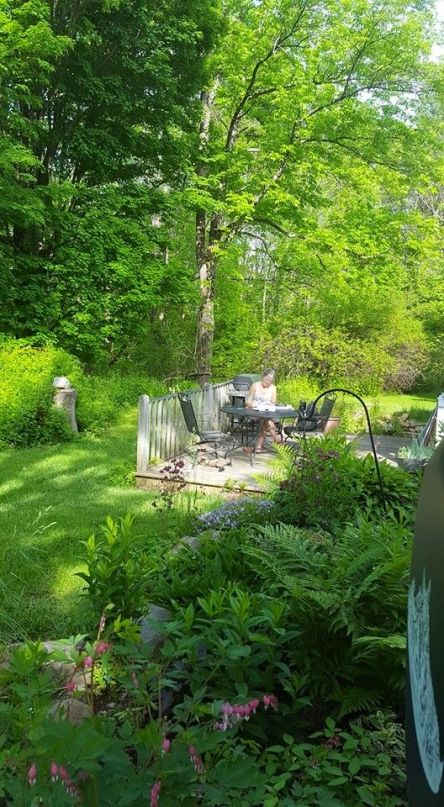
My in-laws are staying with us right now and my mother-in-law caught me unawares on my back deck yesterday afternoon. I’d love to say I was reading a novel, but I was scoring math tests, completing reading assessment cover sheets, correcting homework, etc. I had all the essentials–my iced coffee, my favorite cat nearby and (you might not be able to see this) a lit citronella spiral by my feet.  (Damn black flies!) This picture captures a perfect, authentic slice from my weekend. (Only 3 weeks left!!)

And I Was Alive

poetry+friday+button-e1341309970195

blossoming-pear-tree

I stumble my way through poetry. I don’t know much about the mechanics or the structure of it.  I can’t talk about sonnets and couplets. Words like enjambment and spondee are foreign to me. When discussions head in that direction, I head to the periphery–keen on learning more but a bit intimidated by it all. I’m more comfortable with the wonders of word play– the delicious way that poems tumble off my tongue with assonance and alliteration and onomatopoeia. My pool of known, beloved poets is also small: Mary Oliver, Naomi Shahib Nye and Wendell Berry. Robert Frost, Shel Silverstein, Ogden Nash. Yet even as I write their names, I’m profoundly aware that I have only a superficial familiarity with their work (with the possible exception of Shel Silverstein whose much loved  Where the Sidewalk Ends brightened my childhood days).

Yet I love poetry. I love discovering new poems. I love writing them. Above all, I love how poetry encapsulates an emotion or a moment so perfectly that it seems to reveal an essential truth–to cut right to the heart of the matter. There are times I read a poem and am stopped in my tracks. I don’t necessarily understand it all nor can I articulate all of its nuances or the craft that went into its structure, but it resonates within me. I feel charged and often changed by my encounter with it. Recently I encountered such a poem by Russian poet, Osip Mandelstam, translated by Christian Wiman.

And I Was Alive by Osip Mandelstam

And I was alive in the blizzard of the blossoming pear,
Myself I stood in the storm of the bird–cherry tree.
It was all leaflife and starshower, unerring, self–shattering
    power,
And it was all aimed at me.
What is this dire delight flowering fleeing always earth?
What is being? What is truth?
Blossoms rupture and rapture the air,
All hover and hammer,
Time intensified and time intolerable, sweetness raveling rot.
It is now. It is not.

If you’re interested in reading more poetry, go on over to Reflections on the Teche where Margaret Simon is hosting this week’s Poetry Friday Roundup.

Artistic Legacy


11454297503_e27946e4ff_h

My cousin is an artist. Her paintings, often watercolors, vibrate with color and passion. Sometimes she shares her work on Facebook and I marvel at her talent. Truth be told, I’m also a bit jealous, as this kind of talent does not run in my veins.

12803212_10208698679562352_8572096088051338971_n.jpg

She posted this picture not long ago with the caption: “Thinking of Grandpa Pat while using his pencils.” It turns out that her watercolor pencils were once held and used by our grandfather. She called him Grandpa Pat, I called him Poppa Pat. Either way he was ours and much loved, but clearly she knew him in a way I did not.

I did not know that Poppa Pat had art supplies.  Sure, I knew he could draw, and I always enjoyed the small hand-painted holiday postcards he sent us. I particularly remember a grinning jack o’ lantern from some long ago Halloween. I can still feel the rough, dry texture of the paint strokes on the card and see the jaunty crooked black grin. I knew Poppa Pat was a singer and a mad whistler. I knew he was a storyteller. I knew he loved to eat oatmeal with raisins for breakfast. But I didn’t know that he was the kind of person who had art supplies, the kind of person who knew what crayon d’ache pencils were. I’m a bit jealous that my cousin knew this part of my grandfather and I didn’t–and saddened that I didn’t pay more attention.

It follows that I did not know that our grandfather had shared his art supplies with my cousin. When I saw her photo, I was touched that his supplies were still being used –that they were treasured.  “He gave me all of his art supplies one of the last times I saw him,” she wrote, “ I have his oil paints (mostly dried up but I’m keeping them), his pastels, linoleum cutting tools, and his crayon d’ache pencils (watercolor pencils). He was so excited to share them with me.” What did my grandfather really think and feel when he handed those cherished supplies to my cousin? A delight in a shared passion? A recognition that he could no longer use these tools? A sorrow for the passing of time? A pride in his granddaughter’s talent?  There must have been an element of bitter along with the sweet. I know, though, that he would be thrilled that his crayon d’ache pencils, held in his granddaughter’s hands, were still actively creating, linking the two of them through time and the creative process.

About two weeks ago, a picture of a painting popped up in my Facebook feed with the caption: “This little one is from my cousin’s photo in Acadia (National Park), Maine.” My cousin had painted a watercolor, inspired by a photograph I’d recently shared.

Here is the original photo I shared on Facebook:

DSCN6111

Here is her painting:

13063135_10209167193474907_4215481294881444724_o.jpgAnd I wondered. Did she use my grandfather’s watercolor pencils to create this? I’d like to think so. I could ask her and find out, but I’d rather not. I’d rather simply believe she did. Either way, to me this painting is a circle– from Poppa Pat to my cousin to me. It feels rich and rewarding and right.
After a quick Facebook exchange to work out details, the watercolor is on its way to my home. Here, like my grandfather’s art supplies, it will be treasured. There is sweet solace in this painting, this artistic legacy, that connects us through the years.

Spring Peepers

poetry+friday+button-e1341309970195

imgres.jpg

Image used by permission from Mike Benard’s Frog Call website

There’s something magical about the song of the spring peepers. When I hear them, I know that after a long winter, spring is arriving. Usually we first hear them when we’re driving on a chilly spring evening. We’ll still have the heat on in the car but we’ll roll the windows down. “There they are!” we’ll call as we hear them singing. (I even call out if I’m alone in the car. A joyous reflex–“Oh!  Listen to the peepers!”) We speed by their conversations in our car, shivering in the chilly breeze, eavesdropping on  a few highlights from a variety of vocal communities. You can’t help but smile when you hear the peepers.

Maine poet, Carl Little, also enjoys the wonders of spring peepers. This is the end of his poem Zones of Peeper. I love the image of those tiny frogs flinging their music about with such abandon and I know firsthand about the joy their song inspires.

Zones of Peeper, Carl Little

...
not synthesized but a perfect
cacophony of the higher ranges,
tiny frogs doing their spring thing,
flinging music into dank milieu
of pond edge and marsh, inspiring
a certain joy in our recap of the evening
as if every fault could be forgiven
when you consider the rest of the world
wild and wet and flipping out.

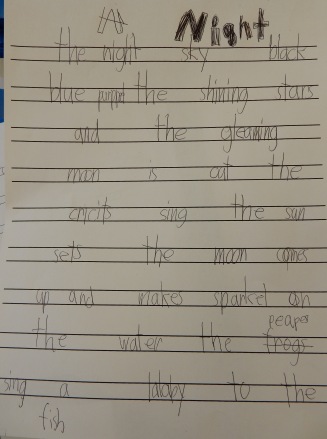
One of my first graders also knows the value of specific language and the wonder of the peepers. Here is her recent first draft of a poem, prior to working with line breaks:

DSCN5792.jpg

What a wonderful final line:” The peepers sing a lullaby to the fish.”

Spring peepers–hope, inspiration, and sheer poetry!

Pop over to Violet Nesdoly’s blog for more poetry today. Thanks for hosting Poetry Friday Roundup, Violet!


Writing

11454297503_e27946e4ff_h

unnamed.jpg

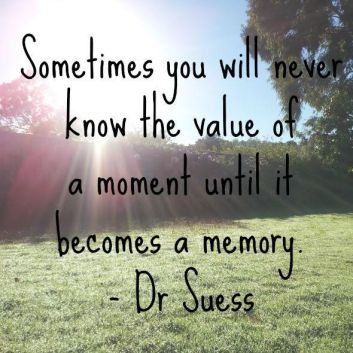
The secretary at work attaches quotes to our Morning News e-mails. When I read this one, I immediately thought–that’s what writing does! It slows me down and makes me pay attention. I don’t have to wait for an event to become a memory–Writing helps me to recognize the value in a moment.

NPR recently broadcast a program about how handwriting your notes helps you to learn better. Because you can’t write down everything, you’re forced to synthesize as you take notes and thus you organize the information more meaningfully in your brain. Or something like that. It occurs to me that whether you’re handwriting or typing, writing makes you do the same thing. You have to choose which elements to share, which to highlight and which to omit. You can’t write about every moment of your day, so you sift through and find the more meaningful ones. And sometimes if you don’t the time to write, you might not notice the meaning was there at all.


The gift of language

11454297503_e27946e4ff_hI wasn’t sure what I would write about today. Or if I would write. I was in a bit of a mood yesterday–one of those moods that’s hard to shake, not easy to pin down, but casts a long shadow. Usually I try to whip up a rough draft for Tuesday’s slice on Monday night. Then I fine tune and post in the morning. I’d had a wonderful poetry celebration in my class yesterday and my students are truly jazzed about poetry. I knew I could write about that. I could even share some of their poetry. But I was in a mood.

I got home last night a bit early after racing around in a downpour, running errands. I had a raging headache. At 6:15 I got into bed. Yes, 6:15. I was asleep before 7:00. When I woke up at about 1:30 am, my mind started racing about, touching on all the things undone or half done or even poorly done. Apparently the mood still lurked. Already, I could sense the flavor of the day. After tossing and turning for a bit, I elected to get up. Perhaps I could get some work done and then tuck in a two hour nap a bit later in the morning.

I puttered around a bit, making coffee, changing over the laundry and finally sat down at my computer. I opened up my e-mail and noticed a note from a parent who had attended yesterday’s celebration. Oh, I thought, how nice, he’s probably written to say that he enjoyed the poetry celebration yesterday. I clicked and read. As it turns out, he was, but there was so much more.

“Hey There –
I just wanted to send you a quick note. I had my 39th birthday today, and it will go down as one of the best, and I am handing over a large degree of credit to you. I’ll be honest, C. made a lovely dinner and my day at work was fine as well. I thought the poetry slam might be the icing on the cake (no pun intended) – BUT…the real kicker was when after dinner/cake/presents L. strolled over to his backpack and begin reading some poems from his poetry notebook. He had his sister and both parents mesmerized as he begin reading prose with an enthusiasm that I have not seen from him in a very long time to be perfectly honest. It ended with me, a former business school grad with a “hobby” of poetry, reading the poems that I used when I proposed to my wife, when I married my wife and some that I wrote after saying goodbyes to grandparents, classmates who passed too early, etc. The point is – poetry for me…something that I never write in a land of bulleted emails, PowerPoint decks and succinct talking points is a true gift of language. A gift that I admire you for exposing  (15)  children to today that I feel might be changed for the better as a result. It’s a long-winded way of saying thanks – thanks for all that you do, and for the passion that you bring to our children and their minds.”

Wow. This letter touched me in so many ways. I’m thrilled that his son, a reluctant reader, opted to read aloud poems on a night of family celebration.  I love that his family listened and then that his father pulled out and shared poems that he’d written to his wife and to others at significant occasions in his life. What a powerful message to his son and daughter!  I could envision the family sitting around, sharing poems, connecting through them.  Finally, I am so thankful that this father took the time to write me to share his own love of poetry and words, to share this moment with his family and to thank me.

I’m struck by the power of language–both poetic and everyday–to unite, to build, to celebrate.  So often in today’s world, language is used to denigrate, to destroy. But this parent celebrated the gift of language with his family and then again, through his letter, with me. He truly recognizes the power of words and poetry, but I wonder if he realizes how far the ripples will carry from his e-mail. How I will carry both these words and my image of his family with me. How they will remind me that our work as teachers may bear fruit at unexpected times, many unknown to us. I will carry his words with me, not just today, but on other days. And perhaps on one of those days when a mood lingers and taints, his words will drift back and shift that mood. It certainly has today.


The Upside of an Empty Nest

11454297503_e27946e4ff_h

I started vacation a bit tentatively. This was the first time I would have vacation and an empty house since becoming an empty nester. Most of the past vacations were holidays when the kids came home for break and then in February we traveled for the week. Though I was nervous heading in, I was looking forward to the down time and…the verdict is in…

I LOVED it!

I spent the week enjoying lazy mornings, long hikes, gardening, reading, writing, eating out, and generally luxuriating in a fluid, flexible schedule. It was utterly delightful. We capped it off with two days at Acadia National Park, surely one of the most beautiful spots on earth, and dinner with two of our three children at University of Maine. By Sunday I was refreshed and relatively ready to return to school on Monday morning.

These two conversations from early Monday morning brought back many memories, reinforced the upsides to vacationing and traveling without young children, and engaged my sympathies for the parents involved.

“How was your trip to Pennsylvania?” I asked a student.
“Mrs. Hogan! We drove for like 12 hours!”
“Wow! That’s a long drive.”
“Yeah, and I had to stop like 8 times to go to the bathroom,” he said.

Another student bounced up to me first thing, announcing “I got stitches over vacation.”
“You did?” I exclaimed. “What happened?”
“I cut my foot.”
“Where were you?” I asked, knowing her family had planned to travel for part of the break.
“At the hotel,” she said.
“Well, where was the hotel?”
“Oh, it was in Washington, D.C. It happened on the first day of vacation and I had to go to the emergency room.”
“Oh, no,” I said, “What an awful way to start your vacation!”
“Yeah,” she agreed, but then added, “But it’s a great small moment story!”

And then, apropos to nothing really, I just needed to share this–the view outside my classroom today:

DSCN6197.jpg


Ham’s Brook

poetry+friday+button-e1341309970195

DSCN5991.jpg

Walking along a trail the other evening, we saw this plaque, attached to a boulder adjacent to a picturesque brook. The phrase “Trickling down from the Old Ham Farm” played over and over in my mind, sparking thoughts not only about the brook, but also about the Ham family line and about the intertwined history of brook and family.

Trickling Down

Everett and Vivian’s
old homestead remains,
populated with their progeny,
a landmark imprinted
in the county’s
geographic lexicon.
“Turn right just past the Old Ham Farm,”
the locals might say.

Ham’s Brook
still trickles down
from the farm on the hill,
swirls into the Sabbatus River
and ripples in the rapids,
rushing over and around
slabs of granite ledge
and waterfalling
over moss-strewn boulders.

Through the years
the farmhouse children,
Lucy and Rufus,
Harriet and Stephen,
followed the brook
from hilltop to river valley,
stirring the carpet of leaves,
slipping on moss,
dipping toes into icy brook water,
foraging for frog eggs,
and flipping over rocks and logs
to locate shy salamanders,
skipping through a childhood
rooted in the earth
of the farm,
discovering treasures
that abound by a brook
deep in the Maine woods.

Today, Ham’s Brook
still trickles down
inviting you
to slip into the shadows
between trees
to explore its tumbling length,
to ramble over its rocks
and to search for its source…

I imagine it springs
from deep beneath
the Old Ham Farm
and ebbs
and swells
through seasons and time,
coursing
through the landscape
like a pulse.

Molly Hogan (c) 2016

DSCN5992.jpg

Ham’s Brook, Lisbon, Maine

To enjoy more poetry, head to the Poetry Friday Roundup at Jama’s Alphabet Soup. You’re sure to be inspired!

A Semi-Reverso Poem

Reverso poems are tough! When recently interviewed by Michelle H. Barnes at Today’s Little Ditty, Marilyn Singer summarizes a reverso like this: “A reverso is one poem with two halves.  The second half reverses the lines with changes only in punctuation and capitalization and it must say something completely different from the first half.”  I was able to get the first verse to reverse to a meaningful second verse, but I couldn’t capture the heart of a reverso–a totally different message when reversed. Oh well!  I’ll keep trying but thought I’d share this first effort anyway.

DSCN5953

With dainty, slippered stamens,
dipped in electric blue,
Scilla dances
in the cool spring breeze,
each petal a marvel
as it bursts into bloom.
One single flower
enhancing
a watercolor world.

A watercolor world
enhancing
one single flower
as it bursts into bloom,
each petal a marvel.
In the cool spring breeze,
Scilla dances,
dipped in electric blue,
with dainty, slippered stamens.

Molly Hogan (c) 2016

Letting go…

11454297503_e27946e4ff_h

imgres.jpg

Somewhere  I have a picture from Connor’s first day of Kindergarten. It was a beautiful day in early fall. The bus drew to a stop before our house and we crossed the road together. Connor stepped up onto that tall, tall bus step and then with the encouragement of the bus driver and me, turned dutifully to have his picture taken, grinning at me. Then he turned, climbed up the remaining steps, and disappeared onto the bus. I crossed the road and the stop sign on the bus rotated in, the red, flashing lights turned off, and the bus slowly pulled away, gathered speed and moved down the road.  I waved and waved as it left, keeping it up as it went up and down the road, then disappeared in a misty yellow blur over the hill.

As this was almost 20 years ago, I wasn’t sure how my pictures would turn out. I deposited my film for development and waited. (My, how times have changed!) When they came back, there he was, my little boy, smiling on the steps of the bus, heading off on a new adventure. And then I noticed his hands. They were clenched tight, knuckles white. My heart cracked. On that day when he pasted that bright smile on his face, clearly he was scared as well. But he stepped up onto that bus, smiled for his picture, and took his seat. And I didn’t notice. I didn’t see his small clenched hands through my tears. I only saw his smile.

Next month Connor graduates from college. It’s hard to think about. As the oldest, he’s always been the one to go first–the one I’ve had to let go of first, little by little. While cleaning out my Inbox recently I found some old e-mails from his early college days, many of them from me to him. Not so many from him to me!  It’s an interesting record of our relationship. Many of mine were filled with variations of this line: I love you and miss you! and So, can you drop me a quick note so that I know you’re alive and hopefully thriving? or  Are you feeling any better?  My maternal radar is on high, trying to pick up incoming signals of your health status.

There are also helpful bits of advice: P.S.  It’s good etiquette to answer your mother’s e-mails, especially around Christmas time.

Or evidence of enabling:  We mailed your package yesterday so keep an eye out for it!  Your glasses are in a case tucked into the middle of all the clothes.  I also sent out your thank you notes today and will hopefully deposit your checks this weekend. 

And a bit of sarcasm: I just love these long, chatty e-mails.  It’s so important to me to feel close to you as you find your way out in the world.  Thanks for taking the time to write and let me know how things are going.  🙂

I also found some snippets of our conversation on our drive up to get textbooks for his first semester:

—“Mama, would you object if I try to set a new land-speed record?”
—-“Connor, slow down. You can’t drive 80 mph.”
“But that’s how fast the rest of the traffic is going.”
“I don’t care.  It’s dangerous to drive so fast.”
“Don’t worry, Mama, I have the reflexes of a bobcat.”
“Connor, they’re endangered animals.  I don’t think their reflexes are that great.”
“No,  they aren’t endangered, only threatened.”
–“50 miles to go.  That should take about 25 minutes.  We’ll need to change things up a bit.”

—“I thought of a new game to play.  It’s called No one Catches Connor.  My first favorite thing about it is the alliteration.  My second favorite thing is that I have to speed really fast so that I always win.”

God, I love that boy. Each of these exchanges are artifacts of the evolution of our relationship. The driving snippets make me laugh even now. He still has a knack for making me crazy and making me laugh simultaneously.  (It can be supremely annoying!) Reading through the collection of e-mails, I see him moving away and creating his own world, one that only intersects with ours. I see myself struggling to support and encourage and to find the balance between loving and letting go. I remember how much I missed him in those early days and realize that I’ve become accustomed to his absence. While that makes me sad, I also know it’s a good thing, the way it should be. He’s on his own, creating his own life and at this moment, happy and fulfilled.

So much has changed since that first day in Kindergarten and I miss that little boy so much but am so proud of the man he’s become. When I look back at that Kindergarten picture, the clenched hands still break my heart, but his smile is still strong. He stepped bravely into that adventure, despite his fears, and has gone on to so many more. On Saturday, May 14th, he’ll mount the steps to the stage to collect his college diploma. I know he’ll be smiling, but you can bet I’ll be checking his hands this time. I’m pretty sure they’ll be relaxed. He’s come a long way. And my face–I’m pretty sure I’ll be smiling through my tears. So, maybe on some levels, not much has changed after all.