TLD September Challenge

unnamedThis month Michelle H. Barnes interviewed Naomi Shihab Nye for Today’s Little Ditty. If you haven’t read the interview yet, be sure to check it out here. Michelle writes a mean interview, and time spent with Naomi Shihab Nye is always time well spent. You also get a sneak peek at some poems from her most recent book, Voices in the Air: Poems for Listeners. Naomi Shihab Nye’s challenge for the month was to write letters to ourselves or some sort of introspective poem (not necessarily in letter format) in which we pose questions which we don’t necessarily answer. Here’s my effort:

Skiing—Victory or Defeat?

What was I thinking?
What erratic firing of neurons placed me here
on an icy snow-covered hill
heading in slow motion for the trees
with quivering thighs
fighting a losing battle
with “pizza”
or what was called snowplow
decades ago?
Why did I think this would be fun?
I, who hate adrenalin, speed and heights?
Was this some sort of test
I assigned myself?
Just who am I trying to impress?

Deliberately, I tip and fall
skid to a snowy inelegant stop
remove the rented skis
rise and pick up the scattered equipment
then walk down the mountain

It feels like victory to me.

©2018 M. Hogan

This week’s Poetry Friday Roundup is hosted by Jone Rush MacCulloch at her blog. She’s featuring a poem from “Great Morning” by Sylvia Vardell and Janet Wong.

Playing with Verbs

unnamedRecently, Irene Latham posted a poem challenge in a post titled Free Verbs! Pick 5. She shared a picture of verbs she’d seen in a Kindermusik room. The challenge was to choose five words and write a poem containing those words. I chose the words: poke, creep, punch, spin and press. Here’s my effort:

Fall’s shadow
infiltrates summer
poking chilly fingers
into early mornings
creeping into shivering trees
punching color onto leaves
spinning birds into southward flight
pressing closer, closer, closer.

M. Hogan ©2018

The Poetry Friday Round-up this week is hosted by the gallery hostess-with-the-mostest, Carol Varsalona, at her blog, Beyond Literacy Link. She’s sharing a sneak peek at her upcoming summer gallery, The Art of Summering. (Pssst–you can still send her a submission if you get it in today!)

Poetry and Prison

unnamed

Poetry Foundation’s poem of the day on August 27th was “The Cremation of Sam McGee” by Robert Service.  The poem begins like this:

There are strange things done in the midnight sun
      By the men who moil for gold;
The Arctic trails have their secret tales
  That would make your blood run cold;
The Northern Lights have seen queer sights,
  But the queerest they ever did see
Was that night on the marge of Lake Lebarge
   I cremated Sam McGee.

Now Sam McGee was from Tennessee, where the cotton blooms and blows.
Why he left his home in the South to roam ’round the Pole, God only knows.
He was always cold, but the land of gold seemed to hold him like a spell;
Though he’d often say in his homely way that “he’d sooner live in hell.”

The poem continues for thirteen more verses then ends with a repetition of the refrain.  It struck me as a poem I would have enjoyed reciting with friends on a long bus ride or at camp (rather like the Titanic song “Oh, they built the ship Titanic to sail the ocean blue.”)  It seemed an unusual choice for Poetry Foundation to share… until I saw the editor’s note. It stated that this had been Senator John McCain’s favorite poem. The story goes that when he was a prisoner of war in Vietnam, he and another prisoner “typed” this poem back and forth to each other through the walls of their cells using a tap code.

I was fascinated by this story and decided to investigate. I  discovered an episode of Poetry in America that focused on the poem, “To Prisoners”, by Gwendolyn Brooks. It was described like this: “This episode brings together a group of interpreters who learned in prison to hear poetry’s “call.”  Learn from Senator John McCain, playwright and activist Anna Deavere Smith, poets Reginald Dwayne Betts and Li-Young Lee, and four exonerated prisoners about poetry’s special resonance for those behind bars.” I clicked on it to check it out and was drawn in for the full 25 minute episode. It’s a fascinating look at the poem and how different people interpret it.

To Prisoners
I call for you cultivation of strength in the dark.
Dark gardening
in the vertigo cold.
in the hot paralysis.
Under the wolves and coyotes of particular silences.
Where it is dry.
Where it is dry.
I call for you
cultivation of victory Over
long blows that you want to give and blows you are going to get.click here to read the rest of the poem.

Watching the video, I learned more about the story of the poem tapping that first sent me on my internet journey. What I discovered was that Bill Lawrence, who occupied a cell next to John McCain, actually taught John McCain that poem while they were in prison. (Tune in at 11:40 in the video if you want to hear McCain recite part of this poem and tell the story.) McCain explained that Bill would type a few lines to him and then he would tap them back. Each time McCain would add the lines to what he’d already learned, accumulating the poem. It gave them both something to think about. Learning this poem and tapping it back and forth was an important part of the communication that was so vital in helping McCain and others survive torture and solitary confinement.Learning about McCain’s experience with poetry in prison, reading these words by Gwendolyn Brooks, and listening to the personal interpretations of others had such an impact on me. It reminded me of the power of poetry. No, remind is too weak a word–it lit a flare of awareness–a blaze of wonder– about the power of words to offer connection, to express pain, to kindle hope, to help us in our darkest times. It also reinforced for me the importance of taking time to dig into a poem, to consider each word and all its nuances and how this is the work of the poet and the reader.

The more I thought about Gwendolyn Brooks and the more I read and considered this poem, the more I thought of her as a sorceress, and her poem, an incantation. “I call for you…” Brooks carefully selected words and images to pour into her crucible and the resulting poem glows with power.  It pulses with pain and potential triumph. It speaks to those who suffer in literal prisons, yet also speaks to those who suffer from other less tangible prisons–depression, abuse, etc.

This poem and McCain’s story still move in me, generating thoughts, connections, wonderings. They say that where there are poets, and where there is poetry, you’re never alone. Now that’s powerful magic.

This week Robyn Hood Black is rounding up the old fashioned way at her blog, Life on the Deckle Edge. Stop by to experience the power of poetry!

Color Poem and Poetry Swap

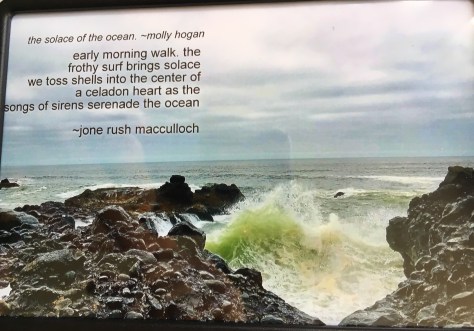
unnamedMy last poetry swap of the summer arrived this past week and what a beauty it is! Jone Macculloch shared a picture of her west coast ocean with me, using a line from my recent east coast ocean sonnet to create an accompanying golden shovel poem. Her word choice and alliteration are delightful and her fabulous photo captures a heart in the surf. Really!? Isn’t it wonderful? IMG_2889 (2).jpgThe color, celadon!, is just fabulous and one I probably couldn’t have named, but as soon as I read it, I recognized it. I’m also delighted that the photo is neatly tucked into a magnetic frame that now has a place of honor on my refrigerator, in the midst of some other treasures. Every time I see it, I think of the ocean’s splendor and of poetry connections across the country. Thanks so much, Jone, for ending my first poetry swap experience so beautifully!

IMG_2890.jpg

Jone’s poem reminded me of  a post by Heidi Mordhorst at My Juicy Little Universe way back in July. Heidi hosted the Poetry Friday Roundup and shared some recent PD experiences. One thing she shared was a wonderful color poem she’d written in response to this prompt: “We imagined that we had met a cloud of our favorite color on the street and taken a handful… ”

I had played around with this prompt some, but had forgotten about it until thoughts of celadon inspired me to look for it again. Here’s my draft response to the prompt:

Aubergine

Some call you dark purple
but I call you
aubergine
glamour surrounds you
a mysterious shadow
separating you from paler hues
Within your depths
black and purple
have kindled a new shade
warm yet regal
I reach my hand out to you
and feel a charge
startling, powerful
soft like plush ermine
hard like a faceted gem
Aubergine
we walk together
me at your heels
and I hear echoes of
late blooming lilacs
brushing against each other
in a spring tempest
their bruised blossoms
perfume the air

M. Hogan ©2018

I think I’ll toy around with this a bit more and I may revisit this prompt again–maybe I’ll write about celadon! Thanks for the inspiration, Heidi and Jone! While I’m shouting out  thanks, a huge one goes to Tabatha Yeatts for organizing the Summer Poetry Swap. It’s been a wonderful experience to participate, rewarding in so many ways. Thank you so much, Tabatha!

Poetry Friday this week is hosted by the inspirational Margaret Simon at Reflections on the Teche. Margaret has been very busy recently with all things wonderful associated with her newly published book, Bayou Song. This week she’s sharing a poetry swap poem she received and a poem she wrote. Both were inspired by other poems. Poems sparking more and more poetry! Gotta love that!


Bird Poetry and more Poetry Swap Goodies

DSCN5585.jpg

Night heron at the Squam Lakes Natural Science Center in NH

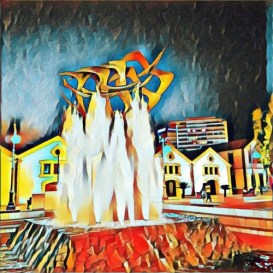
I’ve been immersed in birds this summer. I’ve long enjoyed watching (and writing about) the birds at my feeders (here and here and lots of other places!). This year I’ve upped my interest and spent a considerable amount of time photographing birds (or at least trying to) and reading about them. (Note–If you’re looking for a fascinating non-fiction read, pick up The Feather Thief: Beauty, Obsession, and the Natural History Heist of the Century by Kirk Wallace Johnson.) This intensified bird interest has percolated through my life, emerging unexpectedly. For example, my responses to Laura Purdie Salas’s past three 15 Words or Less challenges have all centered on birds, regardless of the photo prompt! Here’s last week’s example, in response to this filtered photo of a fountain in Cyprus:

fountain

Photo credit to Laura Purdie Salas

Inspiration

Fledgling dreams
flutter
in smoldering ashes
From flames
Phoenix
rises
soars

©M. Hogan, 2018


Then this week I started to share my recent bird rescue adventure for my Slice of Life, and it evolved into a 4-part series! (If you’re interested, the first part is here.) In short, I’ve got birds on the brain, so Christie Wyman’s bird-related poem challenge felt like a natural fit.

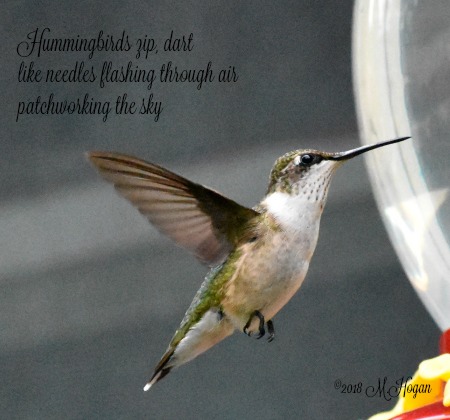
Here are a couple of bird-related poems I’ve written recently:

Hummingbirds.jpg

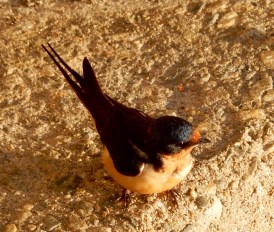
DSCN4592.jpgSwallows

Swift swooping swallows
Wing through shadows
At dawn and dusk in a
Lively
Loop-de-loop
Of aerial predation
What a show!

©2018 M.  Hogan

DSCN4721.jpg

Swallow and reflection–I’m still working on those action shots, darn it!

Then, back to another love of mine: Dandelions! Kat Apel, superstar Poetry Swapper, wrote a double reverse acrostic dandelion poem for me. What? I never even knew such a thing was possible! Stunning! I read it again and again, awed by this poetic feat. She makes it all sound so natural and fluid, yet manages to stay within that insanely ambitious structure! Then, to top it off, she presents it with a delightful photo and all sorts of playful fonts. A visual feast as well!

dandelion double reverse acrostic (1).jpg

close up dandelion (1).jpg

Kat also included a wonderful assortment of photo postcards–Beautiful pictures with often humorous friendship quotes. Another big “YES!” for the Summer Poetry Swap. Thanks so much, Kat!

postcard assortment (1).jpg

This week’s Poetry Friday Roundup is hosted by Christie Wyman whom I recently met in real life! We crossed paths in July at the Heinemann Teacher Tour in Portsmouth, NH. Before that (and since then) I’ve spent loads of time enjoying her writing at her blog, Wondering and Wandering. Stop by to enjoy the flock of poems that have flown in for today’s gathering!

unnamed.jpg

Personification

unnamedI participated (translate this as: lurked and wrote privately) in Jennifer Serravallo’s Summer Writing Camp for teachers. If you haven’t checked it out yet, don’t worry! Camp ends tomorrow, but you can find all of the video sessions posted in the related group on Facebook (The Reading and Writing Strategies Community). Watching the videos and responding to the prompts is time well spent.

During the second week of camp, Jennifer focused on Poetry.  On Day Two of that week the emphasis was on Strategy 7.4: Bringing Objects to Life.  She suggested that you choose an everyday thing to bring to life. She advised choosing an animal or something that moves, then listing the verbs related to it.  Next, she said to think of something similar that a person might do. Then work with these two lists to bring your object to life.  (Go to Facebook and watch the video for a much clearer explanation!)
Here’s my response:

Tiny Tyrant

He marshals his troops
into rigid columns
One by one
never marking time
they march forward
Beat by beat
coming ever closer
until
at the precise
designated
hour…
they strike!
With one prolonged, rousing
BLAST
they rip their victim
from deepest sleep
to weary surrender

Alarm Clock Victory!

©2018 M. Hogan

This week’s Poetry Friday Round-up is hosted by the warm, wonderful and wise Catherine Flynn at her blog, Reading to the Core. Be sure to stop by and visit!


Bird Nest

unnamed

DSCN5076.jpg

Recently, I found an empty bird nest tucked into the top of a rose bush. I thrilled to touch it, imagining some bird selecting and weaving each thread, instinctively constructing a home. The outside was loosely woven and rougher, with strips of grape vine, maybe? The inner nest cavity was tighter, made with a softer material. Such care was invested in this home and its selected location, safely nestled amidst the thorns. As I ran my finger over it, I thought of one of my favorite Mary Oliver poems, “With Thanks to the Field Sparrow, Whose Voice is so Delicate and Humble.”

Image result for mary oliver with thanks to the field

Using her work as an inspiration, I wrote this:

With Thanks to the Unknown Bird,
Whose Nest is so Carefully Constructed

I do not live happily
within the harshness of our times
The talk is crass and crude
the politics of hatred and division
Violence stalks the streets
and walks our school halls
The world weeps
Yesterday, in the crown of a blooming rose bush,
I came upon your hidden nest
gently I held it between my hands
marveling at the intricate construction
moved by the knowledge that
within this nest
you warmed your eggs and tended your young
From this nest
your brood took flight into summer skies
My fingers traced the woven fibers
I took comfort in the reminder that
such wonders still happen
within our world

©2018 M. Hogan

For more poetry this week, visit Sylvia Vardell’s blog, Poetry for Children. She’s hosting Poetry Friday Roundup and sharing her (and Janet Wong’s) new book, “Great Morning: Poems for School Leaders to Read Aloud.” Be sure to stop by and get an overview of this wonderful soon-to-be-released book!

Elizabeth Coatsworth and Poetry Swap

unnamed

I used to live down the street from Maine author Elizabeth Coatsworth’s home, Chimney Farm, but I’m embarrassed to say that I haven’t read much of her work. (Note to self: add that to the summer list!) Elizabeth Coatsworth wrote poetry and fiction for adults and children. She was both accomplished and prolific. Her 1930 book, “The Cat Who Went to Heaven”, won the Newbery Medal, and over almost 50 years, she wrote more than 90 books.

A few months ago, I stumbled upon her poem, “July Storm.” The imagery immediately grabbed me, and I’ve been wanting to share the poem ever since. July arrives on Sunday, so today seemed like the perfect time. I hope you enjoy it as much as I do.

July Storm

Like a tall woman walking across the hayfield
the rain came slowly, dressed in crystal and the sun.
Rustling along the ground, she stopped at our apple tree
only for a whispering minute, then swept darkening
skirts over the lake,
…(click here for the remainder of the poem)

On another note, last Friday was the final day of school and I came home to find a package awaiting me. What could it be? I saw Margaret Simon’s name on the return label and instantly realized it must be my first Summer Poetry Swap! Yay! What a delightful way to begin summer.

I opened the package to find a card from Margaret and a book. Not just any book! A handmade-by-Margaret book filled with different types of paper, prints, pictures, etc. and tied with a lovely gossamer ribbon.

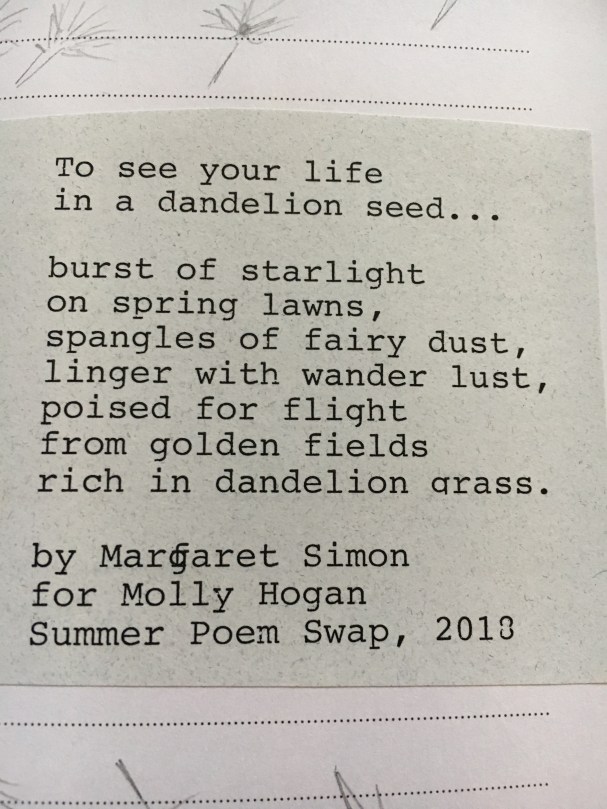
Then, on the first page, Margaret, knowing of my recent dandelion obsession, crafted and typed this fabulous dandelion poem:

IMG_2769.jpg

Thank you, Margaret, for starting my summer off so beautifully and with such style!

For more poetry goodies, visit Carol at Carol’s Corner where she is hosting this week’s Poetry Friday Roundup and shares a powerful poem from Lynn Ungar.


Dandelion Extravaganza

DSCN0331.jpg

“Weeds are flowers too, once you get to know them.” A.A. Milne

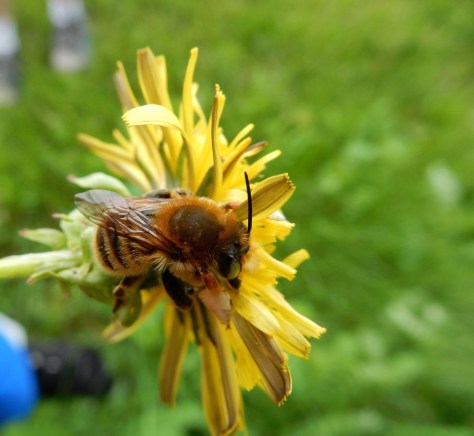
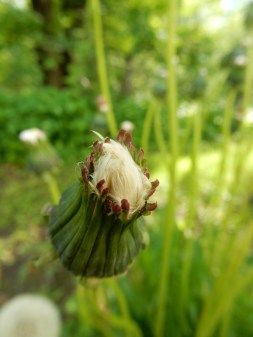
This isn’t the first time that I’ve written about dandelions (to see a previous post and my favorite dandelion picture ever, click here). Every year they delight me more, and this year, it seems like there’s been a bumper crop. I’ve been more fascinated than ever and I’ve taken picture after picture of them in all different stages, from all different angles. It’s addictive! I’ve also been having a lot of fun reading and writing dandelion inspired poetry.

This Valerie Worth poem is one of my perennial favorites. (Get it? lol)

dandelion

Out of
Green space,
A sun:
Bright for
A day, burning
Away to
A husk, a
Cratered moon:

Burst
In a week
To dust:
Seeding
The infinite
Lawn with
Its starry
Smithereens.

~Valerie Worth

And here is a new favorite of mine, discovered this spring in my dandelion mania.

I Wandered Lonely as a … Dandelion?
by William Barton

A plague on your daffodils, Mr Wordsworth.
Granted, daffodils look very fine – harbinger of spring and such,
But they just stand about admiring themselves
or head-tossing and fluttering in a freezing gale,
and you can buy a pot in any corner shop.

The trouble with daffodils is that they turn up
at such a miserable time of the year – snow, ice, fog etc –
season of flu and fruity cold-full-ness.
As a countryman you should have written a poem about
“a crowd, a host of…dandelions”

(click here to read the remainder of this delightful poem)

And here are two of my recent efforts.

Things To Do If You’re a DandelionDSCN0354.jpg

Spangle a spring meadow
Sway in a breeze
Tap deep into soil
Nourish the bees

Gather your energy
Pucker up tight
Then burst into seed and
Launch into flight

©2018 M. Hogan

Meadow Genie.jpg

Meadow Genie

Sun-lit dandelion
Shakes out her gossamer skirts
Poised to grant wishes

©2018 M. Hogan

If you’re not suffering from dandelion fatigue yet, here’s a time-lapse video of a dandelion moving through its life cycle. I could watch it again and again! (and have!)

Finally, here are some of my favorite dandelion photos.

DSCN0326.jpg

DSCN0181

DSCN4271 (1).jpg

DSCN4291.jpg

Kiesha Shepard is hosting this week’s Poetry Friday Roundup on her blog, Whispers from the Ridge. She’s sharing a beautiful summer poem and links to more poetic treats.

Rivers and Bridges

unnamed

“The air smelled like Bayou Teche when it’s spring and the fish are spawning among the water hyacinths and the frogs are throbbing in the cattails and the flooded cypress.”
James Lee Burke, Creole Belle

Margaret Simon and I were e-mailing a month or so ago, and Margaret, typically, had a brainstorm. Why don’t we exchange photos and write poems in response to them? I was immediately on board with this idea. Then, she called it “More Than Meets the Eye” and opted to open it up to a wider audience and have participants share when she posted the Poetry Friday Roundup on May 25th. The game was on!

Margaret organized it all and matched up participants from different geographic areas. She sent me two photos of her beloved Bayou Teche, and then, after agonizing over which pictures to send, I finally sent my photos to her as well. (I can’t wait to read her poetic response!)
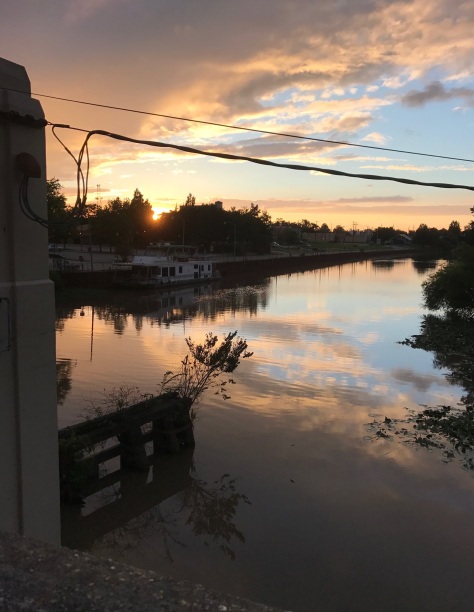
Duperier bridge sunset.jpg

Photo of the Bayou Teche by Margaret Simon

Duperier Bridge in fall.jpg

Photo of the Bayou Teche and the Duperier Street Bridge by Margaret Simon

True confession: The photos are beautiful, but I have struggled with my response. I’ve been all over the place. My first thoughts involved bridges and the nature of bridges. I was intrigued by the idea that the convenience of bridges comes with a cost–a loss of intimacy with the river.

I initially thought I’d try a rondel (roundel?) but wow..that is hard! This is as close as I got and I keep playing around with it. The challenge of the form appeals to and frustrates me.

Hidden Tolls

Each bridge we traverse has a toll
for spanning river’s flowing course
for circumventing nature’s force
for flying o’er shadow and shoal

Intent and focused on our goal
we sow the first seeds of remorse
Each bridge we traverse has a toll
for spanning river’s flowing course

We see one path but not the whole
as we forget about our source
and from our roots ourselves divorce
We lose touch with the river’s soul
Each bridge we traverse has a toll

©2018 M. Hogan

Next I tried a nonet, but that one just fizzled…

I shifted my focus and thought about rivers, and again, I was struck by an inherent duality–their potential as blessing and curse. Fertility and flooding. I also thought of the role that rivers have played in history and how they symbolize the inexorable flow of time. I learned that the name Teche is thought to have come from the Chitimacha Indian’s word for snake, a reference to its twisting, turning course. I played around with that metaphor poem for a while, but didn’t gain any traction. I tried a mask poem as well “I bore witness to gunboat duels and hardscrabble poverty…”

Then, Margaret wrote a comment in response to my Poetry Friday post last week. I’d shared two poems focused on adjusting to the empty nest at home. Margaret wrote, “Life’s changes can make us sad and lonely.” That line reminded me of my thoughts of the river, how it’s so much more peripheral to our lives than it once was (echoes of empty nest here), and I thought perhaps I could use that line to compose a golden shovel.

Forgotten Like a River Under a Bridge

Once central to the pulse and flow of life’s
daily activity, now its changes
are peripheral, casually observed, if at all. A bridge can
span its flow in seconds, avoiding twists, turns and tumult, and make
a straight, safe shot. Convenient, but divorcing us
from communion with the inexorable flow. The sad
truth is that much is lost when we don’t meander and
remember. I wonder…can a river feel lonely?

©2018 M. Hogan

“Life’s changes can make us sad and lonely.” Margaret Simon

Thanks, Margaret, for creating a wonderful challenge, and for the inspiration for a golden shovel. I’ve so enjoyed this journey! Thanks also for hosting the Poetry Friday Roundup this week. To see what photos I sent to Margaret and how she responded, or to check out a plethora of photo poetry and more, go visit Reflections on the Teche.