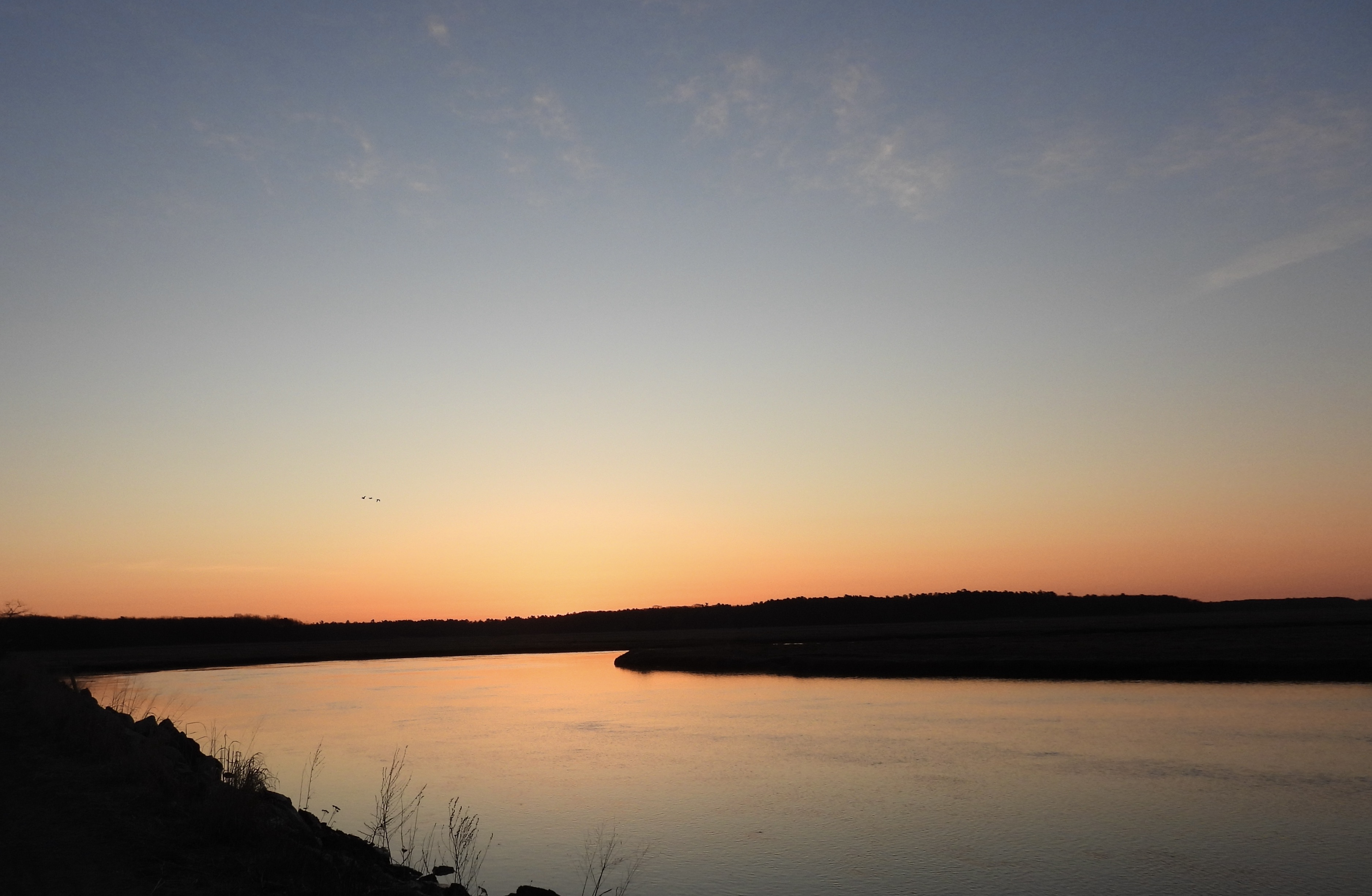
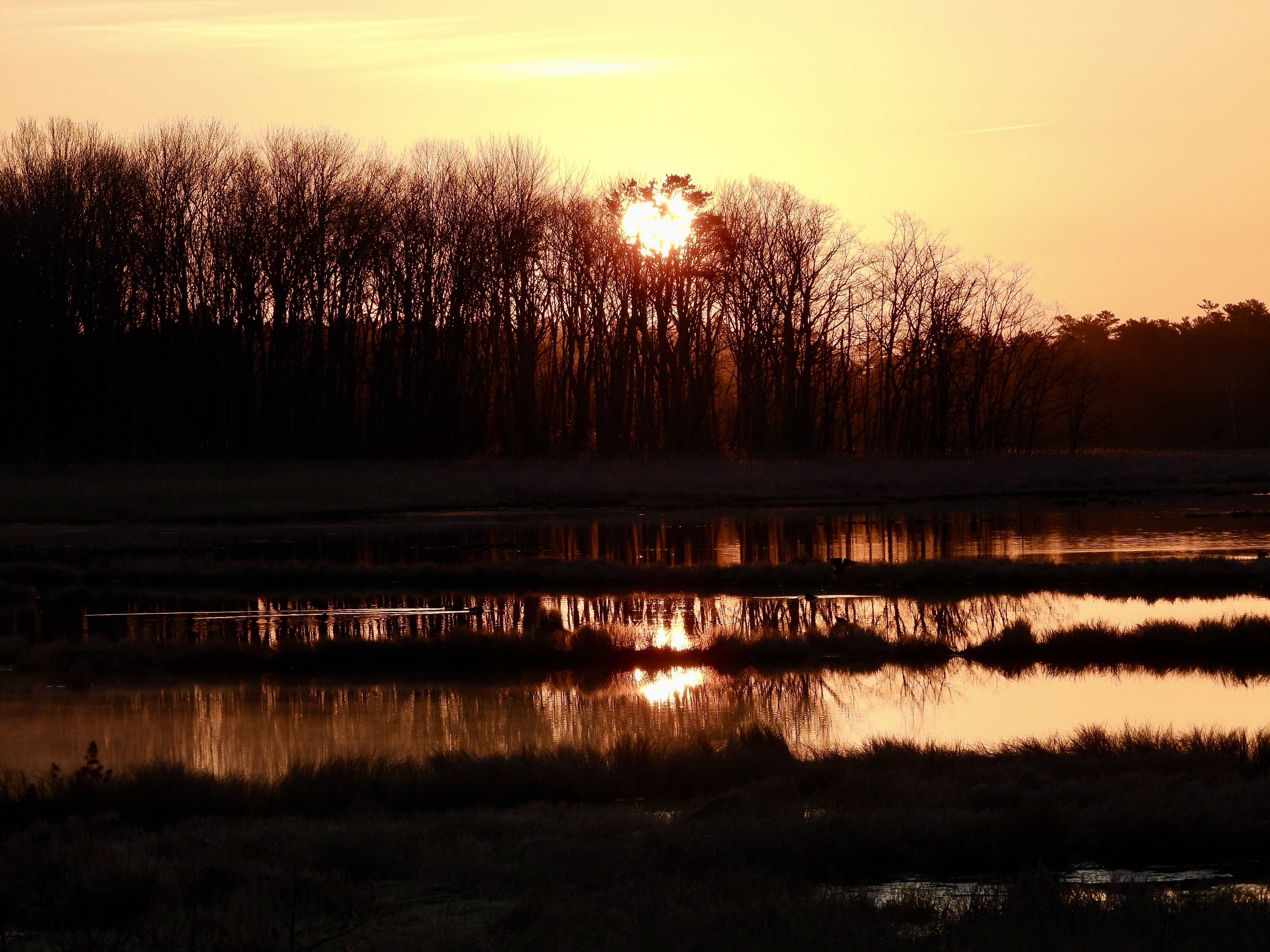
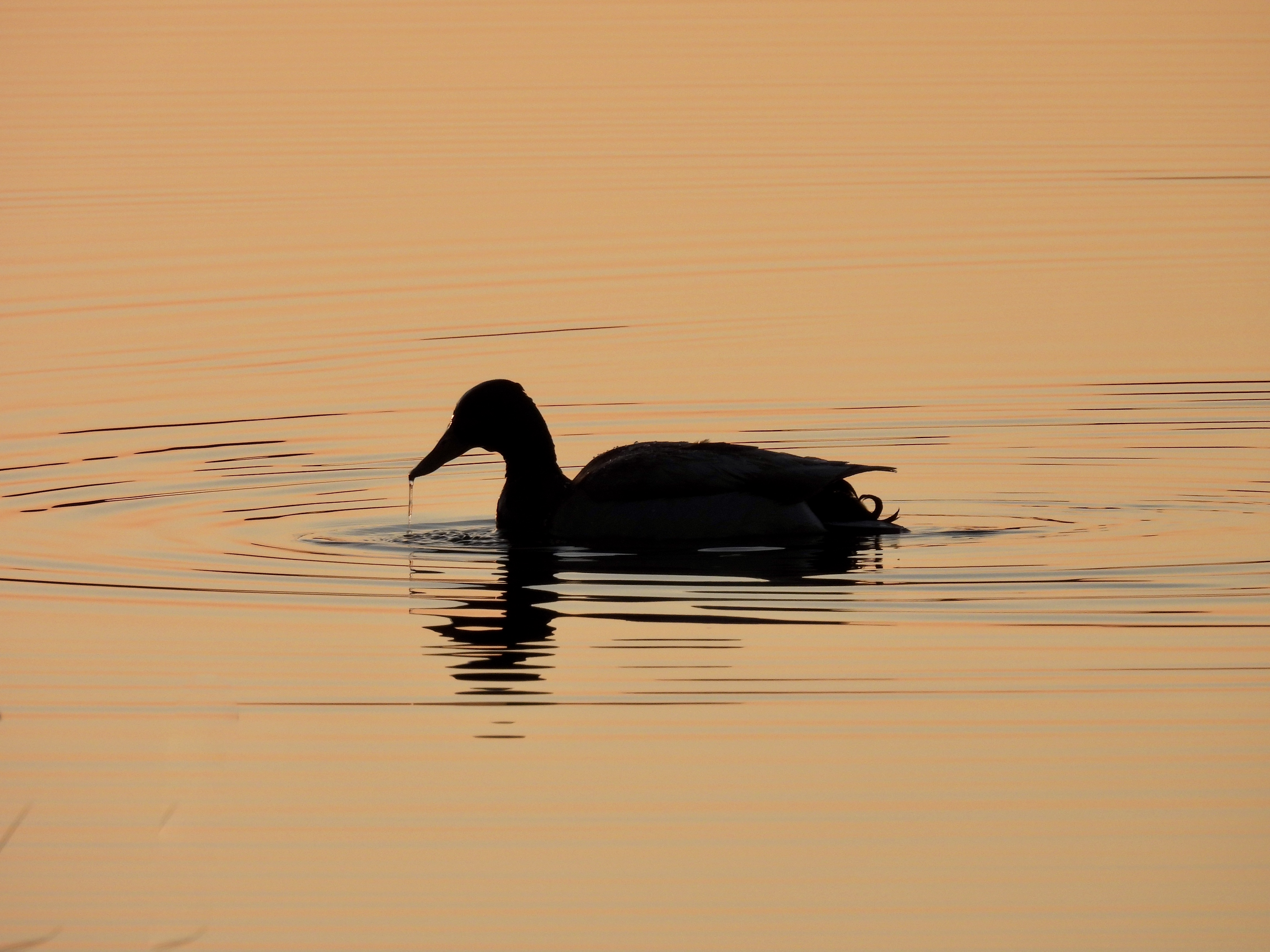
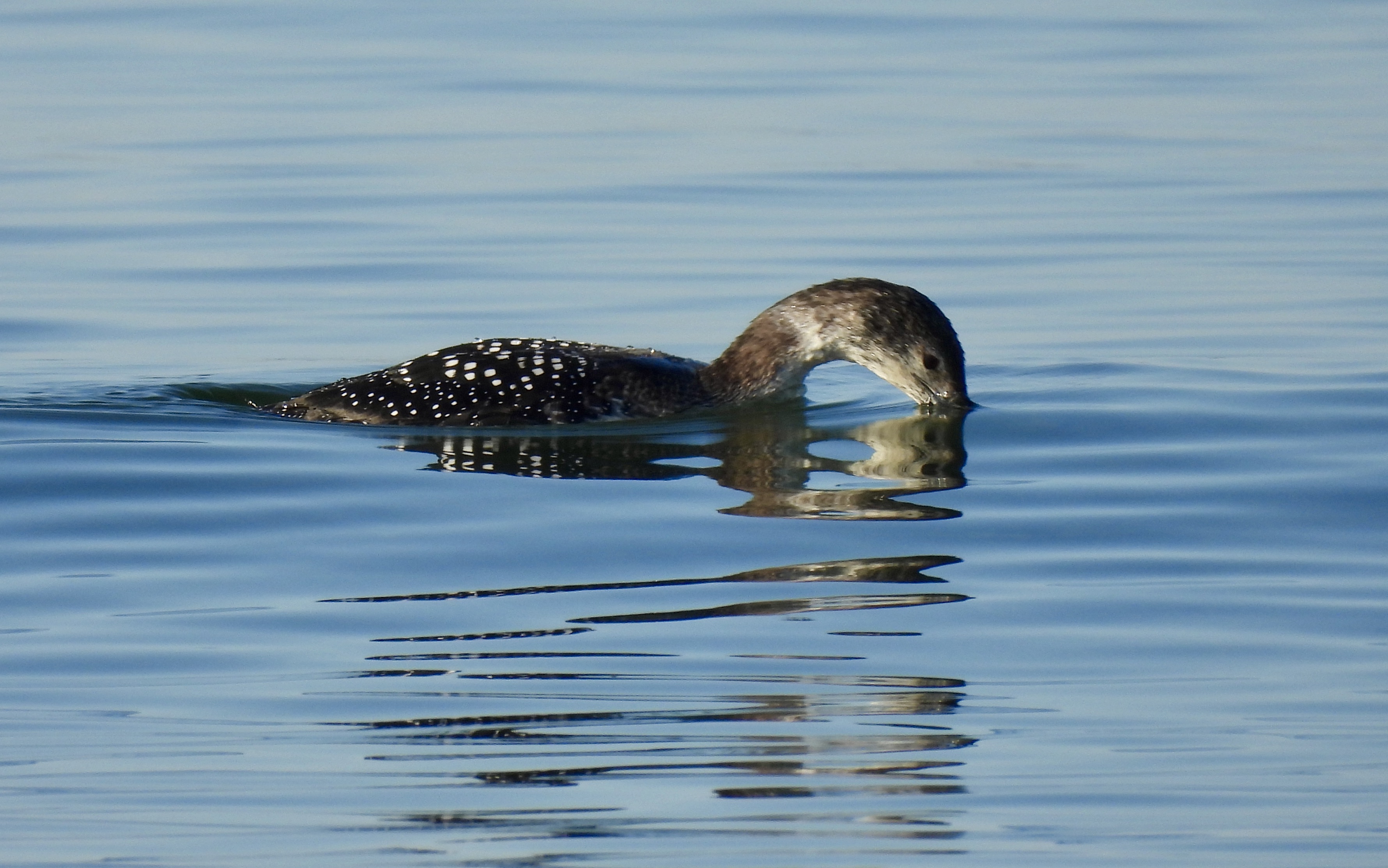
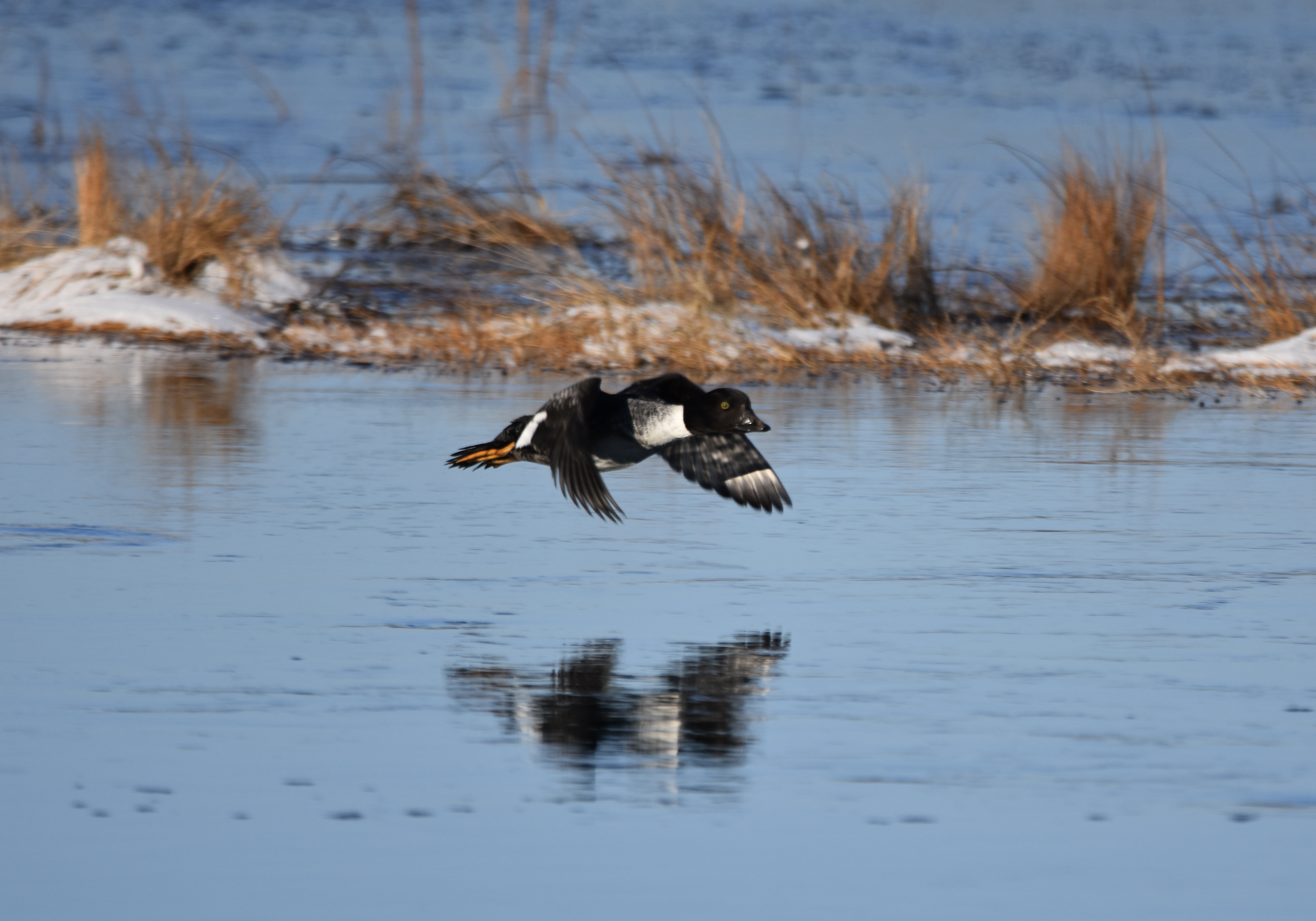
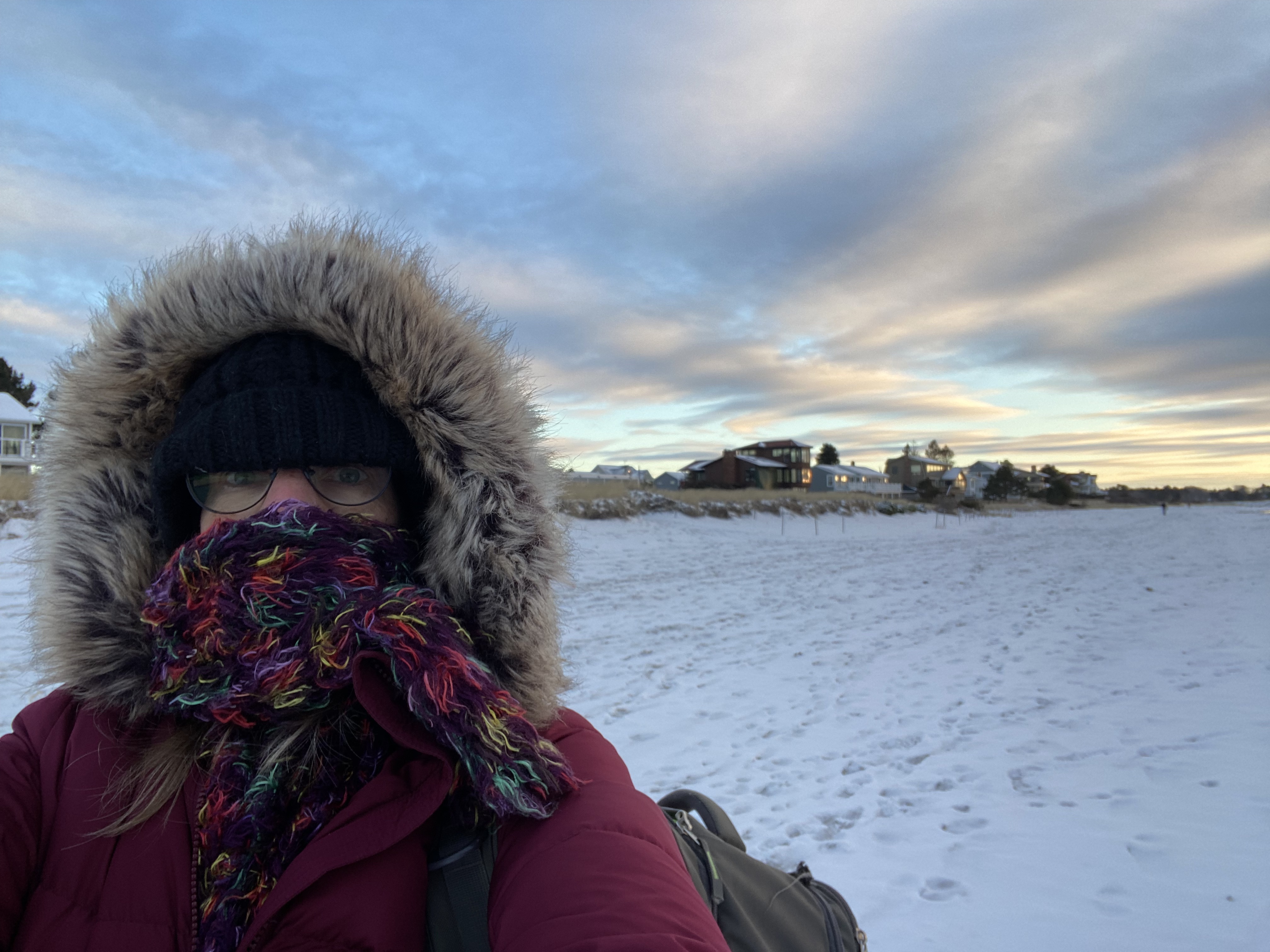
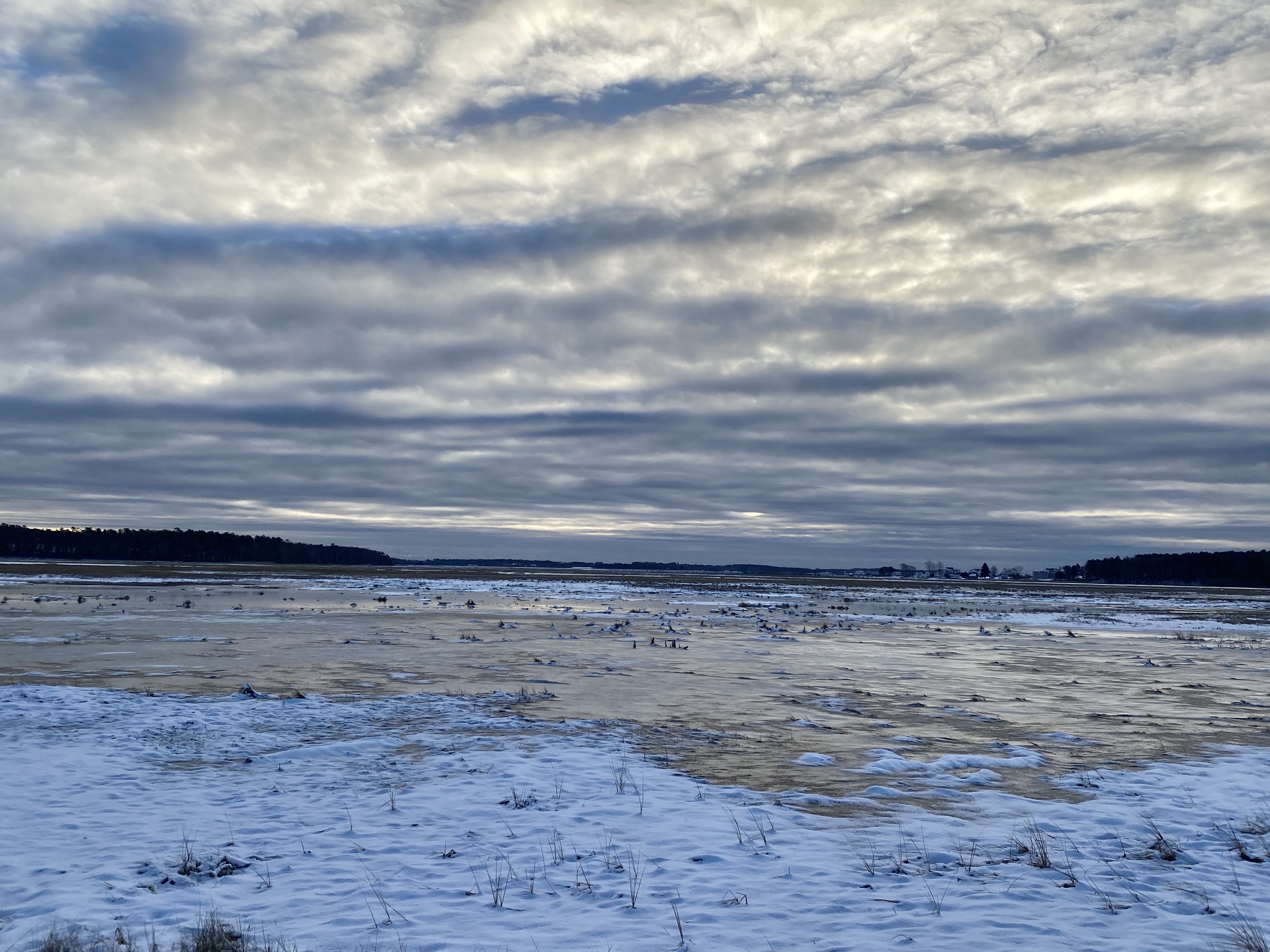
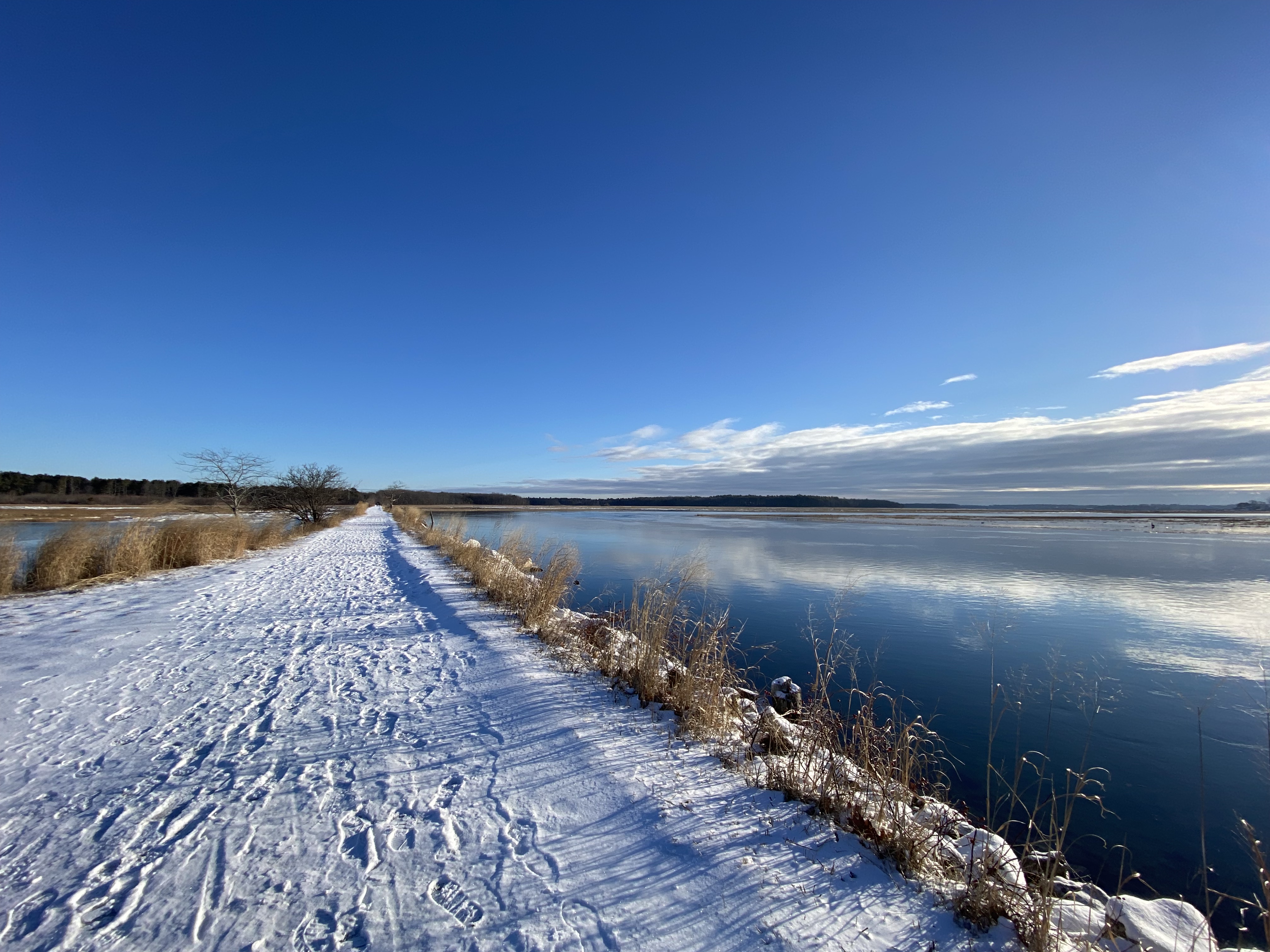
The alarm trills with bird song at 4:15 am. I can’t say I spring out of bed, but I’m somewhat closer to grin than groan. Today, I’m going to welcome the day at the marsh. I’m in happy anticipation of seeing egrets and herons, glossy ibis and who knows what else. I’ve been feeling the pull of the marsh for weeks now, but rainy (and snowy) and busy weekends have kept me away. Even as I rub the sleep away from my eyes, I feel my spirits lifting.
The sun rises well before 6 am these days, and the marsh is about 45 minutes away. It’s in the 30s now, but headed up toward 60 later. I’m uncertain what to wear, but eventually opt for layers, and dress hurriedly. I pour my coffee in a to-go cup, detour to tuck a hand warmer in my coat pocket, and grab my camera. Before too much time has passed, I’m in the car, driving southward. The moon glows overhead, an oddly shaped egg bright in the sky. Soon dawn will chase the dark away over the horizon.
Yesterday I mentioned to Kurt that my shoulders have been living up by my ears these days. No matter how often I consciously relax them, the unrelenting tension of these days pulls them up again. Even now, at the beginning of break, driving to where I want to go, I realize my shoulders are taut with tension. Consciously I pull them down, breathe. I remind myself that my most pressing decision right now is where I will go after the marsh. Will I also go to the beach? Will I take myself out to breakfast? It’s early for warblers, but I could visit some likely spots. The morning is lightening around me and options abound. I settle my shoulders lower, loosen my grip on the steering wheel, and drive toward the new day.
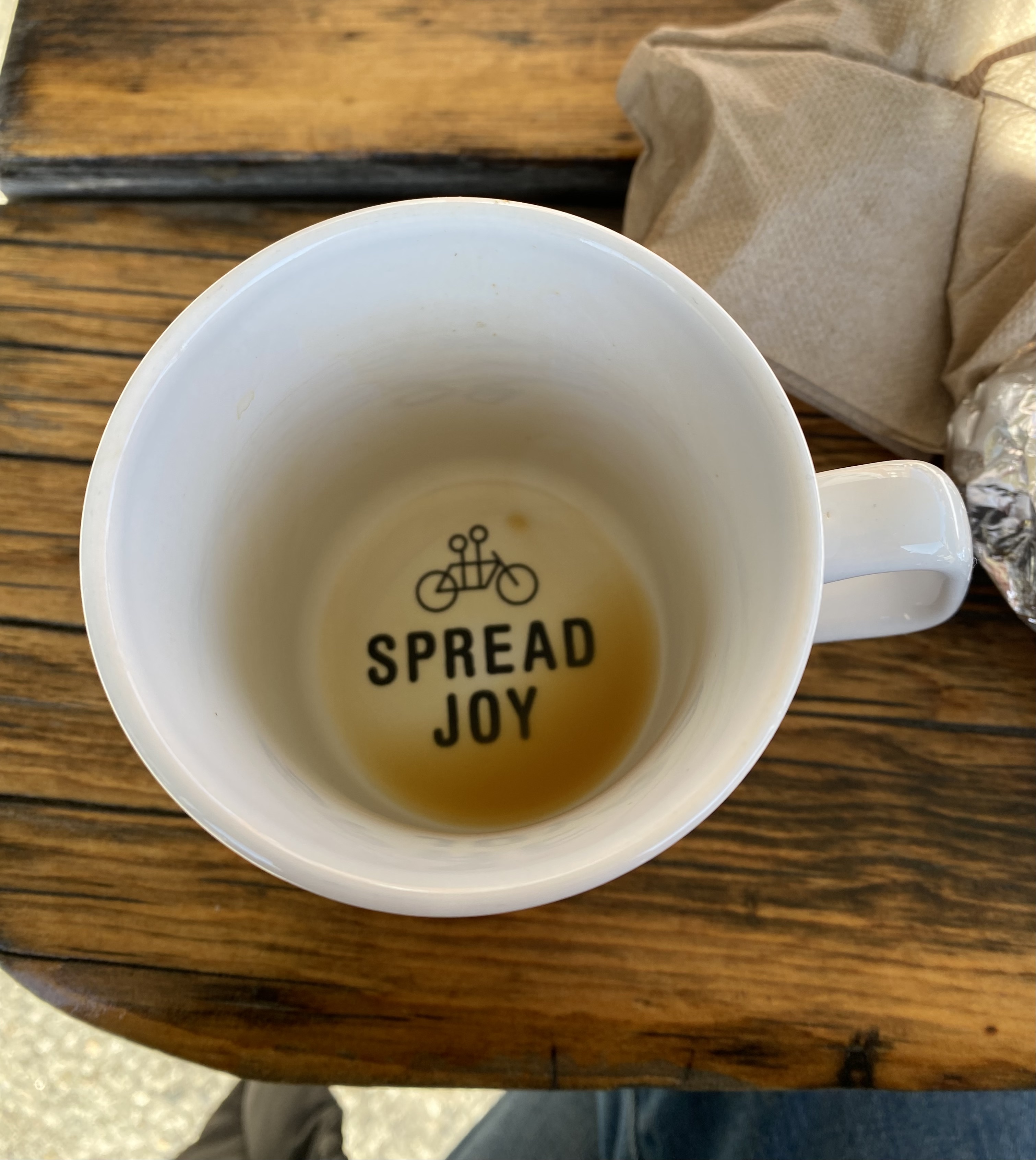
Later I find a surprise message at the bottom of my coffee cup:
It feels like the perfect way to end my morning, and the perfect message to keep in mind as I unwrap the gift of this week.
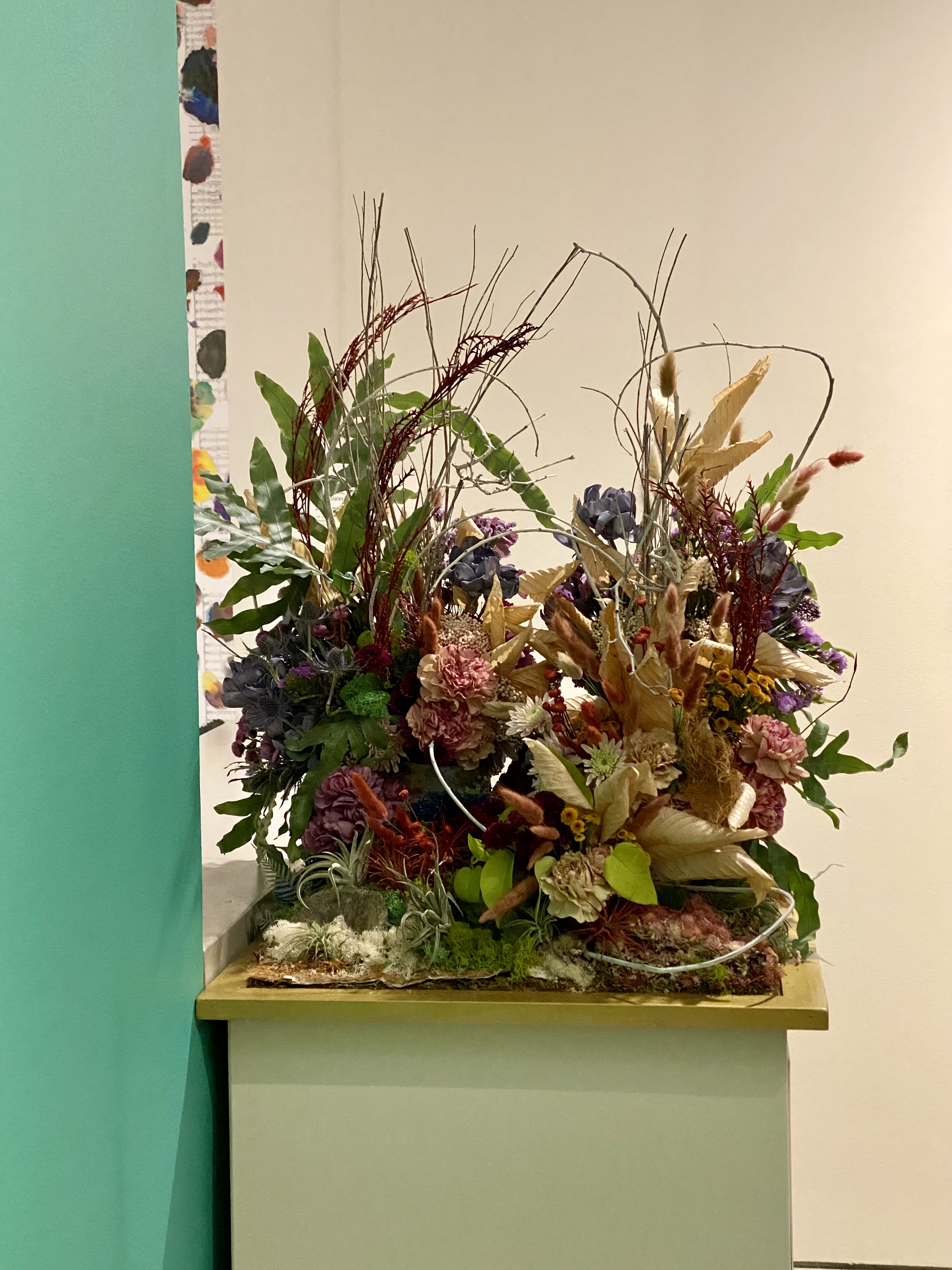
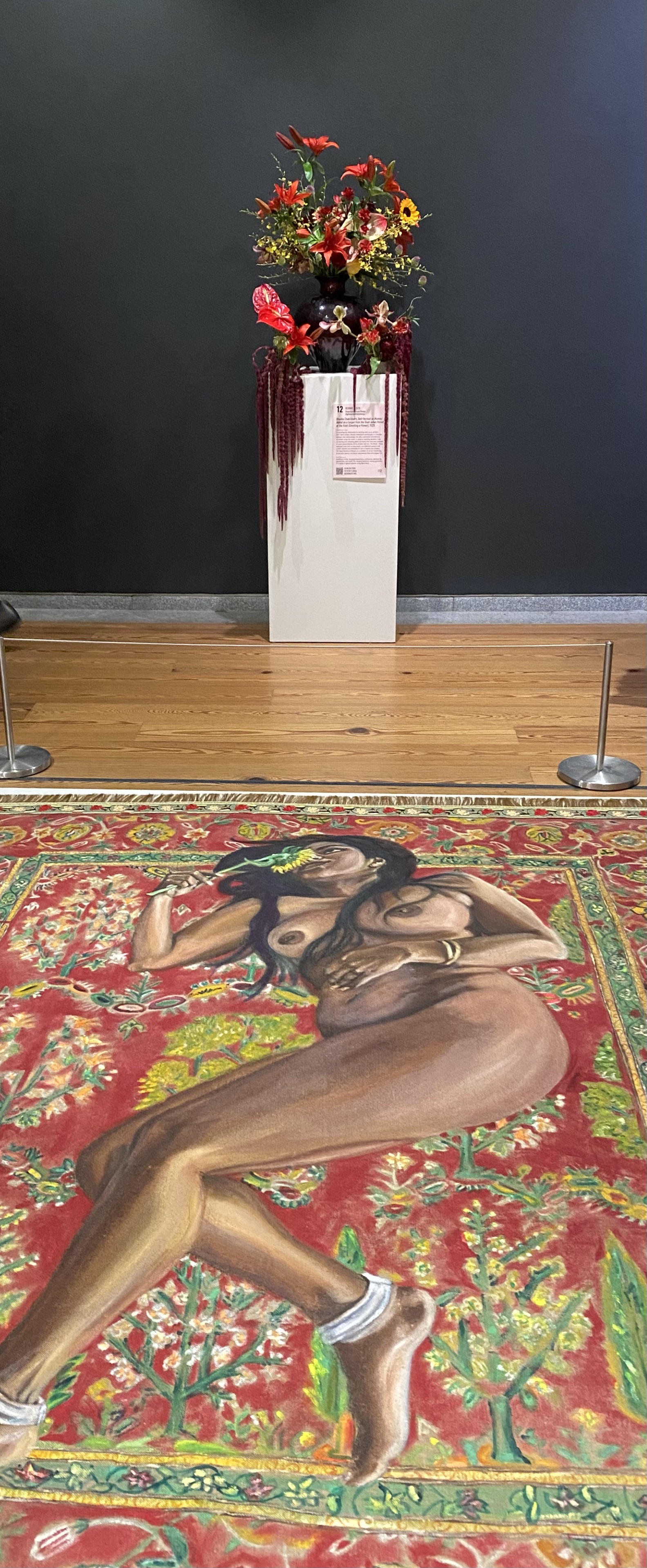
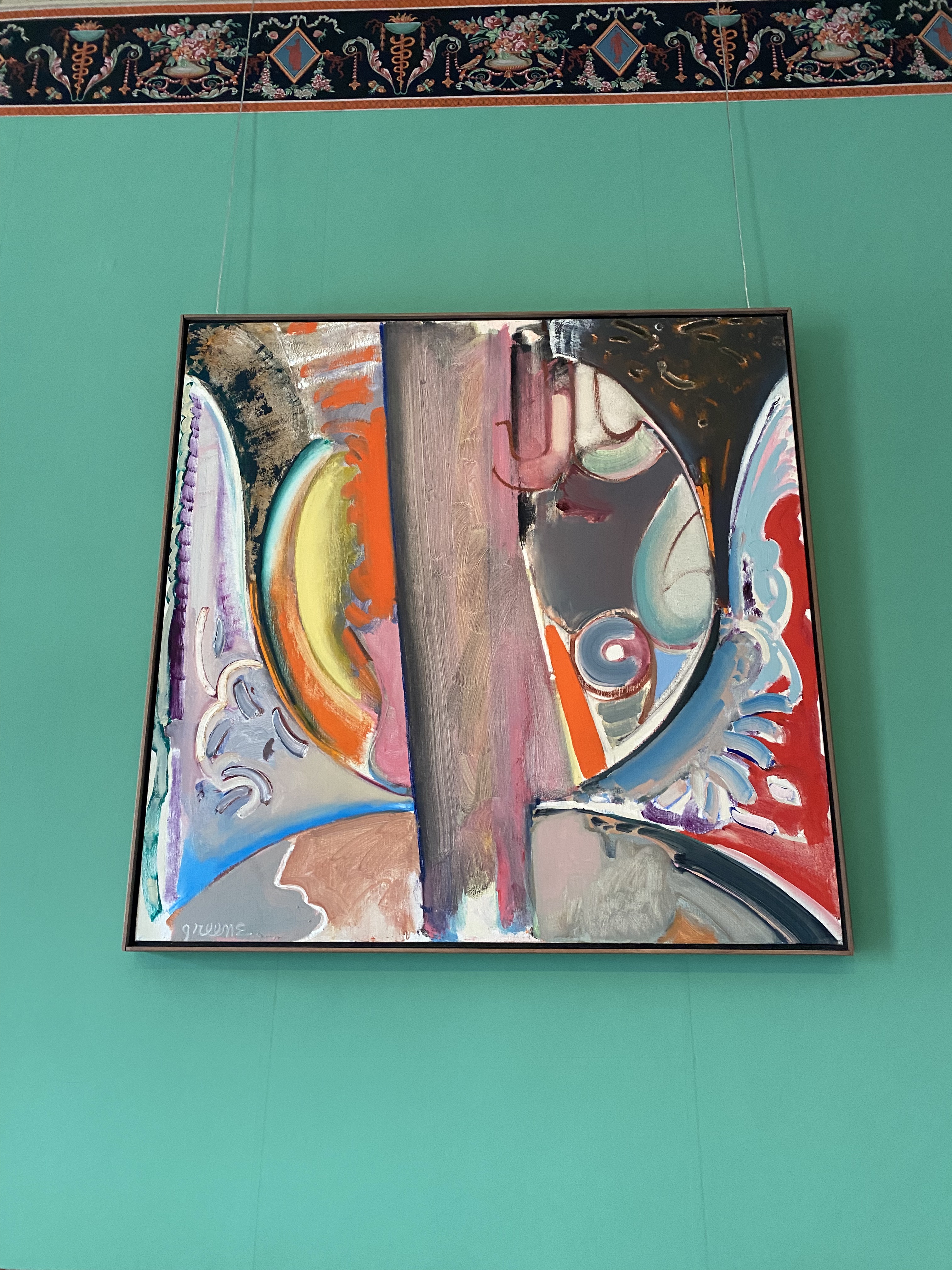
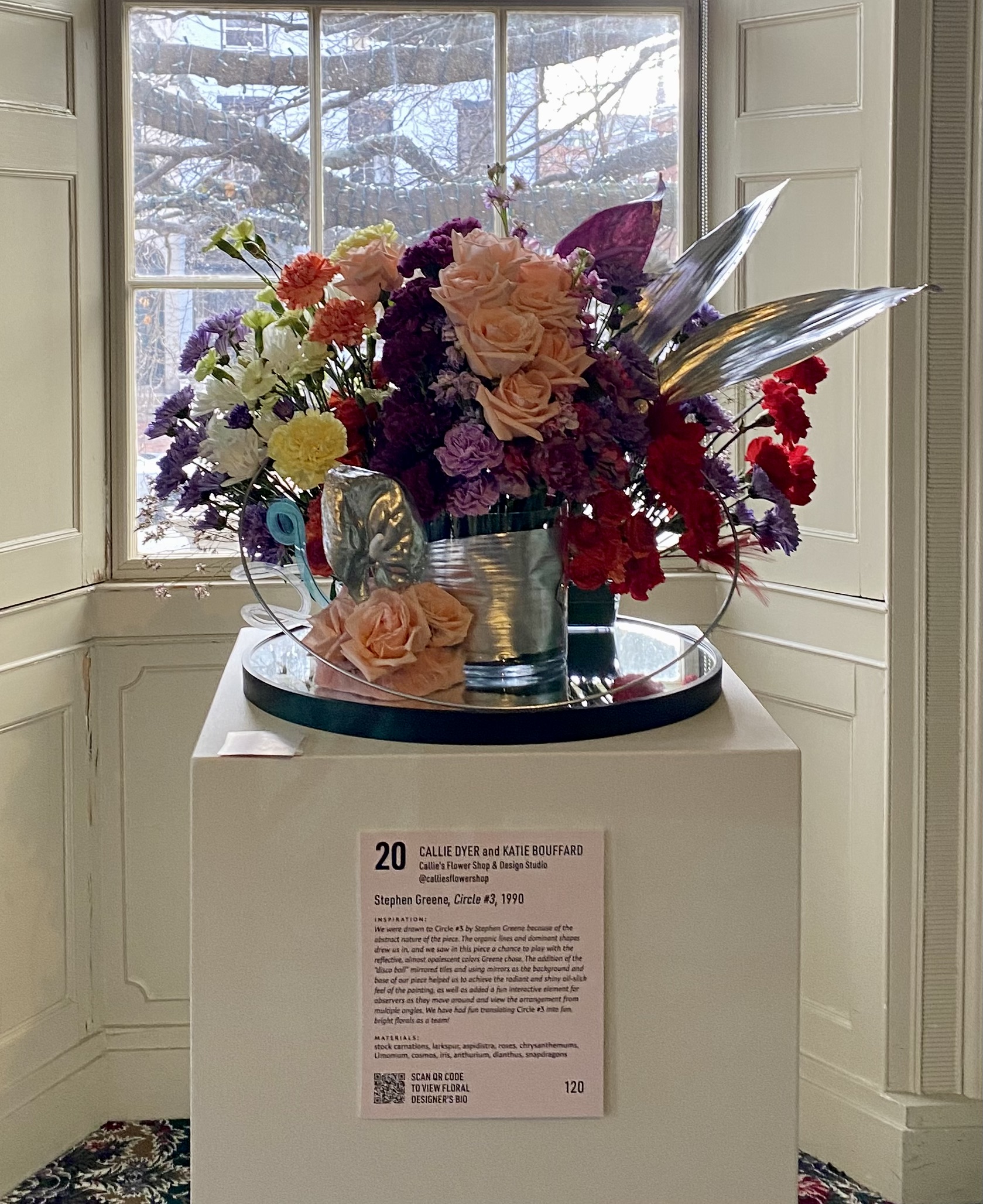
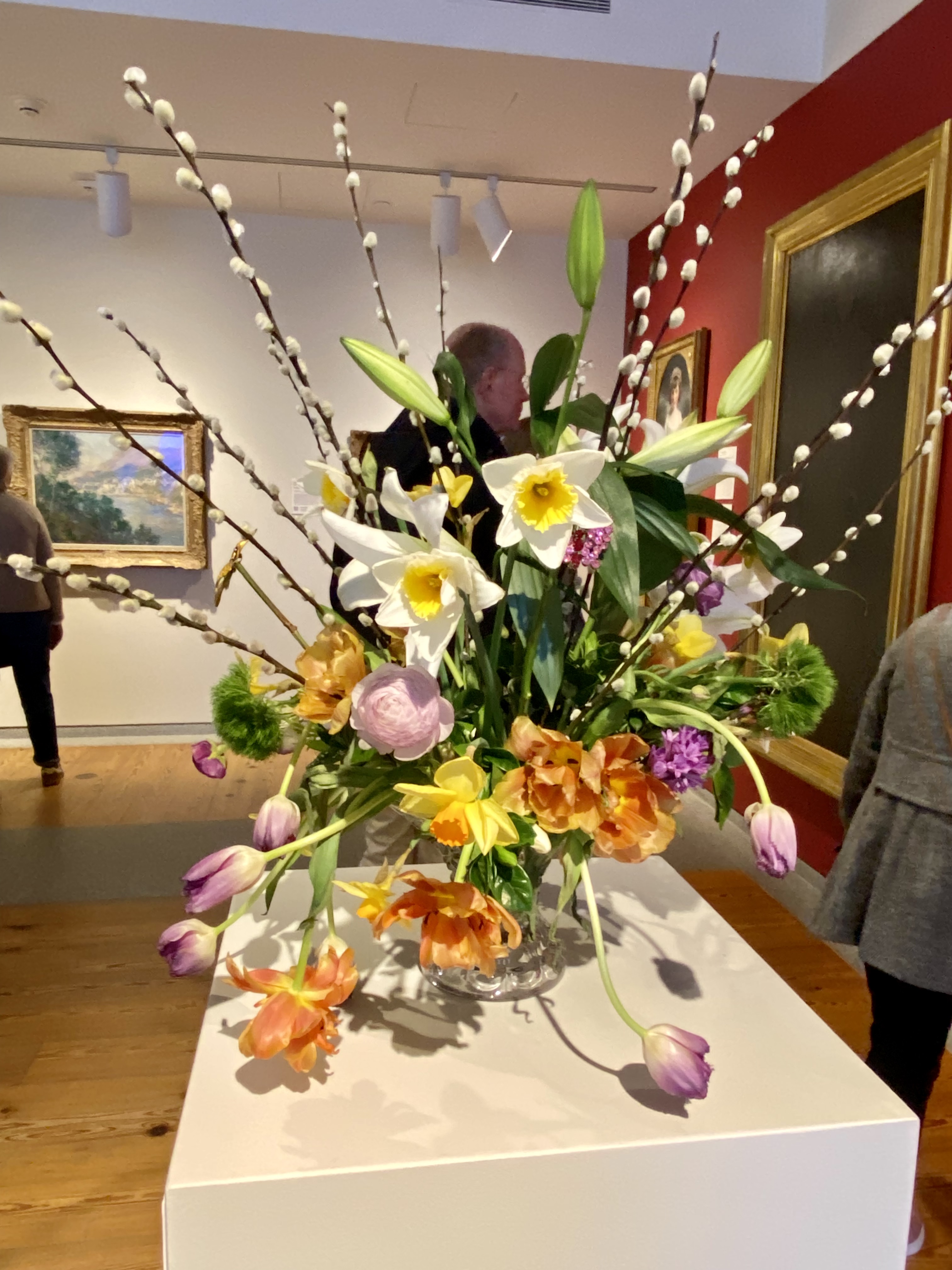
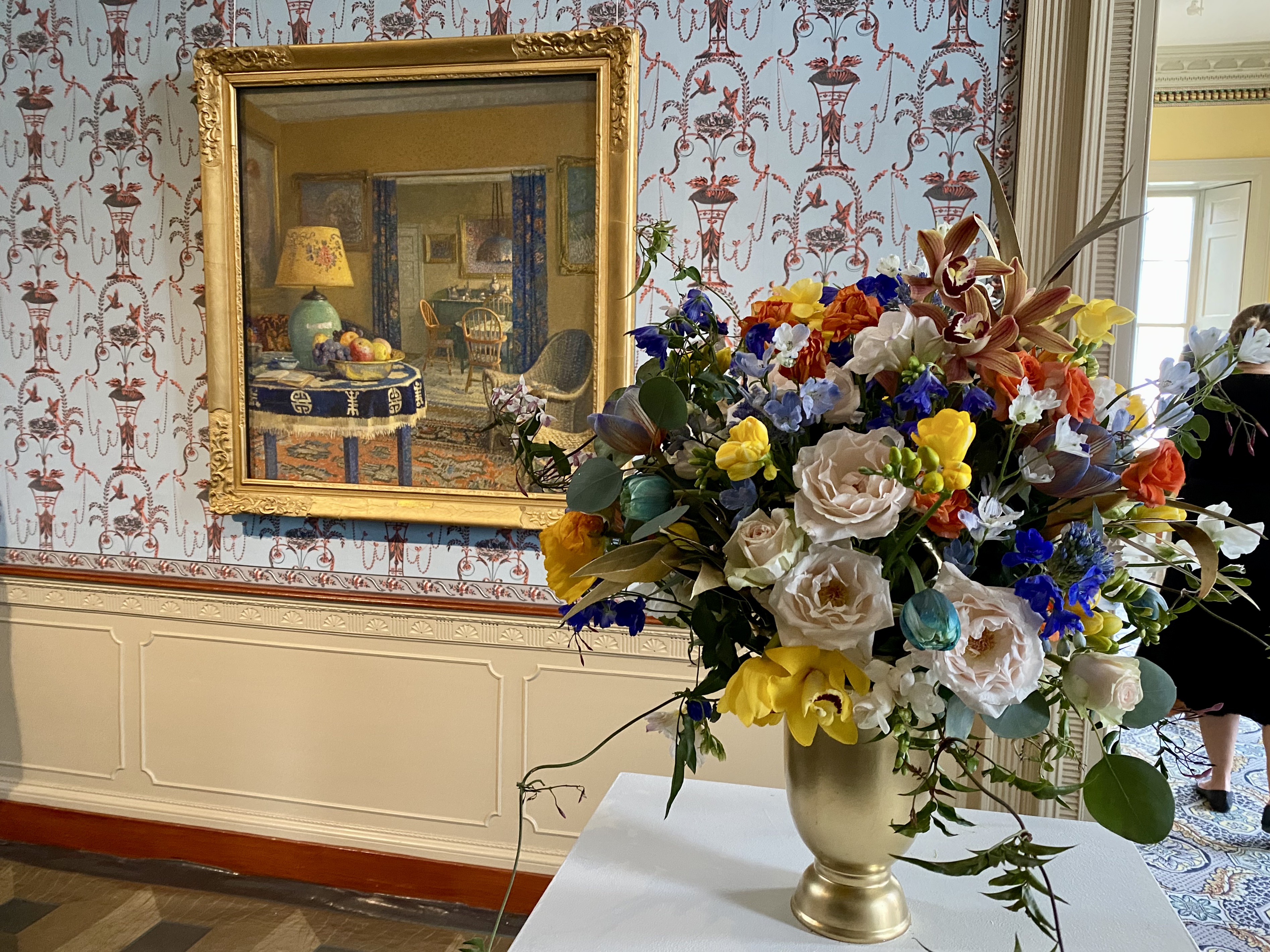
Every April the Portland Museum of Art dazzles spring-craving senses with “Art in Bloom”. They invite local florists to interpret works of art with floral designs. Each arrangement has a placard that lists the inspiring art work and includes a written statement from the florist. There’s also a list of materials used to create the piece: flowers, vines, bark, stone, etc. Ekphrastic floral design!
This past Friday afternoon while a solo violinist played in the background, I wandered through the museum with my friend and one of my daughters. I had debated attending, as doing anything on a Friday night feels challenging to me. After making plans a couple of weeks ago, I’d been looking forward to the event, but I’d also second guessed myself time and again. And again! The lure of an early evening at home is always strong. Still, I’d made it!
We meandered along with no particular plan, following the flow of our random footsteps, enjoying each piece as we came upon it. As we walked along, sometimes tendrils of scent would beckon us forward, and sometimes it was a splash of color. The hum of other voices filled the galleries, along with the sweet strains of music from the violinist.
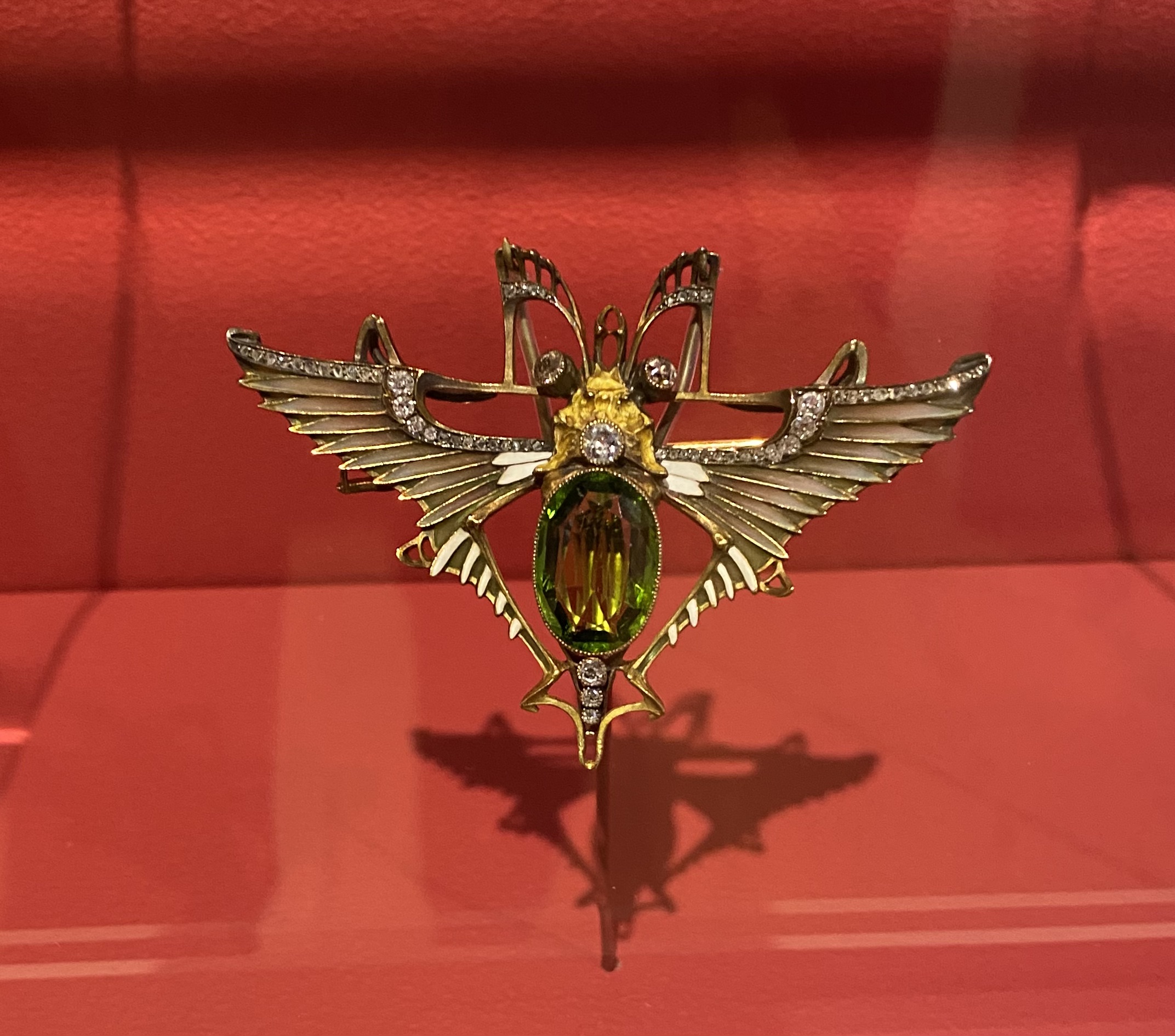
As we approached each piece, we’d examine it, trying to figure out from shape, color, materials, etc. what piece of art work inspired it. Sometimes it was quite obvious, and at other times it was tricky to determine. One piece was inspired by a brooch! It felt sort of like a treasure hunt, and I found myself stepping faster as I approached each gallery, wondering what we’d find there.
To be honest, even without special exhibits, museums can overwhelm me. There’s so much to see and absorb! Sometimes I began to wander through a bit superficially, floating on the sea of sensory input, enjoying myself, but not fully connecting with each piece. Sometimes I found myself distracted by watching the people, or listening in to snippets of conversation. As we moved along, at one point I overheard a woman exclaim:
“No, stop! Don’t educate me. I don’t want to be educated!”
I had to laugh, but I could actually relate to that sentiment. It was tempting to immerse myself in the pool of creative energy around me and simply revel in the energy and buzz of color, scent, sound, shape, etc.
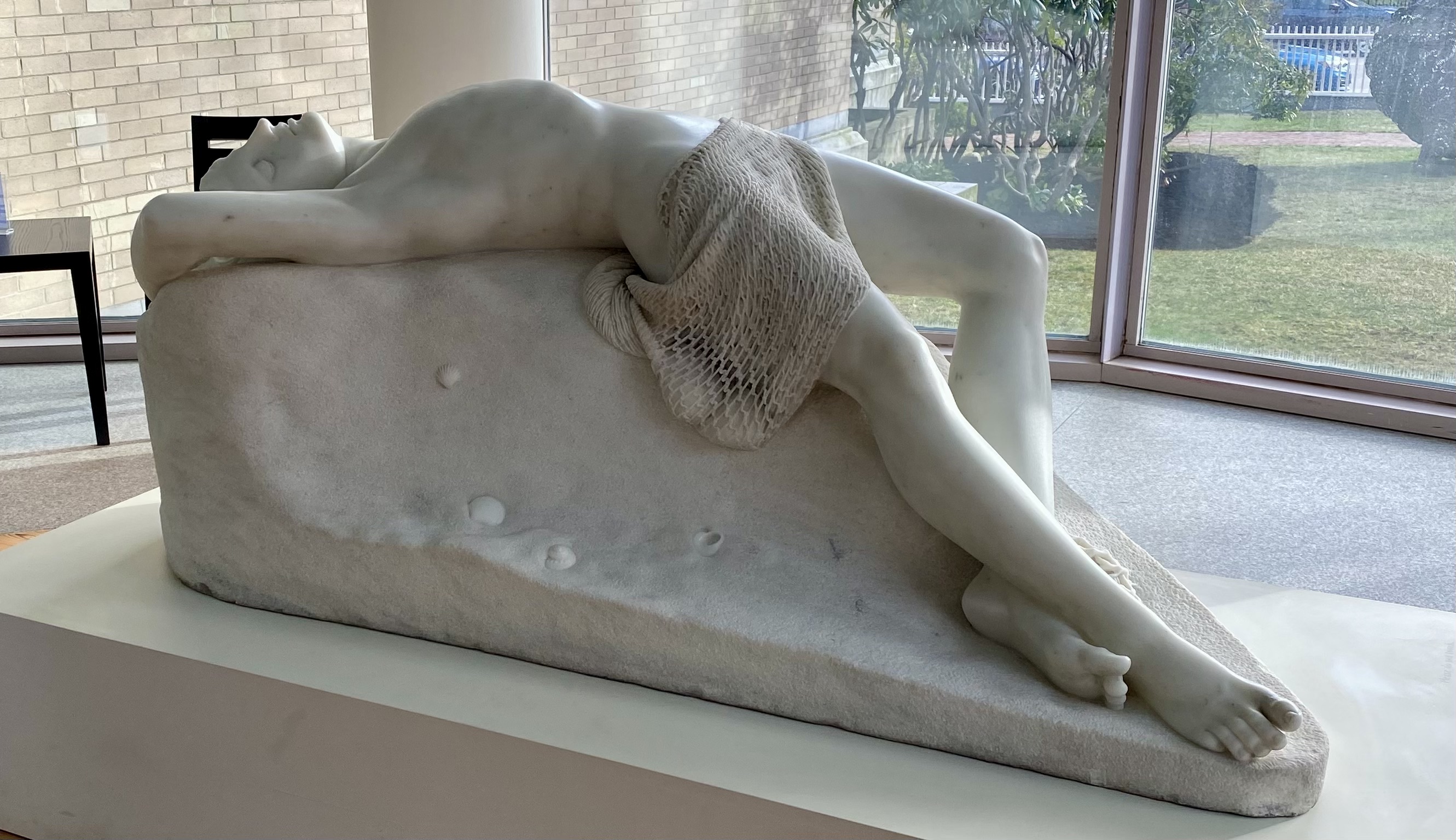
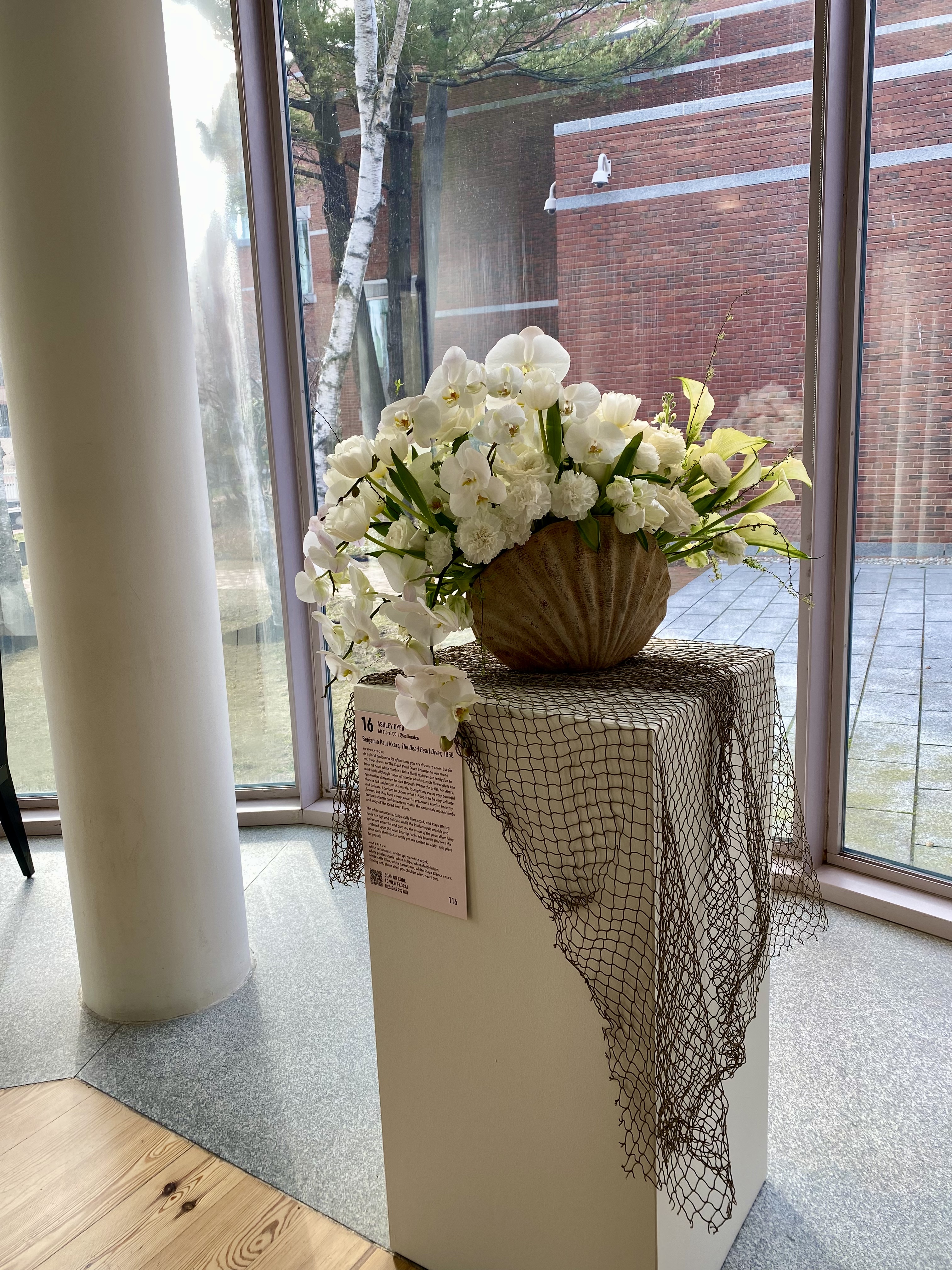
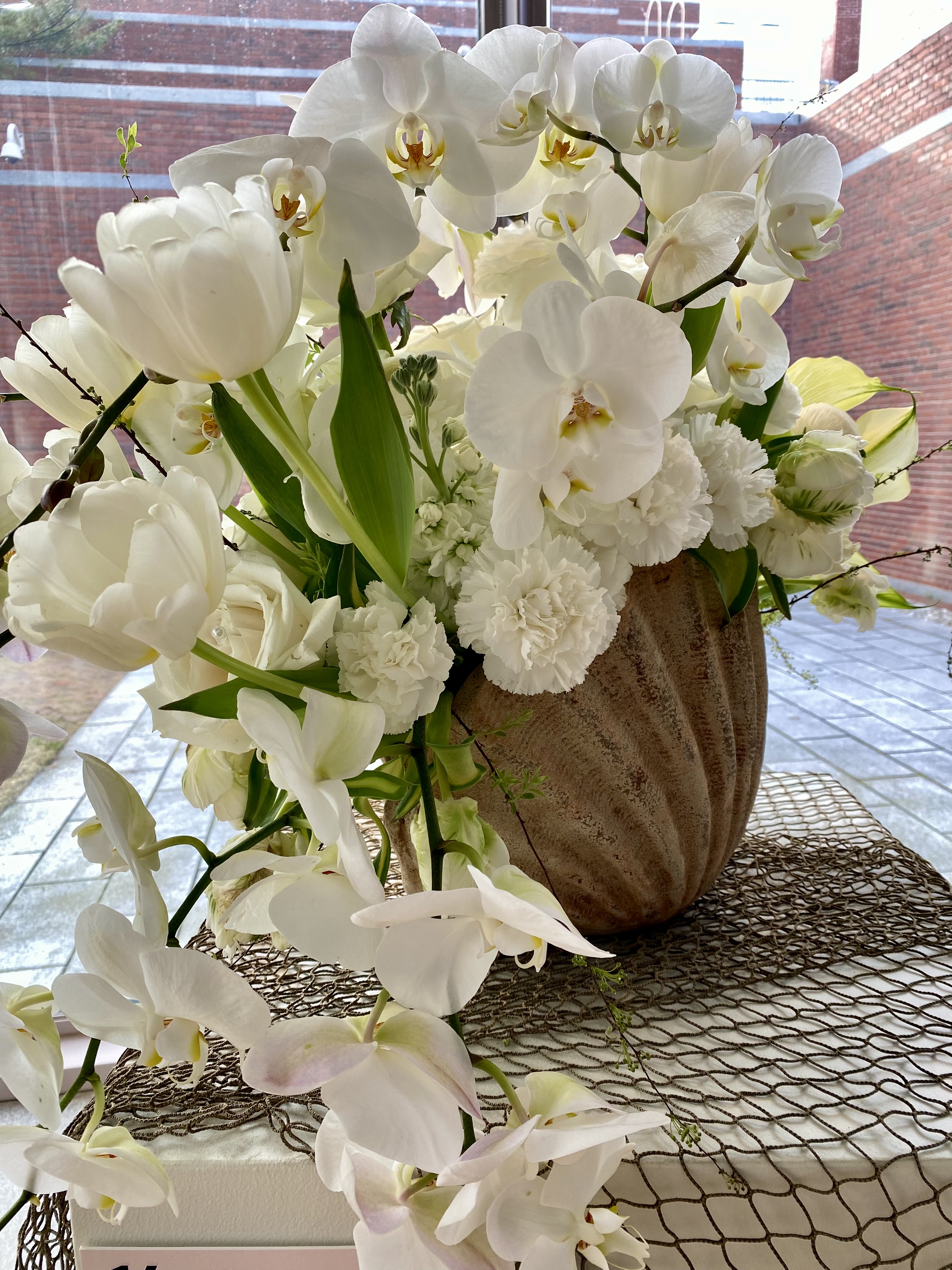
At one point, though, my daughter drew my attention to the artist’s statement for the sculpture below, The Dead Pearl Diver. Reading about the florist’s process drew me in to study the duo more carefully, and it quickly became one of my favorites. The florist talked about how they were drawn to the white marble and wanted to focus on playing with texture in this piece, rather than color– “…each flower gives the eye another dimension to look through.” They deliberately chose smooth larger blossoms to evoke the draped limbs of the pearl diver, and rougher petalled flowers to evoke the stone upon which he lies. The more I looked, the more I appreciated the nuance of this pairing.
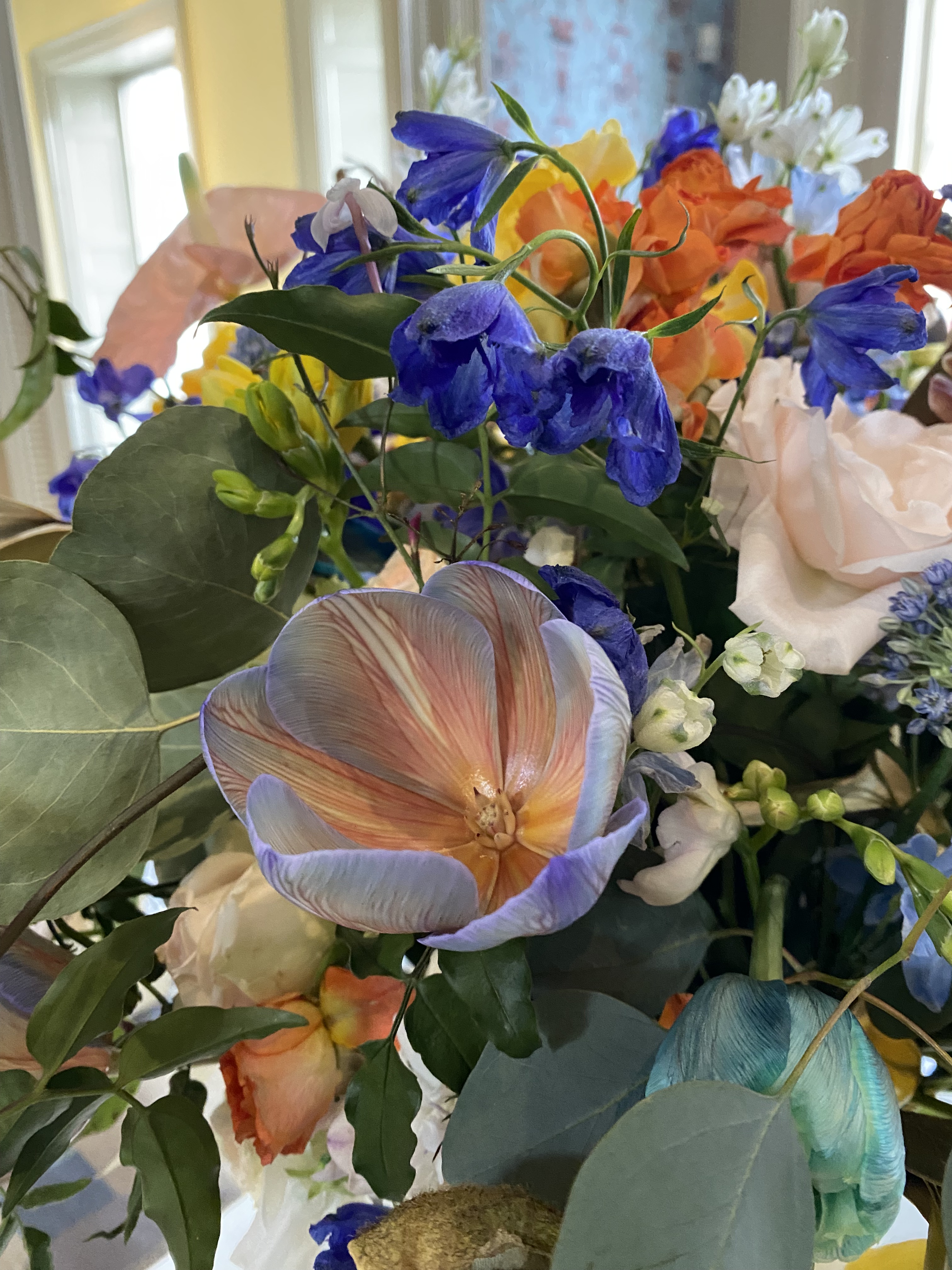
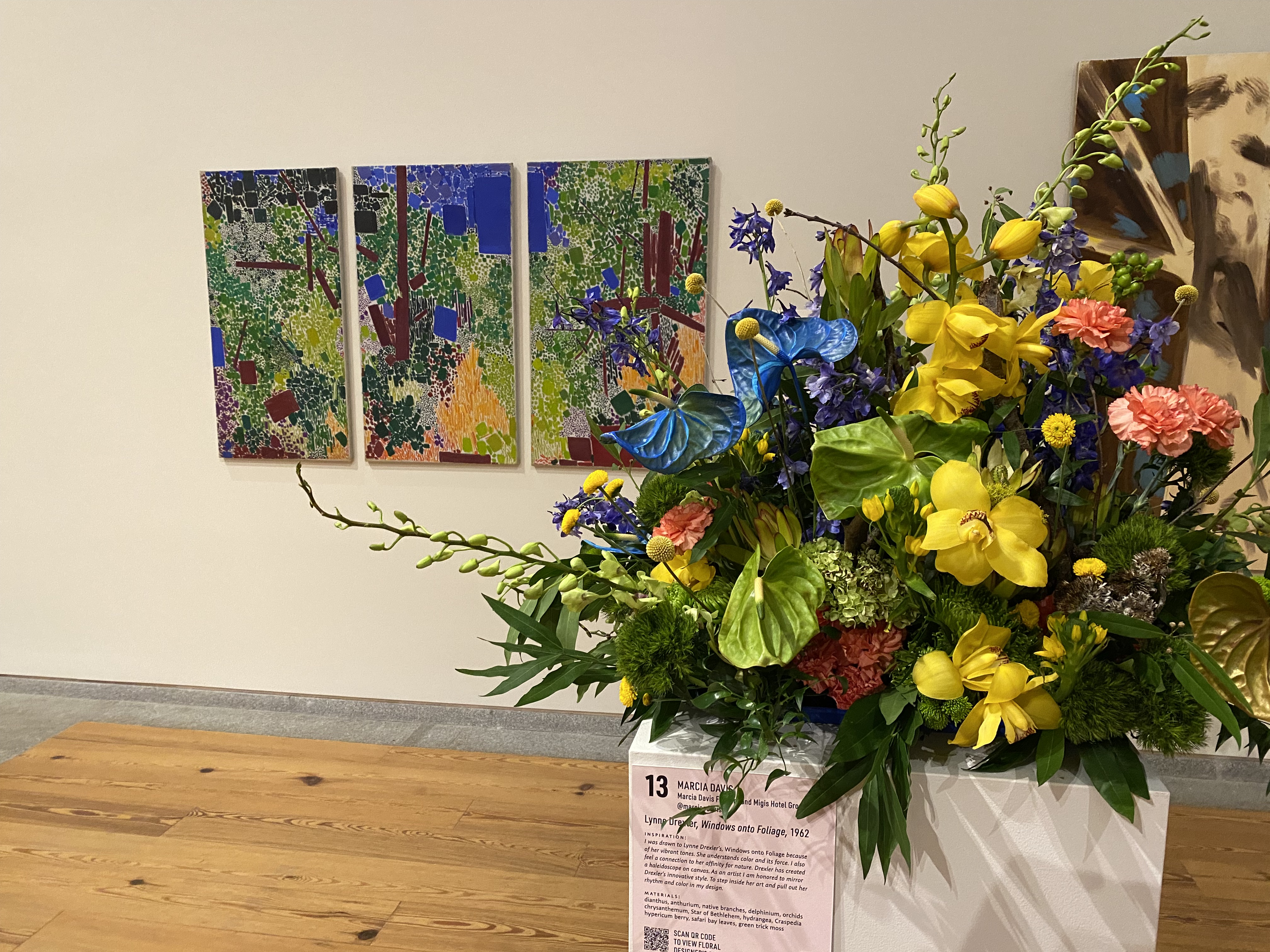
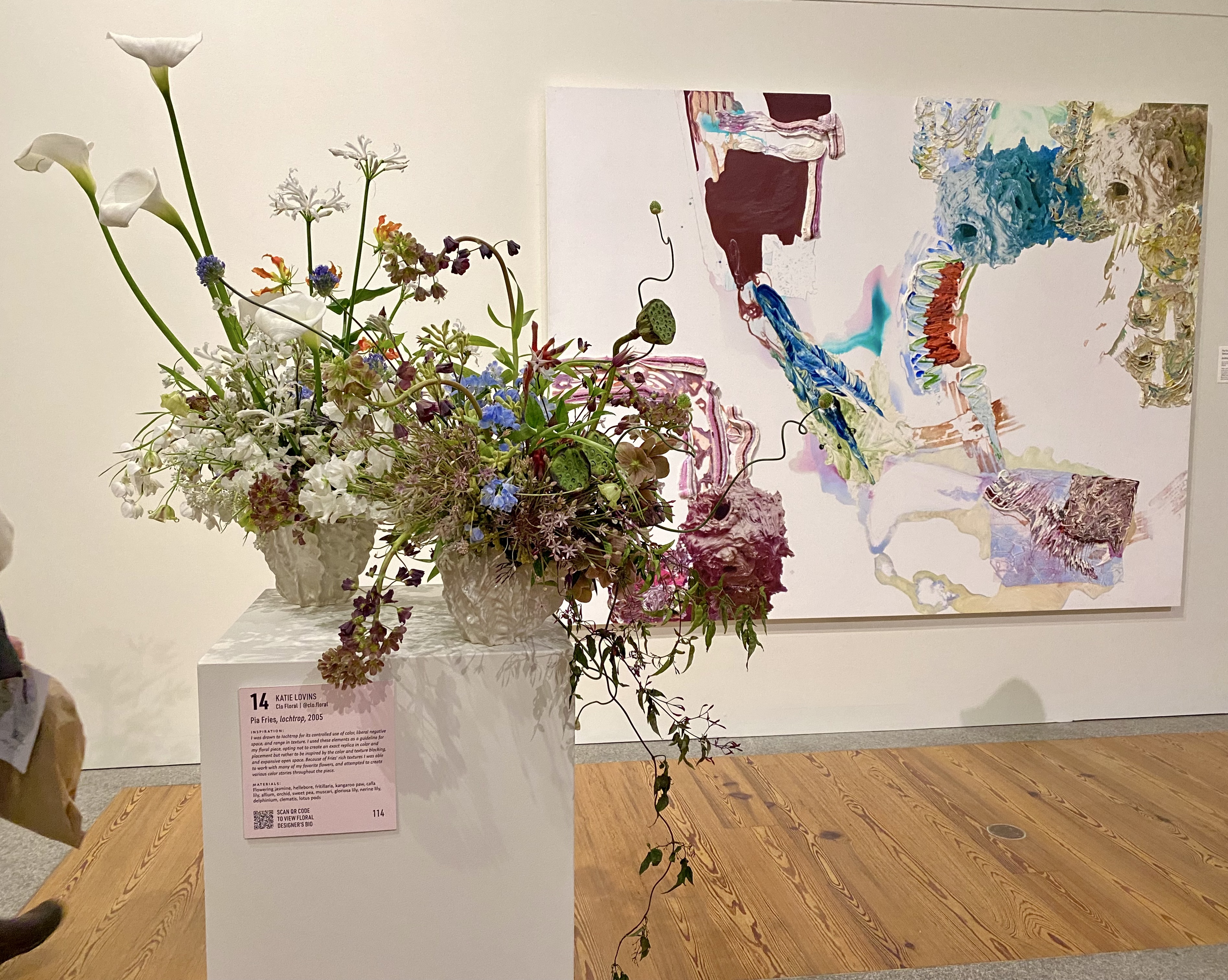
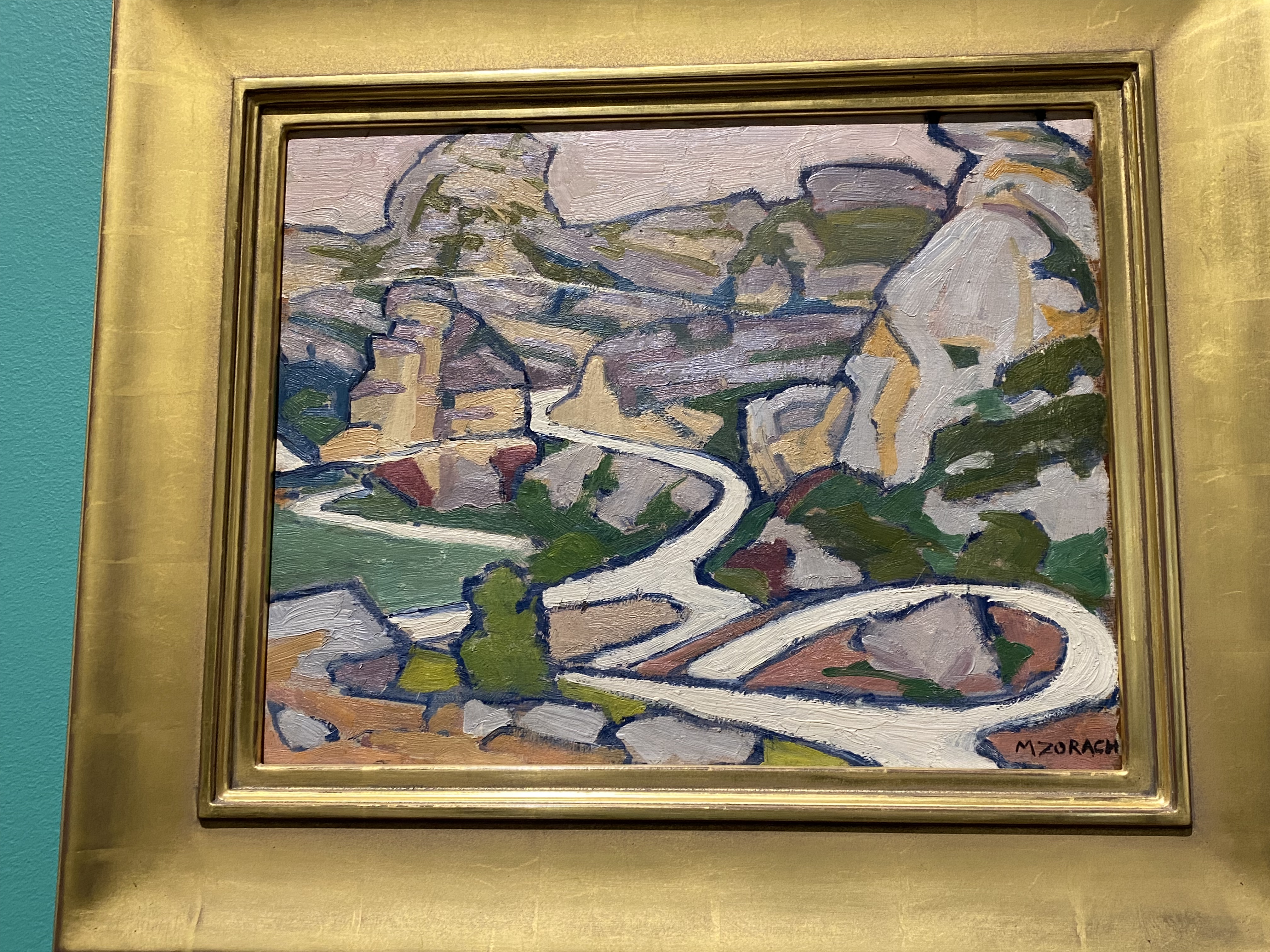
Here are a few more pairings for you to enjoy.
There were 20 pieces overall, scattered throughout the museum, and we’re pretty sure we saw all of them. It was a wonderful chance to escape the chilly April weather (more snow was forecast for Saturday morning!) and enjoy a hint of spring. The evening was a feast for the senses and an immersion in creativity. I’ve been thinking about it ever since, and I’m so glad I went!
My class tends to walk in casual straight line. I know they’re supposed to be super straight, (I see a few (or at least one) intense judgy looks). The problem is that I always think of a Georgia Heard poem I once read. The poem, titled Straight Line, begins like this: All the kindergarteners walk to recess and back in a perfectly straight line no words between them. They must stifle their small voices, their laughter, they must stop the little skip in their walk, they must not dance or hop or run or exclaim. They must line up at the water fountain straight, and in perfect form, like the brick wall behind them...
See what I mean? Ever since reading that poem, I’ve cared a little less about how straight my classroom line is. I more suggest a straight line than require one. I mean it’s a goal, because it’s technically a school expectation, but it’s not one I’m too fussed about. I do want the kids to be quiet, because there’s other learning going on around them, but I don’t require military precision in our formation.
Unfortunately, lately we have become a large, amorphous mass, taking up more than our fair amount of hallway space. Reminders haven’t been working. It was time to straighten up our act, so to speak.
So, as we headed out to recess one day last week, I reminded the class that our goal was to walk out to recess in a single file today and to be quiet while doing so. We lined up in the room, and after another reminder, we headed out of the room and into the hallway. The class was doing pretty well. I gave them a thumbs up. One student edged out of line.
“Get back in line, G.” shouted N, another one of my students, who consistently vies for my job. It was not even 10 am and this was the 178th time he’d redirected classmates. Or was it the 179th? It should be noted that he doesn’t mind attempting to redirect me, too, if he thinks I’ve gotten out of line.
I pushed repeat on my regular refrain, “N, you’re responsible for you.” Then in a bid to change things up and maybe add a bit of humor to the mix, added, “That’s my job. That’s why they pay me every two weeks.”
Several of the students looked up at me quizzically. Especially O. He opened his mouth to speak, but I put a finger to my lips as a silent reminder. We kept moving forward, down the hallway and around the corner. Our line was looking pretty good, and it was quiet, too!
“Wait!” O. suddenly burst out, a few steps later, apparently unable to do so any longer. “Do you pay to come here or do they pay you?”
I stopped in my tracks and looked down at him. My brain struggled to make sense of what he’d just said. Clearly, I needed to clarify. “O., are you asking if I pay to come to school and teach or if I get paid?”
O. looked at me earnestly and nodded. A few kids near him nodded, too.
After a speechless moment or two, I asked, “Well, what do you think?”
There was a pause and then C. spoke up. “I think you pay,” he said. A few other students nodded in agreement.
Replay that speechless moment or two.
“Well,” I finally said, as I started to move forward again, “This is my job, and most people get paid to do their jobs, right?”
“Yeah,” O. said somewhat doubtfully, “But you had to pay to apply, right?”
“No, actually I didn’t.”
They looked at me like they didn’t believe me, or like I was the confused one. We’d already clearly lost the battle on a silent walk, and to be honest, I’d contributed to the conversation as much as they had. As I gathered up my spinning thoughts (Are they that confused or do they think they’re that cute?), we continued moving forward.
We were out the door to recess before I could clear my head enough to determine if our line was straight or not. I’m pretty sure we were in a clump again, my straight line ambitions blown to the wind.
This all reminded me of an anecdote my colleague shared last year. She was drinking an iced coffee at recess duty. One of her second grade students approached. “What’s that?” he asked.
“It’s an iced coffee,” she answered. “I picked it up on the way to work.”
“Oh,” he said. Then, after a brief pause, he asked politely, “So, where do you work?”
If you’re looking for a laugh or a light post, this isn’t the place to find that. If you’re trying to avoid politics, you might want to skip this post. But I’m tired of watching what I say. The time for that is past. The reality is that it’s impossible to tear my mind away from the news, even when I try not to follow it. Even when I try to create, the darkness creeps in. So, this post may be disjointed, and it may be somewhat incoherent. But it feels like it reflects my reality right now, and even though I am hesitant to press publish…well, if you’re reading this, I guess I just went ahead and did it.
This morning I read Brad Montague’s post entitled “Empathy is Dangerous“. I thought it must be sarcastic, and I guess, in a sense, it was. But it was also deeply disturbing. Apparently, the latest trend is to suggest that there is danger in being empathetic. That empathy is being weaponized. What?!? When I looked into this a bit further, I saw quite a few 3-4 year old articles supporting the view that empathy is problematic. That it’s somehow dangerous to try to relate to how others experience the world. I really can’t wrap my head around this.
This reminded me of the Rodgers and Hammerstein song, “You’ve Got to Be Carefully Taught.” One of the verses goes like this: “You’ve got to be taught before it’s too late, Before you are six or seven or eight, To hate all the people your relatives hate— You’ve got to be carefully taught!”
Apparently some things haven’t changed much since this song was published in 1949.
In my Facebook feed today, there was a picture of Ruby Bridges. You know the name, right? She’s the woman who as a child was the first black to integrate a southern all-white school. She’s only 70 years old. How can that be? It feels like that should be ancient history. Clearly, oh so clearly, it isn’t.
I’m participating in a Facebook group poetry challenge this month. The theme is space and today’s prompt invited us to tell about “a thing or things you have, or know of, that used to be in a different space/place.” For some reason, I thought about a place where I once saw a fox, and wrote this poem:
A Waiting Space
Each time I pass the bend in the road where once I saw a fox and the fox saw me, I slow down to look
I’ve never seen it there again but I’m now tuned to its frequency so if I keep looking perhaps someday I will
A friend commented “This is what hope looks like.”
If you think of it in a different way, I suspect this is what despair looks like as well–the continual search for something that is no longer there.
These days, I’m looking at a dark space in our country’s history, where things have changed rapidly in a terrifying fashion. Or perhaps they haven’t changed so much as have been made more visible. I’m not sure which is more disturbing. The mandates and orders coming from the current government are ill-conceived and often illegal and unconstitutional. There is no empathy there. There is hatred. And so much greed.
I keep looking into the abyss of a space that once was, or at least seemed to be, a place where there was at lease some respect for the rule of law, for our constitution and for its careful balance of power.
This morning it struck me that I’m always hurrying. At least during the work week. This, no doubt, is not news to those around me. In fact, I can anticipate almost hearing the sound of my husband’s eyebrows shooting upward in shock when he reads this. Then, I expect to hear something along the lines of, “Wait! You’re kidding right? You really just realized this?!” (In fact, if you live within bordering towns, you might also hear him when he says this.)
At any rate, many years ago I started getting up very early before work so that I didn’t have to rush. It was quiet. I could write. I could get myself oriented to the coming day. I loved it!
But somehow this morning, it struck me that I’ve somehow managed to fill that part of my day up. It’s like a tetris screen full of blocks with no space for anything else to drop in.
I get up at 4:45 am, start the coffee and do the morning chores (feed the cats, stoke the wood stove, etc). Within 10-15 minutes of rolling out of bed, I’m sitting at my desk. I always start my day by writing in my notebook for 20-30 minutes or so. I’m often noodling around with writing challenges or prompts, too. Then, I try to read and comment on others’ writing. I respond to comments on my blog. I check my e-mails. Then there are a few beloved word games (Wordle, Connections and Spelling Bee) that suck up a few minutes. (I count that as time dedicated to slowing down mental decay.) I shower and get dressed. Then, while I’m eating breakfast, I read a chapter of whatever book I’ve designated as a morning book. (Right now it’s Margaret Renkl’s The Comfort of Crows: A Backyard Year which is fabulous!) Finally, I’m out the door by about 6:15 or 6:30 am, typically filling the bird feeders on my way to the car, and zipping off to work.
I cherish my morning time, and love all that I do during that time, but it really has become one big long rush. I’m stunned that I honestly hadn’t realized that until today.
So now I’m left with a lot questions: Is there any point in getting up at 4:45 am if it just means I’ll be rushing around for the next 11-12 hours? Do I want to change things? If so, what am I willing to change? I know I can’t get up any earlier, so how can I regain that feeling of morning spaciousness? That freedom of uncluttered time? What can shift or move?
I have a few thoughts, but for now, I’m still processing my realization and pondering…
“Should I drive south and look for snowy owls?” I wondered.
It was tempting. The forecast was for cold and clear weather, and the possibility of seeing snowy owls is a time-limited opportunity here. There was no guarantee that I’d see one if I went out, but on the other hand, I definitely wouldn’t if I didn’t go looking.
I glanced around me at my desk, my notebook and pen. I heard the coffee pot burbling and felt the warmth of the wood stove gently pulsing against my back. In a little while, the sun would rise and the birds would be visiting. The idea of a lazy, lingering Sunday morning at home tugged at me. I love the quiet of the house when I’m the only one awake and when all deadlines are distant enough to ignore for at least a little while.
Still, I was torn.
I had a little time before I had to decide, so I opted to write for a bit before making up my mind. I opened up the most recent prompt from the New Year’s Poetry Challenge from MOST (the Modesto Stanislaus Poetry Center). Much to my surprise, it was entitled “A Chance Encounter.”
I put down my pen. “Well, that’s that,” I said aloud. It was a definitive sign, or at least I interpreted it as one: I needed to get out there and look for a snowy owl! I didn’t even read any further. I took another sip of coffee, shut my notebook, and packed up my things. Within about 10 minutes, I was on the road and on the hunt for snowy owls.
Here’s how the morning unfolded:
I did not see a snowy owl, nor did I return to write anything in response to the prompt, but I enjoyed a thoroughly gorgeous morning on the beach and at the marsh.
A few Saturday mornings ago, I was in my regular spot, writing at my desk. I had every intention of remaining there. I had a prompt to respond to and a list of other creative and mundane “to do’s” to accomplish. I was content, but also determined to be on task and focused.
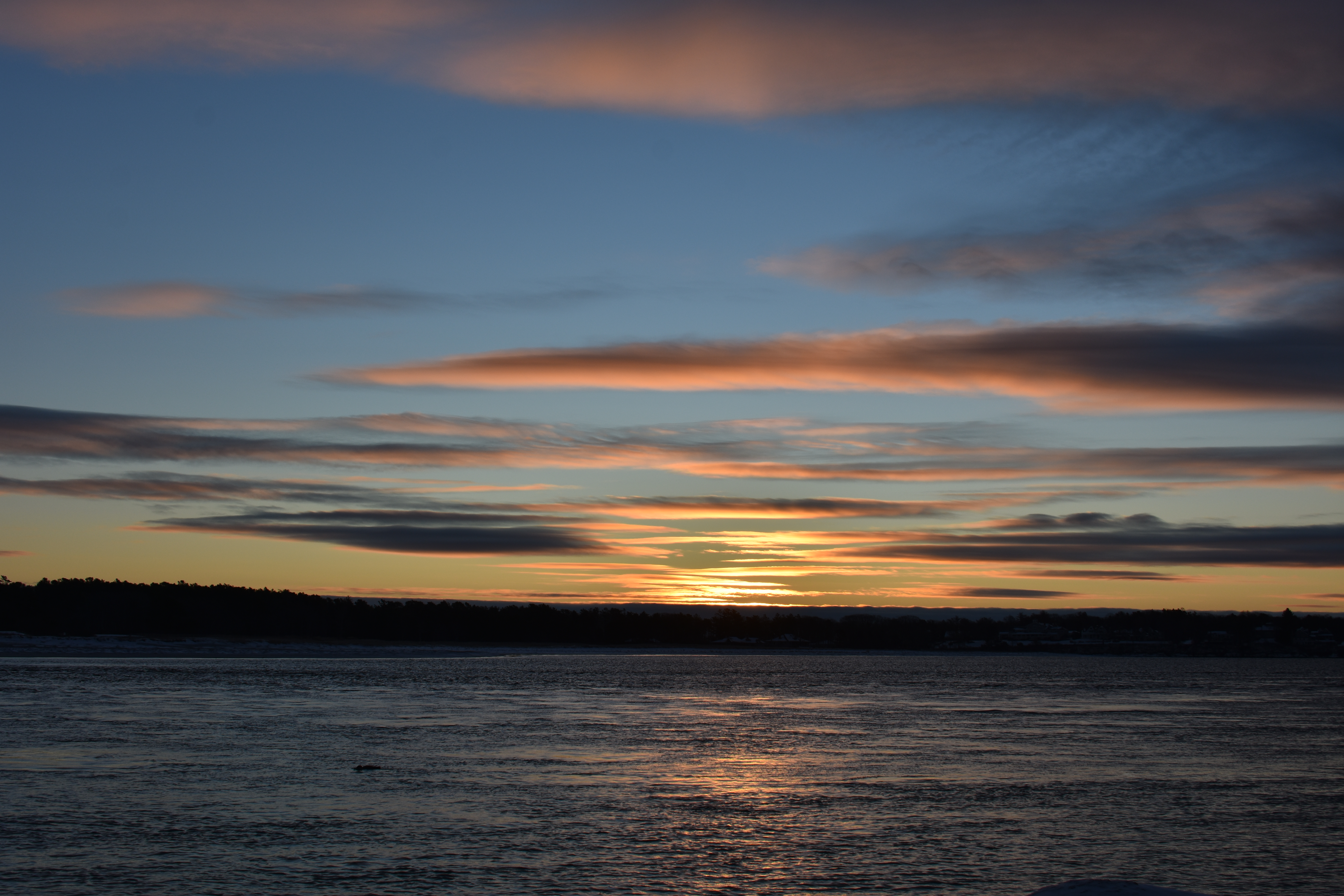
Then I glanced outside and saw this sky:
It takes a much stronger woman than I am to resist that lure!
Mere minutes later, I was hastily dressed and in my car driving down to the waterfront. I arrived there to soft light and a flock of seagulls.
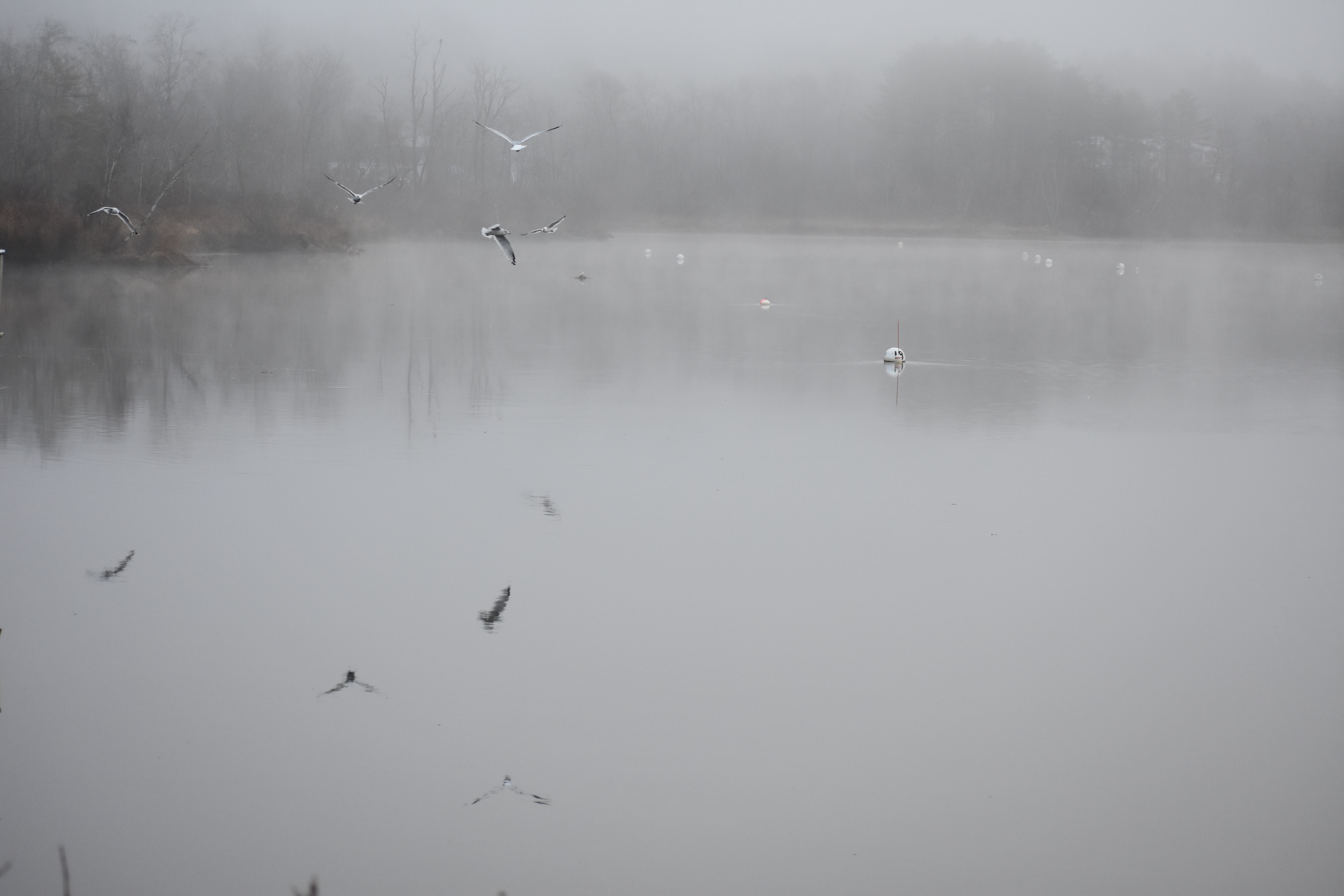
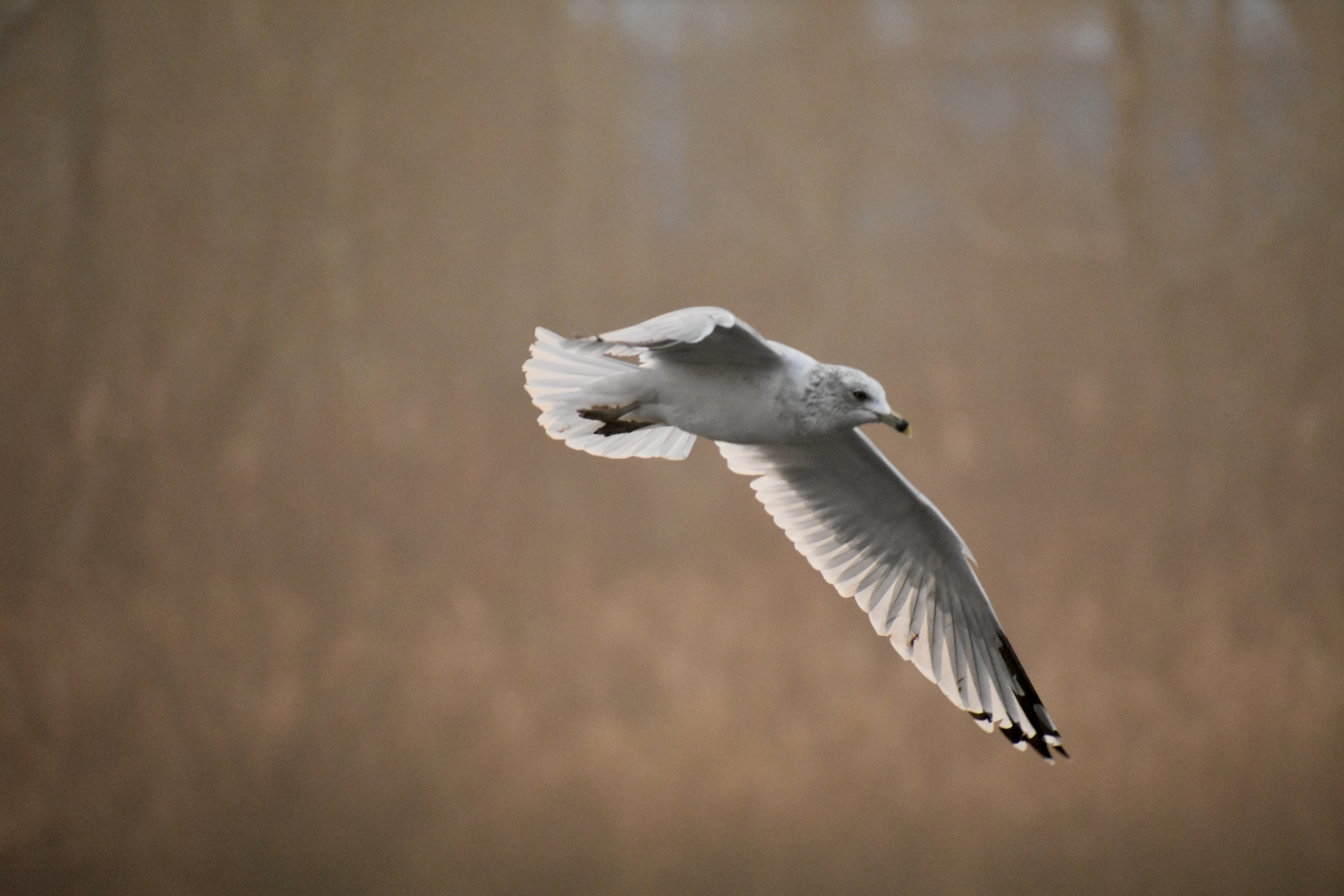
I stood at the shoreline and watched the gulls swoop and dive. Their white and grey bodies shone against the changing light and mist and fog. It was mesmerizing.
I watched them while my fingers grew cold, then colder and then began to ache. They flew in large circles or ovals over the water, their dark shadows mirroring them in the river, like phantom dance partners.
Often gulls can be quite loud. On this morning they were mostly silent, adding to the surreal atmosphere. Occasionally, one of them called — a sudden thrust of sound partially muted by the fog and mist. Echoing off and away across the river.
After a while, I wandered further along the shore. Raindrops from the previous day’s storm lined branches. Many were oddly shaped and half-frozen, etched with crystal. Caught in a liminal zone between water and ice. A spider web strand had transformed into a showcase for glowing orbs, neatly arranged along its length. Each one a complete, dazzling marvel.
Glancing upriver, I saw more gulls and a horizon layered with fog-softened grades of water, tree and sky.
Somehow, I’ve fallen out of the habit of visiting the local waterfront. I’ve been enjoying lazy mornings at home instead, or the occasional trek down to the marsh. Watching the gulls’ aerial ballet on this morning, seeing the light shift, and noticing the beauty that surrounded me, I felt a shift, a gentle click and an opening. It was as if a key had turned in some internal lock.
This morning as I walked out to the car, the horizon was aglow, lighting up the dark. It was lovely, but it didn’t stir me as it usually would. Its impact felt muted. Beauty is having a tough time finding its way inward these days. There’s so much to slog through first, I guess. This feeling has been hard to shake, and honestly, I’m not even sure that I should shake it.
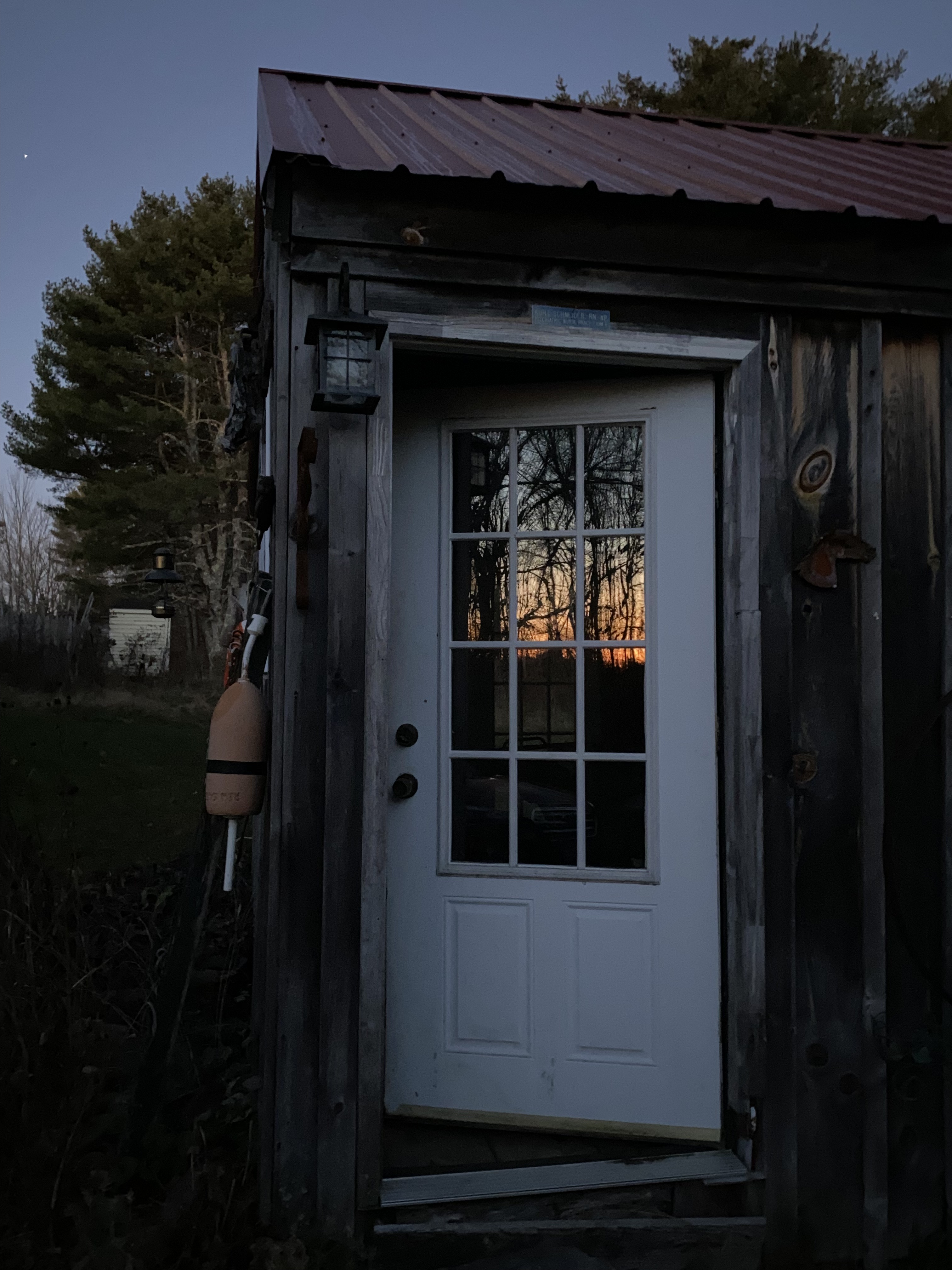
As I moved forward, there was an unexpected flash of color in the doorway of our free-standing “office”. I took a small detour to check it out, and the sudden incongruity of the reflection pleased me. I snapped a photo with my phone.
As I stood there, I suddenly heard rustling and crunching out beyond the zone of visible light.
“What’s that?”
It was probably deer. Probably. Most days I would have imagined bears, coyotes and/or a roaming raving maniac, and would have stepped lively back into the light and then scampered into my car. But this morning I didn’t care. These days I vacillate between deadened and defiant. I’m not sure which was dominant at this point, but I took another step into the dark, gazing about me. The noises got louder, seemingly closer. Whatever was out there clearly wasn’t worried by my presence. I was still pretty sure it was deer. My eyes scanned the field in the dim light. I could see nothing, other than the dim shadows of trees and the hint of high weeds in the fields. The noises continued. Finally, the awareness of time passing pulled me back toward to my car.
As I drove down the driveway, I kept my eyes peeled. I drove a bit slower. Glanced to the left. Glanced to the right. And then, sure enough, there it was, barely visible in the dim light. A small deer standing in the front yard. I’m sure there were probably more of them, based on all the noise I’d heard, but this was the only one I saw. And yes, deer are plentiful in Maine. And yes, I see them frequently. But still, this sighting somehow felt like a small victory. A small light in the dark.
At the end of our driveway, I turned to head out toward the main road. As I pulled onto Main Street, another flash of color caught my eye. At some point during the last 24 hours, our neighbor had carefully wound brightly colored lights around each segment of a tree. A bold rainbow tree now decorated their side yard.
It’s been hard to find my footing after the events of last week. The best analogy I have read is Anne Lamott’s in which she says: “If you are anything like me, you can barely remember having ever felt so stunned, and doomed, except when someone very close to you died, or divorced you, or the godawful biopsy results came back.
It’s a little as if the godawful biopsy results came back, and 73 million people cheered and gloated.“
In the aftermath, I’ve been reading a lot, writing a little, lamenting and brooding. And trying to find a way forward. What does one do? I don’t know, and neither do most of my go-to gurus. But I’ve been gathering ideas from different places.
One powerful piece of advice that always offers a way forward, comes from the recovery community: “Just do the next right thing,” they say. Apparently, this originated with Carl Jung who wrote, “And so the best we can do is walk step by next intuitively right step…”
Of course, determining what that step is can be a bit trickier.
This week Katherine May suggested that taking time to pause and tap into our resources is critical at this time. She defined resources as “something that we can draw on when we need to; or, better still, something that we can turn into a habit that becomes protective of our sanity, part of our steady functioning”. When I followed her prompts to consider my own resources, writing and writing communities were near the top, along with nature and photography.
And then Mary Lee Hahn of A(nother) Year of Reading put out a call to write haiku for healing (#haikuforhealing).
I’m weaving all these influences together, quite haphazardly, but it does seem like they create a path of sorts to follow. I remain uncertain what the next right thing is, but at least I’ll be doing something. As I ponder the magnitude of this moment and what it says about our country, I want, no need, to celebrate beauty, connect with community and dwell in gratitude. So, each day I’m writing, often haiku, trying to kindle some light in these dark times. It feels a bit like lighting a candle outside during a brutal gale…but I guess it’s something:
rainpatter slows…stops patches of blue sky appear soon there will be sun
The day looms before me. I can feel myself pulling away from it. Wanting to hide. Seeking anywhere to linger in a bubble of ignorance. I try to ground myself to this moment. Listen to the slight trickle of water in the aquarium. Hear the faint tick-tick-tick of the clock in the kitchen. Outside it’s still dark. The day awaits. There’s nothing I can do right now.
Later, I’ll go to school for a half day of PD (professional development). No one’s mind will be on what we’re doing. Then I will vote. I will not tune in to the media today. Why crank up the anxiety volume? I’m not even sure I’ll check the news on Wednesday morning. I don’t expect that things will have been decided yet, and I’m so concerned about what might be coming. I can feel anxiety growing like a toxic algae bloom, deadly and smothering.
So, again, I breathe in and feel my lungs expand with air. I listen to the water trickle in the aquarium. I hear the far off hum of tires on the road. Others have begun their days. I’m trying to remember that we are all linked, but I feel the embers of anger stirring beneath my anxiety. How have we gotten to this place?
A faint tapping begins on the windows. I can hear raindrops hitting the fallen leaves. The water still trickles. The clock still ticks. No light has yet appeared on the horizon.
The day still looms, but now I’m writing. Soon, I’ll post these words to share. I’ll read other posts. Comment. Connect.