I stumbled upon this poem recently, and I have come back to it again and again. Jane Kenyon sure knew how to say it.
In the Nursing Home by Jane Kenyon
“She is like a horse grazing a hill pasture that someone makes smaller by coming every night to pull the fences in and in.
She has stopped running wide loops, stopped even the tight circles.” click here for the rest of the poem.
The Poetry Friday Roundup is hosted this week by Carol Varsalona at her blog . She’s unveiling her most recent autumn gallery, an extravaganza of fall-inspired poetry and imagery. Be sure to stop by and check it out.
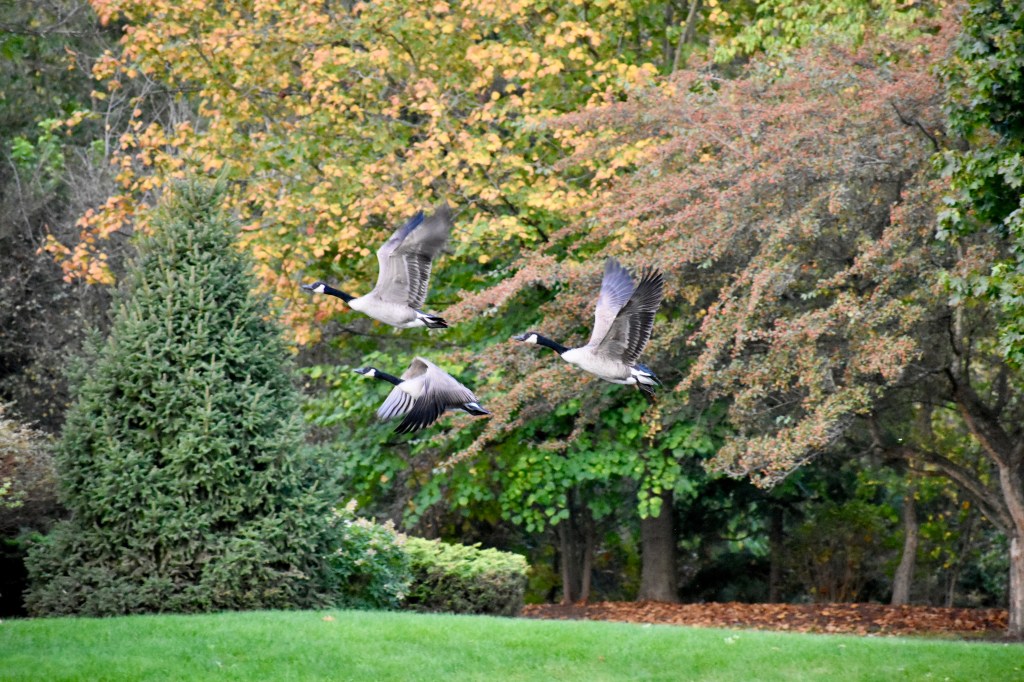
I heard the geese before I saw them, and the sound drew me across the room to the french doors. I looked into the sky over the pond and spotted them immediately. They flew low, a disorganized cluster, their calls loud and mournful. My mind reached for lines from a favorite poem, pulling up only a few of them.
“Something told the wild geese it was time to fly. Summer sun was on their wings, Winter in their cry.”
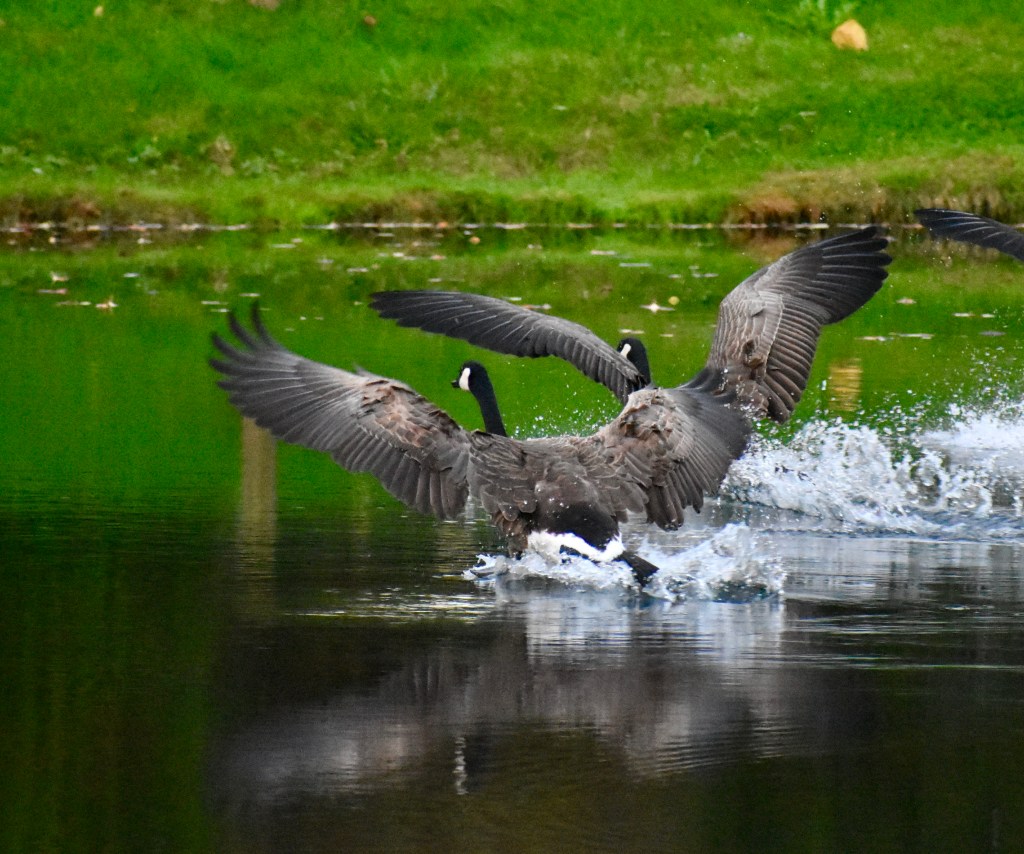
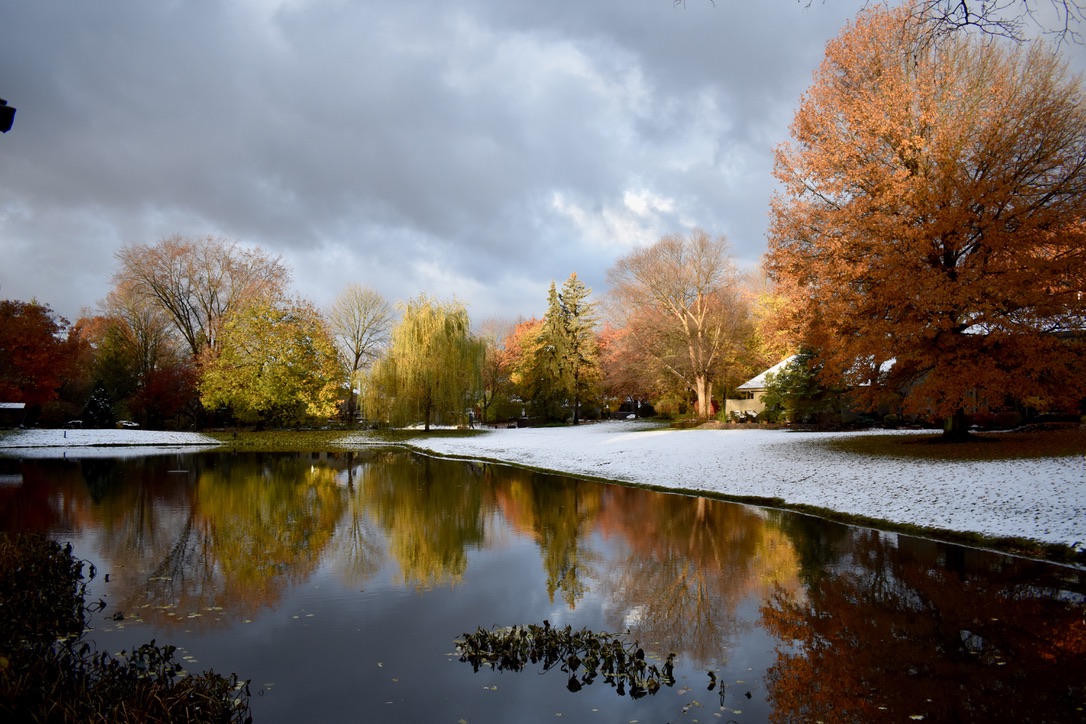
As I watched, to my delight, the geese wheeled and turned, and then headed back toward the pond. Feet first, wings spread wide, they touched down in the water with great splashes. About a dozen of them paddled to shore and clambered up onto the snow-covered grass. I leaned against the cool glass, watching them. Every so often one of them would rise up and flap its wings, then settle back down. They ambled about socially. I wondered if they were cold. How long had they been traveling? Where were they bound? I thought idly that I could simply watch them all day long. Their presence soothed me.
I thought about my visit here three or four weeks ago. Then temperatures had been in the high 70s and low 80s and I’d been picking late-blooming flowers in my father’s garden. The geese had visited during that time as well, only a few, but still I’d enjoyed watching them until they flew away, their calls so evocative– Time is passing. Winter is coming.
So much had changed since then.
As I watched from the window, a neighbor from across the pond strode down the lawn, newspaper in hand, gesticulating at the birds.
Oh, no.
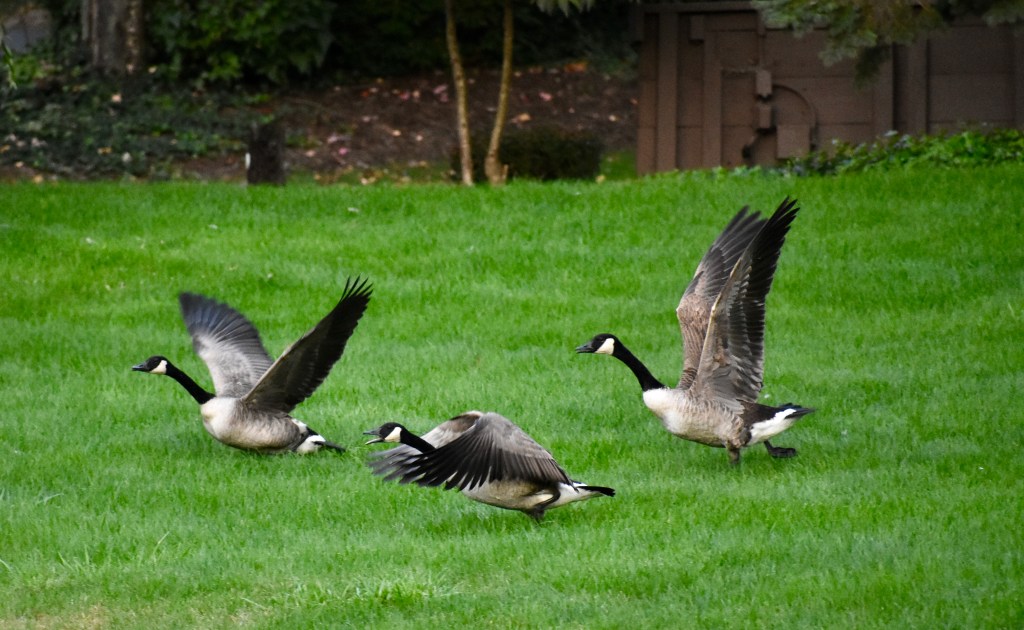
I straightened at the door, aware there really wasn’t anything I could do. I was a visitor in this neighborhood and her message was loud and clear. She flapped her arms vigorously and the geese heeded the warning. In a flutter of feathers and scrambling feet, they scrabbled into the pond. Within moments they had taken flight and moved out of sight. So quickly were they all gone, leaving only ripples of disturbance which quickly ebbed as the pond settled back into stillness.
I watched the neighbor trudge back up to her house, wondering what she felt she had accomplished. Sometimes I really don’t understand people. Geese are easier.
I remained by the window for a while, hoping the geese might return. Of course, they didn’t, but soon enough the sun shone through low clouds and lit the remaining foliage, dazzling my eyes. Within moments clouds prevailed again.
But oh, how beautiful the moment was while it lasted.
Something Told the Wild Geese by Rachel Field
Something told the wild geese It was time to go. Though the fields lay golden Something whispered,—‘Snow.’ Leaves were green and stirring, Berries, luster-glossed, But beneath warm feathers Something cautioned,—‘Frost.’ All the sagging orchards Steamed with amber spice, But each wild breast stiffened At remembered ice. Something told the wild geese It was time to fly,— Summer sun was on their wings, Winter in their cry.
Sometimes it can be hard to choose what to share on my blog. When I’m struggling or trying to work through something heavy, lingering in that space in my writing can help me. Having a sort of distance from the maelstrom of my emotions allows me to process them from a safer vantage. I still feel the impact, but I’m exploring them with an eye toward expressing them. I can’t explain it well, but it works for me–even if the results typically just live in my notebooks. But when is something too personal or perhaps worse, overly sentimental? Sometimes when I’m in the thick of something, I lose my objective eye and it’s hard to gauge that. Today I’m stepping out of my comfort zone a little bit, sharing two poems that carry a lot of emotional weight for me right now.
Landslide
Under the weight of their accumulation the years have finally given way.
An avalanche of aches and pains pummels his frame.
After each strike he staggers struggles to regain his balance.
We step carefully along the path into the cancer center as if we can sense the scattered debris of dreams and wishes swept away in a slow flow of inexorable loss.
I still remember swishing my brush in the water, and watching the swirls of color leave the bristles in curling ribbons and gradually infuse the water. How the water turned a beautiful shade of blue or purple or maybe red. Sometimes instead of focusing on the paper and my watercolor creation, I’d turn my attention fully to the water. I’d dip my brush into those dented colored ovals and add a bit more of this hue or that, then watch the change. Inevitably, I’d end up with a murky glass of water and no matter what bright color I added next, the end result was…murky water.
I’ve been feeling like my life is a bit that way lately. No matter how much I try to focus on the joyful moments, of which there are many, I can’t change the overall tone. I’ve begun to start my day with a gratitude list, to push myself to stop and really enjoy moments of this blissful autumn weather, to notice and celebrate small successes, etc. But, it’s like adding yellow into that pigment-laden jam jar of watercolor water. The overall tone remains unchanged. Dark.
Then, this morning I read a post in a new-to-me blog that was referenced in Austin Kleon’s newsletter. The blog is called Affirmation Chickens. Kleon’s endorsement and the blog name drew me in. One thing the author included in that post was a section titled “Here’s What I Loved This Week.” I loved that title and the idea and it made me think. What did I love during this past week? As soon as I asked myself that question, I knew the answer.
Here’s What I Loved This Week
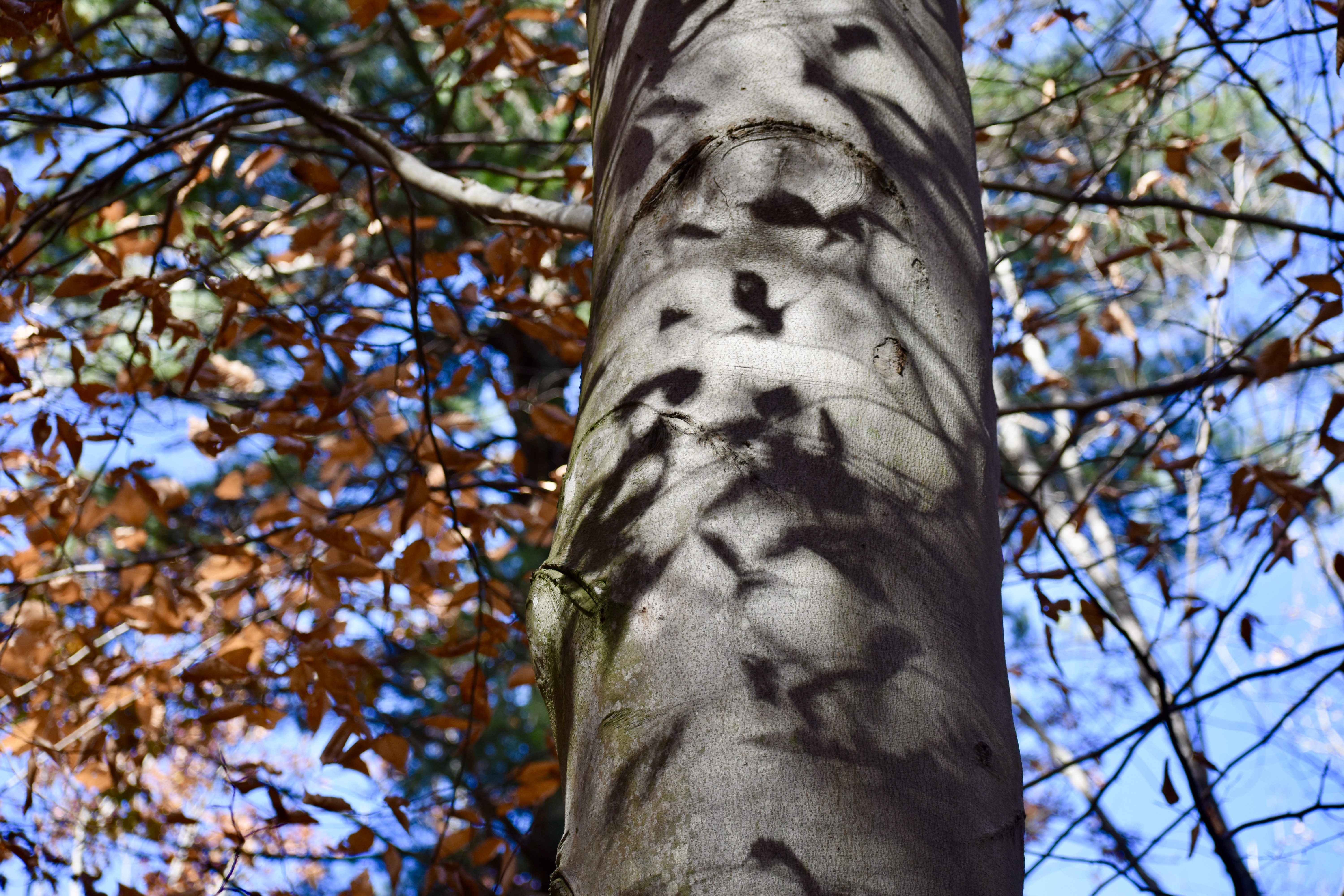
Sunday, on yet another gorgeous fall day, Kurt, Lydia and I walked along a trail to the Presumpscot River. Despite the date on the calendar, there were still quite a few amber and russet leaves clinging to the trees. They cast dappled shadows on the tree trunks and the path. Those that had fallen rustled and crunched beneath our feet. We talked idly of this and that, greeted other hikers as we walked, and admired the scenery. Then, as we rounded a corner, off to the side was a split pumpkin, and sitting neatly inside was a little red squirrel.
“Oh My Gosh! Stop! Look!” I said. The squirrel darted away briefly as we came to a sudden stop. It halted by a nearby tree, eying us. “Oh, no!”
“It’ll come back,” Kurt said confidently, and within mere seconds it had done so. It darted right back into the pumpkin and thrust its hands into the pulp. Red squirrels are nothing if not bold! Soon it was gobbling pumpkin to its heart’s content, ignoring the three of us.
“I wonder who put the pumpkin out here.” “It looks like it’s eating spaghetti!” “Oh, it’s so cute!”
We stood for several minutes and watched it eating, making all the appropriate admiring comments, laughing as it grabbed and ate more and more pumpkin. It was such a delightful, unexpected moment.
Eventually we moved on toward the rest of the trail and the waterfall. But that moment was something I truly loved about the past week. So many things had to come together for it to happen–the timing of our walk, our choice of destination, the squirrel’s lunch hour, and above all, someone’s decision to share a pumpkin with the wildlife. So often I find myself aghast and stymied by the choices that humans make on a daily basis. There was an inherent generosity to the placement of the pumpkin, and I felt connected to that beneficent donor, whoever it might have been. It was so comforting to know that there are some people out there who are doing random, kind things in the world.
Remembering that moment makes me feel just a bit lighter.
Now, thinking back to that watercolor water jar, I remember another thing I learned long ago. One way to change that dark color is to empty the jam jar and start with fresh water. Then, be careful not to insert too many dark tones. The squirrel moment is a nice bright beginning. I’m hoping to work with it.
Linda posted this month’s challenge. She said, “Percentages are all around us in recipes, prices, assessments, statistics.” She then asked us to write a poem that “includes the idea of percentage/percent in some way.” When I first read this, my thought was What!? This seemed like such a random prompt and a bit foreign to my ELA-inclined brain. As always though, when pushed into exploring new territory, I found the journey rewarding. Thanks, Linda!
Confounded
In my college statistics class I learned all about variables: dependent, independent, confounding. The rogue nature of the word, confounding, fascinated me. The way it transformed fact into uncertainty. Transformed causation into correlation.
Last week I saw a bumper sticker “Make The Truth Great Again!” Did you know that 60 % of people can’t complete a 10-minute conversation without lying? But how do you define a lie? And how often do we lie to ourselves? Is there a percentage to capture that? I just said “Fine, thanks” in response to the last three people who casually asked, “How are you doing?”
I recently read that 80% of Soviet males born in 1923 did not survive World War 2 and that 99% of all species that ever lived on earth are estimated to have gone extinct. Such despair, encapsulated in numbers.
We turn to percentages as if to gospel, spouting them with the fervor of converts. As if a number can help us make sense explain tidy up and tuck away all the messy realities. Forgetting the variables forgetting the nuance forgetting to think. Wondering why we still feel utterly confounded.
This week’s Poetry Friday Roundup is hosted by Mary Lee Hahn at her blog, A(nother) Year of Reading. She’ll be sharing a wonderful percentage poem there. To see what the other Inklings have done with this challenge, click on the links below:
Something disturbed my slumber. I stirred and heard a layered cacophony– a rich, raucous nighttime noise drifting in through our window, along with the chilly autumn air. What is that? I wondered blearily. Beneath my nest of blankets, I turned toward Kurt, sensing he, too, was awake.
“What’s that?” I murmured.
“Coyotes, I think,” he whispered. “Did you hear the owl, too?”
Oh, I thought, in surprise. I did.
With Kurt’s words, the sounds had shifted in my memory. I had heard the owl, but hadn’t quite realized it. It was like one of those moments when you don’t quite hear what someone says, and you ask,”What?”, and then, right as they answer, you realize you actually did hear their words, but it just took a second for them to come together in your mind. The owl’s call, closer to the house, had floated on the wave of coyote revelry. I knew it was there, or knew something was there, like a flavor or scent I couldn’t quite identify. Altering the whole experience, subtle but significant. Now it all fell into place.
We laid still and listened intently. Captivated. The ruckus didn’t last long. The coyotes carried their revelry further afield or simply quieted. The night slipped back into silence.
Then the owl called again. One long, low “hooooooot.”
Clear and true. A gift or a farewell.
Or perhaps both.
Slowly, contentedly, I closed my eyes and fell back asleep.




 Nix the comfort zone