The Bird Word

poetry+friday+button-e1341309970195

Last Sunday after enjoying (and envying) the splashes of color at my friend’s feeder, I switched to black oil sunflower seeds in my feeder. I put the seed out on Saturday evening and first thing Sunday morning, I had finches at the feeder!  I couldn’t believe how quickly they appeared.  I hadn’t seen one finch this spring and in less than 12 hours, there were more than half a dozen of them happily feeding in my yard!  How did they know?


DSCN5832.jpg

The Bird Word
Do they read a daily flyer
to alert them one and all?
Do they indulge in back-fence talk
and disclose each new windfall?

Do they banter at the birdbath
’bout the tasty treat du jour?
Do they gossip while they’re gorging
at the feeder by the door?

Do the bluejays trade in hearsay,
while the chickadees chitchat?
Is there a message to decipher
in Woodpecker’s rat-a-tat?

Do the sparrows spread the good news?
Have they a coded whistle?
Could one chirp mean sunflower seeds
and two long tweets mean thistle?

I suspect they gather nightly
to exchange the bird seed news
and to plan their daytime visits
to the feeders that they choose.

Now when I hear their trilling song
sweetly fill the morning air,
I wonder if each note’s a clue,
information that they share.

I plan to sit and ponder
how the word spreads with such speed,
but I’m heading to the feed store first
to buy more bags of seed!

Molly Hogan (c) 2016

To enjoy more poetry, head to the Poetry Friday Roundup hosted by Michelle H. Barnes at  My Little Ditty.


DSCN5836.jpg


Decoding disappointment

11454297503_e27946e4ff_hIt was snack time. Every day X has a Slim Jim. Every day he announces the flavor with great fanfare. On this particular day X pulled the Slim Jim from his lunchbox, looked at it, looked at it again, then held it aloft.
“Oh!” he announced with great enthusiasm,  “It’s a new flavor!  I’ve never had this one!” He paused and then said slowly and dramatically, “I can’t even read what it’s called!”
A friend rushed over, “I’ll help.” They bent their heads together trying to decipher the small print of the unknown word.
Curious, I approached, and the boys handed it to me.
“What does it say? What does it say?” they asked.
I looked, smiled, and then said, “Oh, I’m sure you can figure this out.” I wrote the letters of the unknown flavor in larger letters on the board. “Come on, give it a try.”

They stumbled through for a moment, trying a few possibilities, and then X called out, “Original! It says Original!” He danced about in place, triumphantly waving his Slim Jim in the air, chanting, “Original! Original!”

Then suddenly, he stopped, “Wait a minute… ”
His smile faded. His face fell.
“That means it’s just regular!”

Sometimes it’s better to just preserve the mystery.


Spring Cleaning

poetry+friday+button-e1341309970195

When I was young, I always loved the stories where the characters may not have had much, but their house was sparkling clean, their clothes neatly mended, and their garden tilled, weeded, and supported as needed. Sadly, admiration doesn’t always translate to imitation. Cleaning is not my thing. When my children were young and saw me pull out the vacuum cleaner they immediately asked, “Who’s coming over?” This was a pretty accurate assessment of the situation.

I love having a clean home, but I’m not much on maintenance cleaning–it just isn’t a priority. It gets downright dirty around here sometimes. I feel bad about it. But not quite bad enough to rectify it or to put down my book (or my writer’s notebook, or my glass of wine…).  And spring cleaning? Do people really still do that? I mean that intensive wall-washing, curtain-washing, cabinet-scrubbing crazed top-to-bottom house cleaning?

Ellen Taylor, a Maine poet, tackles this topic in her poem, Spring Cleaning ,and though I may not be a cleaning goddess, Taylor’s poem resonates. There is something deeply satisfying about the click and clack of grit whirling down the vacuum cleaner hose. And I’ll let you in on a little secret– cleaning is especially satisfying when there’s a good supply of dust bunnies, dirt and debris to disappear and you can make visible progress!
Spring Cleaning

By Ellen M. Taylor

Why are there no poems of the joy
of vacuum cleaning after a long
winter? Of the pleasure of pulling
the couch back, sucking up cobwebs, dead
flies, candy cane wrappers, cookie crumbs?
The sun rises earlier now, flooding
the room with daffodil light, enough
to see long unseen clumps of dog hair,

 (Read the rest by clicking on the title.)

stars beneath your bed.jpg
Soon after enjoying this poem, I read April Pulley Sayre’s Stars Beneath Your Bed: The Surprising Story of Dust, to my class. Pulley poetically explores the origins of dust–“Dust can be bits of unexpected things-“– and its timelessness –“Old dust stays around.”
images.jpgThis tickled my imagination and combined with Taylor’s poem to inspire me to rethink dust and dusting and to write this poem.

Dusting

The dust on my floors
has been stirred
by the feet of dinosaurs,
the leaping of gazelles and
the sweet shuffle of footie pj’s
in the early morning
on chilly winter days.

When I sweep the floor
and make the dust fly,
I stir up a tornado
of particles and pollens,
and pharaohs dance with dodos
in a temporary tango.

Scales from a butterfly’s wing,
a stray piece
from a comet’s streaking tail,
or fragments of skin-kissed skin
from my once-upon-a-time-toddlers

accumulate atop the old wooden table,
where once my grandparents dined,
and coat the lightbulbs
in the hallway chandelier.

With duster in hand,
I wipe away the remnants,
sneezing stardust,
and marvel
that 
our history
is writ through dust,
as is that of the universe.
Ashes to ashes
Dust to dust
Cosmic.
Historic.
Mundane.
Transcendent.

Molly Hogan (c) 2016

images-2.jpg

If you’re interested in reading more poetry, Laurie Purdie Salas is hosting this week’s Poetry Friday Roundup.


Bumper Stickers

11454297503_e27946e4ff_h

I traveled with my family this summer and spent a fair amount of time on the roads in France and Italy. We noticed several differences, but chief amongst them was that there were almost no bumper stickers. This made us wonder if other cultures embrace bumper stickers or if it’s an American thing to loudly proclaim our opinions to the world. (If we can’t do that because we’re shut in a car, we’ll emblazon it on the bumper!)

Well_behaved_wo_4d56f0d8d203e.jpg

I  love the bumper sticker “Well-behaved Women Rarely Make History” and long ago I wanted to put it on my van. But I hesitated. I felt like a fraud because essentially, I am a well-behaved woman. It felt like false advertising. When I mentioned this to a friend, she said, patiently, “Molly, you don’t have to “be” your bumper sticker!  It can be something you aspire to or simply admire.”
Duh! So, I smacked that bumper sticker right on my van and never regretted  it.

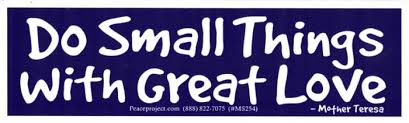
With a new perspective on bumper stickers, I added another one. Again something I strove for continually. I figured I could use the reminder and since I spent so much time in my van, why not put it there?

imgres-1.jpg

And then I chose one more, because when my emotions are high, I have a hard time communicating. If my voice is shaking, I’m probably not speaking. I’d like to change that.

ED-11 (1).jpg

These bumper stickers didn’t reflect who I was. Instead, they reflected who I wanted to be. Every time I read them,they reminded me. They became traveling mantras, reminders of personal goals.

I have had one bumper sticker that did not fit this pattern. This one was on another vehicle and documented an achievement and a philosophy rather than an aspiration.  Simple and to the point.
imgres-2.jpg

Currently, I have no bumper stickers on my car. As I finish writing this, I’m thinking I may start adding them. A quick google search reveals endless promising options ( and some horrifying ones as well.) I’m considering this one at the moment:

url-1.jpg

Do you have a bumper sticker? Does it reflect who you are or who you want to be or something else entirely?


Mourning Doves

There are poetry challenges all over the internet this month and while I am not up to committing to another 30 straight days of blogging, I thought I’d try a few along the way. One recent challenge was to write a lune, which is a three-line poem with a 5-3-5 syllable or word count.

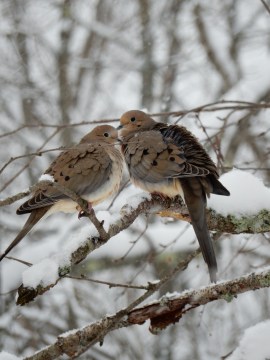
On a recent much-appreciated early-spring snow day, I spied these two mourning doves nestling together in the birch in my garden. They seemed the perfect subject for my first lune attempt.

DSCN5757.jpg

Ruffled mourning doves
perched in birch
watch winter linger

Molly Hogan (c) 2016

The more I write, the more I realize how little I know. Now intrigued by mourning doves, I did a little research and couldn’t resist sharing my new-found knowledge.

Mourning Doves
Monogamous,
devoted,
male and female
incubate the brood,
rarely leaving a nest
unattended.
Both parents care
for the squabs,
feeding them crop milk,
a protein-rich secretion.
Their song is a lament,
their flight path strong
and bullet-straight.
On take-off and landing,
their wings whistle.
A symbol of peace,
mourning doves
are the most hunted bird
in North America.

Molly Hogan (c)2016

April Fool’s gone awry

11454297503_e27946e4ff_h

March SOLC–Day 31
A huge thank you to Stacey, Anna, Betsy, Beth, Dana, Tara, Deb, and Kathleen for all that they do to create an amazing community of writers and a safe, welcoming space to write, learn, share and grow.  Also congratulations to everyone who participated in this month’s challenge and thank you for sharing your stories and commenting on mine. It’s been a wonderful month!

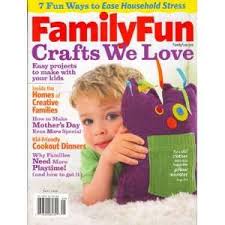
images-2.jpgI’ve never considered myself a sadist, but back when my kids were little, I used to read Family Fun magazine, or as I commonly referred to it “How-to-Make-Yourself-Feel-Inadequate-As-a-Parent Magazine.” Every so often I got really motivated (or delusional) and attempted one of their more benign projects. As a matter of fact, I think we still have a pink soda bottle piggy bank that my daughter and I made together. But one year, I decided to go all out. I was hooked by their idea–A fun April Fool’s joke that would also feed the kids. Who could ask for anything better? This idea didn’t call for mad crafting skills, obscure glues, protective gear, aligned planets, or a home equity loan for supplies. I could do this!

The basic premise: Announce to the kids you’re going to have a backward dinner as a sort of April Fool’s joke. You’ll start with dessert and then move to dinner. But here’s the trick. The “dessert” is cupcakes–actually meatloaf baked in foil cupcake liners with dyed mashed potato frosting. “Dinner” is grilled cheese–Sara Lee pound cake sliced and toasted then filled with orange frosting. Fun, right? That’s what I thought.

So, I plotted and planned, secretly cooked and frosted, and in general built up the anticipation with my three children. Finally, we all sat down for dinner and with great fanfare I brought in the plates with cupcakes.
“Tada!” I announced, “Tonight in honor of April Fool’s Day we’ll begin with dessert!” My kids were grinning, ear to ear.
“Yay!” they cheered.
images.jpgimgres-2.jpg
My youngest daughter was the most excited of all of them. She danced in her seat impatiently. As soon as the plate touched the table, she eagerly scooped up her cupcake, peeled the liner back, and took a giant bite…And that’s when it all went south. Those masquerading mashed potatoes hit her sweet little lips and a puzzled look flashed across her face. Then as her taste buds revolted, her face fell and she looked at me–oh that look! It was a look of such horror and accusation. Her full bottom lip quivered and then she scowled ferociously. How could I have betrayed her so? Spitting out her mouthful of psuedo-cupcake, she threw the rest of it at her plate, pushed back her chair and stormed from the table, sobbing. We sat momentarily stunned. After a moment, the rest of the family resumed eating, laughing about the silly dinner, thinking it was good-natured fun.

I quickly followed my daughter, trying to make amends. “Sweetie, I’m sorry. It was just an April Fool’s joke,” I apologized.
Silence.
“We’re having grilled cheese made of cake later!”
No response.
Then I pleaded, “Please come back and eat with us.”
She turned her head away.
Finally, I resorted to bribery. “You can have the cake first!”
But she was having none of it. She felt utterly betrayed. It never even crossed my mind that this was a mean-spirited joke. I thought it was fun and so did my other two children. But my youngest did NOT see it this way. She refused to eat dinner or to come out of her room that night.  For years and years she would leave the room if we talked about this dinner and/or her reaction. To this day, I’m not sure how much she remembers, but I’m almost afraid to ask. I have never played a prank on April Fool’s since then and I never will.  For the record, I still feel a bit guilty, but I blame it all on Family Fun magazine!


Puzzle Pieces

11454297503_e27946e4ff_h

March SOLC–Day 30

Conference week is hell. I don’t know how I’d forgotten that. We have regular full days of work and tuck conferences in around the school day. It’s essentially miserable. So one night this week after a full day of school and a number of conferences, I was exhausted and delighted to be home.  I clicked onto Facebook to check in with my kids (and to try to delay heading to bed til at least 7:30 pm). The first post I saw  was from my youngest daughter, currently in her first year in college. She’d posted this poem on her Facebook page:

2015-01-21-tumblr_n2367fl2gu1sn0z5fo1_1280.jpg

I read it. Then I read it again. And I know I will read it again and again. I am delighted that this poem resonates with her. I love its message but even more I love that my daughter recognizes and values that message, too.

2014-12-11-1000-colours-puzzle-01-725x407.jpgAs a parent to three young adults, I sit on the sidelines as they lead their busy lives. I gather up bits and pieces, clues, from conversations, observations, and Facebook posts and chats. These clues are like puzzle pieces with glimpses of  who they were, who they are and who they are becoming. But there’s no guiding picture on the box, no obvious way to assemble them.  I gather the pieces and puzzle over them and it’s not always a clear or reassuring process. Sometimes the emerging picture surprises me. Sometimes it warms my heart. And sometimes it keeps me up at night.

While she was home over spring break, I mentioned to my daughter that I’d turned down a full scholarship for a Master’s Degree (eons ago!) because they didn’t have an appropriate program for her father at that school. She said, “Wow! You made that big of a decision because of a boy?” Another puzzle piece.

It’s been hard seeing our youngest leave the nest and spread her wings. There were a few initial bumps, and lots of worries, but more and more, I think she’s going to do just fine. The picture forming is sweet, strong, and centered–Beautiful and so much more. It’s been a heck of a week, and there are still days to go, but my energy just got a boost. Rock on, sweet Rosie!  You are extraordinary!

What’s in a Name?

11454297503_e27946e4ff_h

March SOLC–Day 29

Still exhausted from a 14-hour day of school, conferences and what-not yesterday, I read Kim K.’s slice in which she created a found poem from her blog titles. Intrigued,  I turned to my blog titles from the past month to see if I could create a found poem. I diligently copied the titles and pondered. Hmmmmm…I’m not sure this is going to work. My titles are not inspiring me. While I sat before the computer waiting for inspiration to strike me between my tired, shadow-rimmed eyes, I started thinking about names, titles and words.

I like to know the names of things. Recognizing paintings or songs gives me a soft hum of satisfaction, and I’m always thrilled when I can identify flowers, birds or trees by their names. It’s like finding the perfect word to capture a thought or a feeling. There’s a zing! A name, a word, encompasses much more than just one finite thing. The perfect word or name is magical. It brings things to life!

Stephen King said that writing is telepathy and I agree. If you find the just-right words to describe something, you can take the image, feeling or mood from your mind and send it to your reader. Naming things enhances the process. For example, birds have some general shared attributes but when you identify a bird further with the name “chickadee”, it has a more specific appearance, personality and movements. Shakespeare wrote “What’s in a name? That which we call a rose by any other name would smell as sweet.” I agree that the initial naming isn’t the critical piece. It’s the sharing of that name–The communal knowledge of all that that name encompasses is powerful indeed. It becomes a sort of shorthand. You could initially call any flower a rose, but once that certain flower has that name, its defining attributes or characteristics are imbued within the name. The name contains a world of meaning encapsulated within that one word.

It seems to me that a title should do the same. A title should hint at the essence of the piece it titles, or add a nuance to it. It should have that feeling of inevitability about it–a sense that it is deeply rooted within the body of writing. My titles generally don’t. They are usually afterthoughts and feel artificial or stiff, not at all organic. There’s clearly an art to titling that I have yet to master. So, I’m curious. How do you title your pieces? Do you begin with your text or with its title? Any helpful hints?

At any rate, after this long circuitous pondering (blame the conference overload and lack of sleep!), I finally culled through my list of slice titles and here’s my poem (untitled), found within a selection of those same titles.

One of those days
A Slight Miscalculation
If Only I’d Turned Right
Treacherous ground
Disturbed
The Nightly Struggle
A Bad Dream
The Peace of Early Morning
Talisman
Spring is coming


Easter Memory

11454297503_e27946e4ff_h

March SOLC–Day 28


easter-bunny-basket.jpg

Bitter Chocolate

I remember an early Easter morning
at my grandparent’s house in Florida.
My sister whispered to me,
“Go look for your basket.”
I was uncertain, hesitant.
“Go on, ” she urged.
So I did.
Not pausing to wonder why she didn’t.
Blinded by my sweet tooth,
eager to see that grass-filled basket
filled with a tumble of toys and treats,
I searched until
Eureka!
I found it!
My laden basket
hidden behind a heavy curtain.
I knelt and my small hand reached out,
grabbed and unwrapped
a miniature chocolate bunny,
popped it into my grinning mouth.
Chocolate for breakfast!
Treasure in hand, I turned
to see two dark polished shoes
planted in the plush carpet,
long creased pant legs attached.
Slowly I rose
basket dangling in my hand.
I looked up, up, up to see
my grandfather’s face,
stern and frowning,
disappointment writ large.
“What are you doing?”
he rumbled.
“You’re not supposed to look for your basket yet!”
In an instant
my delight melted
as completely
as the chocolate in my mouth.
It left a
lingering,
bitter
taste.

As I’ve written and read slices this month, I’ve been thinking a lot about memories and how to write them. I’ve decided that being true to the emotional truth of the  moment trumps the actual details. This memory was sparked by all the Easter posts yesterday. The broad strokes of the moment are accurate though the details might be off a bit. I still remember that moment though, and the plummet from delight to shame.

Treacherous Ground

11454297503_e27946e4ff_h

March SOLC–Day 27

We took a walk yesterday and the silence hung heavy between us. We left the road, turning onto an unpaved drive, heavily rutted with churned dirt. The drive was some sort of access road, leading into the woods. Thin, endangered icebergs floated within the deeper water-filled ruts. We stepped carefully, unsure where the ground was firm and where it might give way to submerge an unwary foot. We trod on treacherous ground.

In the shady woods, the chilly temperature dropped a bit more. Small patches of snow lingered in the deeper shadows. We walked on, hands stuffed deep in pockets, sniffing from the cold. Separate.  Off to my right I saw a flash of white and two deer bounded through far off trees, their white tails flagging. Look!  We watched them gracefully leap through scrub and brush until they were out of sight.

As we moved further into the woods our steps shuffled through a carpet of dead oak leaves. A distant rush of water translated into a small, but potent waterfall. Sheets of water poured over a smooth rock face then twisted and turned amidst boulders, following the time-carved path of the stream. The turbulent water pulled at me. I yearned to sit on a cold boulder by its side and lose myself in the hypnotism of falling, rushing water and its dull roar.

We walked for a while longer. Over dead leaves, around ruts. Seeing a glint in the grit at my feet, I stopped and picked up a large, clear piece of mica. I ran my fingers over it. It cleaved smoothly in my hands, splitting into layers.  “They used to use mica in stove windows,”  he said. “It wouldn’t shatter like glass would from the extreme temperatures.” I looked at my blurred fingers through its thin, opaque sheets. Shadow fingers. Ghost fingers.

Along the road sections of old stone walls were visible through the winter-bare trees, marking land borders. Whose land were we walking on now in this unfamiliar terrain? I didn’t know. I didn’t ask. We kept moving step by step. Mostly silent.