
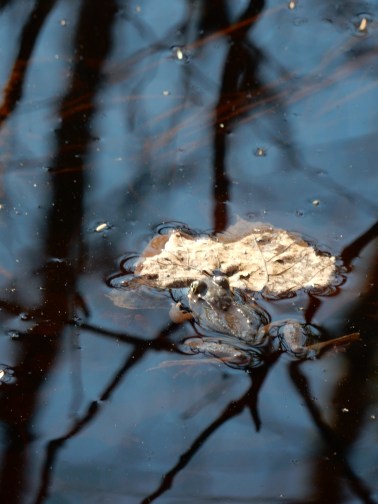
How To Approach a Frog
First, find a likely place,
a place to haunt,
a place where you can simply be
open your eyes
and senses
to the wide, wild world
Scan
Seek
Repeat
Next, listen for the elusive
look for the irregular,
the out of place
Then move with care
(too sudden or fast
and it will vanish
with a speedy splash)
Memorize the lines, the nuances
Let it settle in your mind
Finally, approach it slowly
with supplicant hands
loose and open
not seeking to capture
but to share space and time
so that when the ripples
inevitably spread
they record what was there
rather than what was lost
Repeat these steps
to write a poem
©2018 M. Hogan
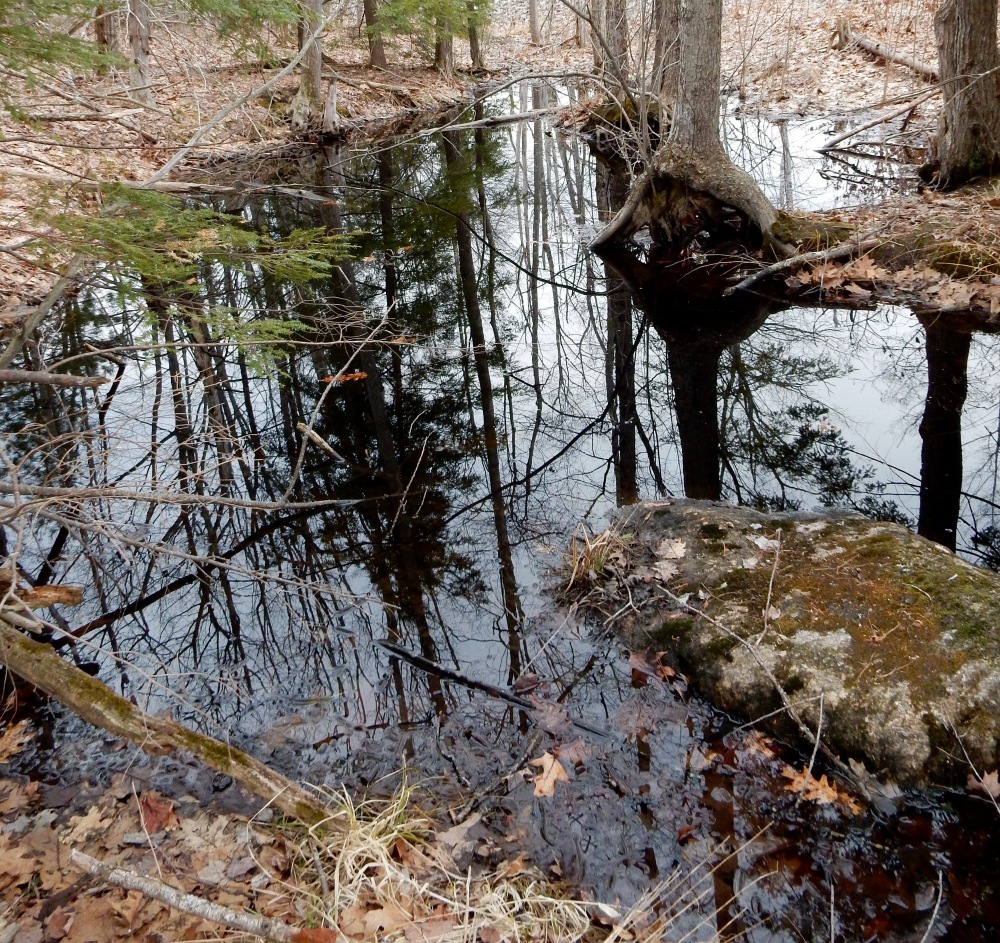
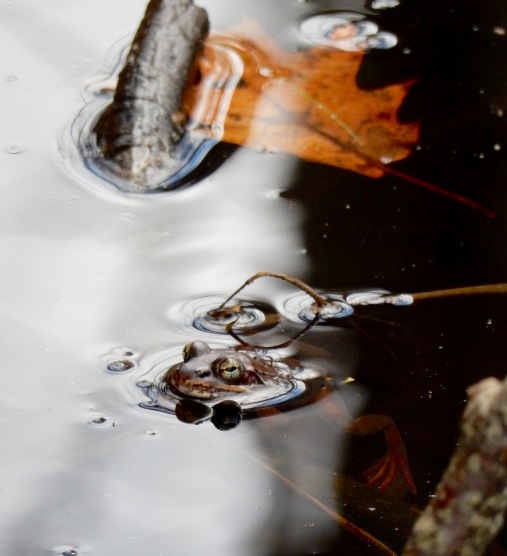
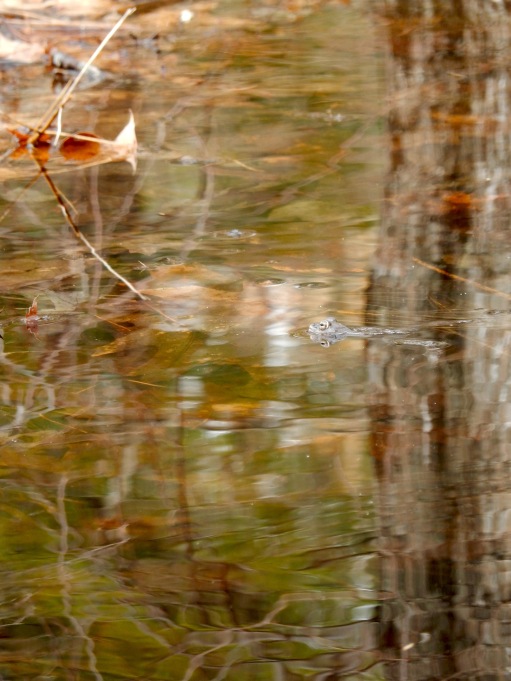
Last week I wrote about how much fun I’d been having hanging out at vernal pools and photographing frogs. While responding to some comments, it occurred to me that trying to capture a picture of a frog, or a frog itself, is similar to trying to write a poem. Then Tabatha Yeatts commented that “sometimes we find what we are looking for by seeking the out of place!” These thoughts all melded together into this poem.
For more poetry, visit Live Your Poem, where poet Irene Latham is hosting the Poetry Friday Roundup this week. She’s been inspired by the arts and artists of the Harlem Renaissance this month. Check out her powerful collection of poems and some others as well! Enjoy!









 This landscape tells a story of powerful forces at work, but speaks a language that is foreign to me. Almost like hieroglyphics. Each shape and bubble, each boulder and slab tells of force and movement, of time and wind and weather. I need my own Rosetta Stone to make sense of this world– Something that would explain the layers, the shapes, the cataclysm that shifted horizontal shelves of rock until they were rotated and running in ridges perpendicular to their original orientation. Even without fully understanding, I’m captivated by the story.
 Nix the comfort zone